

Allergies & eczema
Assessment and care for children with eczema, nasal allergies, asthma or a reaction to food, from babies to teenagers.
Dry, itchy patches that keep coming back, a nose that runs long after every cold has gone, a cough or wheeze that comes with the seasons, a reaction after a new food: these are the questions this visit is for. Dr. Medhat Abu-Shaaban assesses and manages allergies, asthma and eczema in children, from babies to teenagers.
Signs worth bringing in
- Dry, itchy, red patches of skin, on the cheeks and scalp in babies and in the creases of elbows and knees as children grow
- Sneezing, or a runny or blocked nose that does not seem to be a cold
- Itchy, watery eyes, and rubbing at the nose or eyes
- Coughing, wheezing or shortness of breath, or “colds” that last longer than they should
- Hives, vomiting or tummy pain after a particular food, even if the reaction was mild
- Itching or a blocked nose that disturbs sleep, eating or school
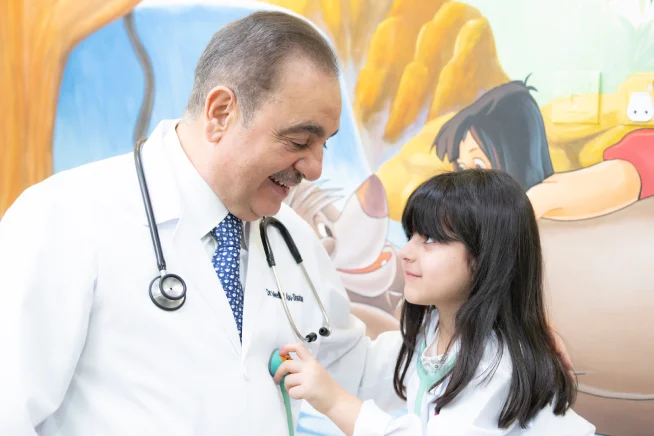
What happens at the visit
- 01The historyWhat you have seen, when it happens and what seems to set it off, along with family history of eczema, allergies or asthma, which often run together.
- 02The examinationThe skin, nose, eyes, chest and breathing, and your child’s growth.
- 03Testing, only if it helpsWhether a test would change what you do next, and which one. Not every child needs one.
- 04A plan you can followSkin care, what to avoid and what to keep, any medicine and how to use it safely, and what should bring you back sooner.
For many children the plan is about daily care at home rather than medicine, and that is a good result.
How eczema and allergies connect
They often belong to the same tendency, which runs in families.
- The tendency is inherited A child inherits a tendency to react, called atopy, not their parent’s particular allergy.
- Eczema often comes first In babies with this tendency, eczema is often the first sign, sometimes followed later by food allergy, asthma or hay fever.
- Dubai’s air plays a part Heat outside and dry air-conditioned air inside can dry the skin and set off a flare.
- Not every child follows it Many children with eczema never develop other allergies, and some allergic children have no family history at all.
Caring for eczema at home
Most of eczema care happens between visits.
Who you would see
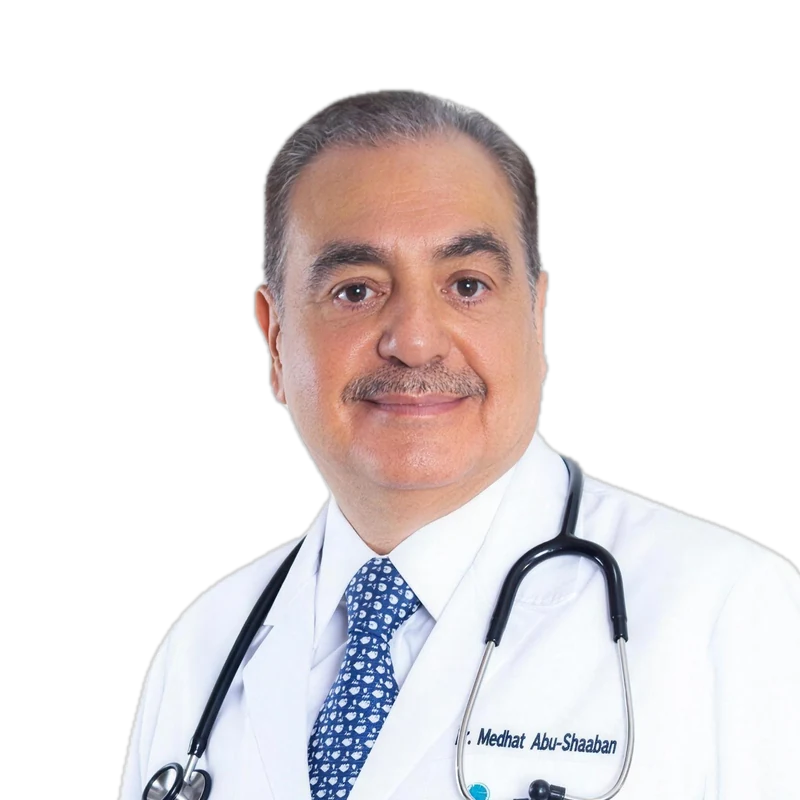 Dr. Medhat Abu-ShaabanConsultant Pediatrician, American Board Certified & Medical Director
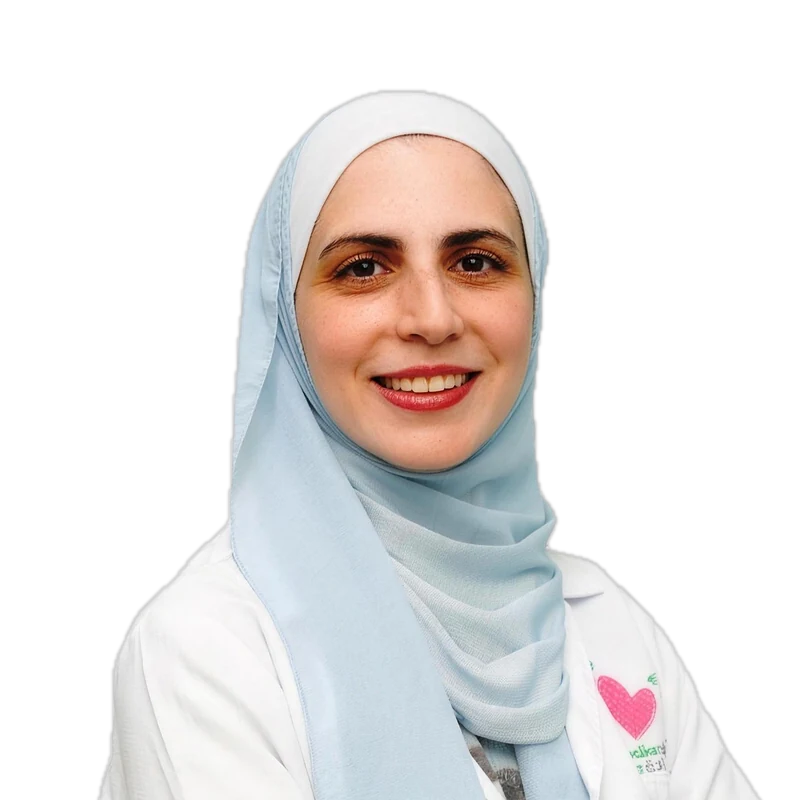 Dr. Tala BelbeissiConsultant Pediatrician
Every doctor consults in English and Arabic.
When is a reaction an emergency?
Difficulty breathing, swelling of the lips, tongue or throat, repeated vomiting, or a child who suddenly seems very unwell after a food or a sting. Call 998 for an ambulance. This visit is for everything that is not urgent.
Will my child grow out of eczema?
Many children’s skin improves as they grow, but eczema can come and go for years. The aim of care is comfortable skin and good sleep now, with fewer and milder flares.
Should I stop foods to see if they cause the eczema?
Not without advice. Removing foods without a clear reason can narrow a child’s diet for nothing. If a food seems linked, bring your notes and it can be looked at properly.
We both have allergies. Should we delay foods like egg or peanut?
Current advice has moved away from delaying them. For a baby at higher risk, for example one with severe eczema or an egg allergy, talk to your pediatrician before introducing peanut, as testing may be suggested first.
Are steroid creams safe for children?
When prescribed for a child and used as directed, yes. You will be told which cream, where, how much and for how long, so it is used safely rather than avoided out of worry.
Is it a cold or an allergy?
A cold usually clears within a week or two. A nose that keeps running, sneezing that comes with the seasons or the same room, and itchy eyes all point more towards allergy.
Your next step
Start with a conversation.
Tell us what is on your mind and reception will confirm the right specialist and a time.
- Opening hours
- Sat-Thu: 9AM - 7PM
- Insurance
- Direct billing with 15 insurers. Check yours
- Find us
- Al Razi Building 64, Block B
Dubai Healthcare City