

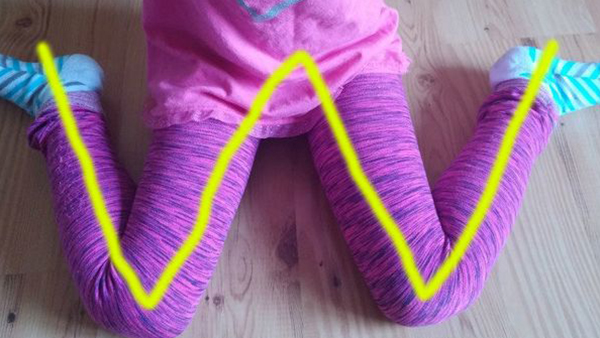
W-Shape Sitting for Children: Complete Guide for Dubai Parents
Many parents in Dubai have noticed their young children sitting on the floor with their legs splayed out to the sides forming a “W” shape when viewed from above. This sitting position, commonly called W-sitting, appears naturally comfortable for many children and allows them to play with toys, watch television, or engage in floor activities with apparent ease. However, pediatricians, physical therapists, and orthopedic specialists increasingly recognize that while occasional W-sitting is generally harmless, habitual or prolonged W-sitting can potentially contribute to orthopedic problems, muscle tightness, and developmental concerns.
At myPediaClinic in Dubai Healthcare City, our pediatricians including Dr. Medhat Abu-Shaaban frequently counsel families about W-sitting, helping parents understand when this position is concerning versus benign, why children prefer it, what problems can develop from prolonged use, and most importantly, how to gently discourage the habit and encourage healthier sitting alternatives. This comprehensive guide explores the biomechanics of W-sitting, identifies children at higher risk for complications, provides practical strategies for transitioning children to better sitting positions, and addresses when professional evaluation and intervention may be beneficial.
What is W-Sitting?
W-sitting describes a floor sitting position where a child sits on their bottom with both knees bent and feet positioned outside the hips, creating a “W” shape with the legs when viewed from above. In this position, the child’s bottom rests on the floor between their heels, with thighs rotated inward and lower legs splayed outward to the sides.
This position is distinct from other common floor sitting postures including cross-legged sitting (sometimes called “criss-cross applesauce”), side-sitting (sitting with legs tucked to one side), long sitting (sitting with legs extended straight in front), and kneeling positions. W-sitting creates a wide, stable base of support that allows children to play without using their core muscles extensively to maintain balance, which partly explains why many children find it comfortable and naturally adopt it.
Why Do Children W-Sit?
Understanding why children gravitate toward W-sitting helps parents appreciate that this isn’t willful misbehavior or stubbornness, but a position that offers certain advantages from the child’s perspective.
Stability and Wide Base of Support
W-sitting creates a very wide, stable base that makes balancing easy without requiring significant core muscle activation. For children with weaker core muscles, limited trunk control, or balance difficulties, W-sitting allows them to sit upright and play without the physical work required by other sitting positions. This is particularly relevant for younger toddlers still developing core strength and for children with developmental delays affecting muscle tone and coordination.
Compensating for Muscle Tightness
Children with tight hip muscles, particularly tight hip internal rotators and adductors, may find W-sitting more comfortable than positions requiring hip flexibility. The W-position accommodates muscle tightness that would make cross-legged sitting uncomfortable. Unfortunately, while W-sitting may feel comfortable for children with tight muscles, it perpetuates and potentially worsens that tightness, creating a problematic cycle.
Hypermobility and Joint Laxity
Some children have naturally loose, flexible joints (hypermobility or joint laxity). These children can easily move into W-position because their hip joints allow extreme ranges of motion. For hypermobile children, W-sitting may be the most stable position since their loose joints don’t provide much stability in other positions. However, habitual W-sitting in hypermobile children can potentially worsen joint instability over time.
Developmental Factors
Younger children naturally have more internal hip rotation than external rotation, making W-sitting biomechanically easier than it is for adults (whose hip rotation patterns reverse with age). Most children outgrow the tendency to W-sit as their muscle tone and hip rotation patterns mature, but some continue the habit if not redirected.
Potential Problems Associated with Habitual W-Sitting
Occasional W-sitting for brief periods is generally not harmful. However, habitual W-sitting—using this position as the primary or exclusive floor-sitting posture for prolonged periods—can potentially contribute to several orthopedic and developmental concerns.
Orthopedic Concerns
Prolonged W-sitting places stress on hip joints, potentially contributing to hip dysplasia concerns, though this is debated among experts. The position reinforces excessive internal rotation of the hips while limiting external rotation development. It can contribute to or worsen muscle imbalances, with tight internal hip rotators and weak external rotators. Knee and ankle stress from the rotational forces through the legs may contribute to joint problems over time. Some research suggests potential links to increased in-toeing (pigeon-toed walking) or out-toeing patterns, though evidence is mixed.
Muscle Tightness and Imbalances
W-sitting can contribute to tightness in hip internal rotators and adductors (inner thigh muscles), hamstrings, and heel cords (Achilles tendons). Simultaneously, muscles that should provide stability and balance—including external hip rotators, abdominals, and back extensors—may remain relatively weak if children can rely on W-sitting’s passive stability instead of actively engaging these stabilizers.
Core Muscle Weakness
Because W-sitting requires minimal core muscle activation to maintain upright posture (the wide base provides passive stability), children who predominantly W-sit may not develop core strength as robustly as children who use more challenging sitting positions. Strong core muscles are essential for posture, balance, coordination, and overall motor development. Inadequate core strength can affect various motor skills beyond sitting, including standing balance, running, jumping, and sports participation.
Balance and Coordination Impacts
W-sitting’s excessive stability means children don’t practice weight shifting, balance reactions, or using core muscles to maintain equilibrium. These skills are important for overall motor development and coordination. Children who exclusively W-sit may have less developed balance reactions and coordination compared to children who use varied sitting positions requiring more active balance control.
Reduced Trunk Rotation
When sitting in W-position, children tend to move their entire body as a unit rather than rotating the trunk to reach for toys or objects to the side. Normal development involves learning to separate upper body movements from lower body (dissociation), allowing trunk rotation. Limited trunk rotation practice can affect various motor skills including reaching across the body, transitioning between positions, and complex coordination tasks.
Children at Higher Risk for W-Sitting Complications
While any child can potentially develop problems from habitual W-sitting, certain groups face higher risks and warrant closer attention.
Children with Low Muscle Tone (Hypotonia)
Children with low muscle tone have decreased resistance to passive movement and often seem “floppy” or weaker than typical children. They gravitate toward W-sitting because it provides stability without requiring much muscle work. However, these children particularly need to develop core strength and should be encouraged to use more challenging sitting positions rather than relying on W-sitting’s passive stability.
Children with Developmental Delays
Children with global developmental delays, cerebral palsy, or other neurological conditions affecting movement and muscle tone may habitually W-sit. For these children, W-sitting can interfere with motor skill development and reinforce abnormal movement patterns. Physical therapy intervention is often appropriate to address sitting positions as part of comprehensive motor development support.
Hypermobile Children
Children with joint hypermobility (very flexible, loose joints) can easily assume W-position and may prefer it because their loose joints don’t provide much inherent stability. However, habitual W-sitting can potentially worsen joint instability over time. These children benefit from strengthening exercises and varied sitting positions that encourage muscle-based stability rather than relying on joint positioning for stability.
Children with Orthopedic Concerns
Children with hip dysplasia history, femoral anteversion (inward twisting of the thigh bone), tibial torsion (twisting of the shin bone), or other orthopedic conditions may be specifically advised to avoid W-sitting as it can potentially worsen underlying structural problems. These children require individualized guidance from orthopedic specialists or physical therapists.
When W-Sitting is NOT a Concern
It’s important to maintain perspective. Not all W-sitting is problematic, and parents shouldn’t feel excessive anxiety about occasional use of this position.
Brief, occasional W-sitting during transitions between other positions or for short periods during play is generally not concerning. Young toddlers (ages 1-2) exploring various sitting positions, including W-sitting among other postures, are developing normally. Children who use multiple varied sitting positions throughout the day but occasionally W-sit are likely fine. Those without any orthopedic concerns, muscle tone issues, or developmental delays who W-sit occasionally but respond easily when redirected to other positions generally don’t require intervention beyond gentle reminders.
The concern arises primarily with habitual, prolonged W-sitting as the exclusive or predominant floor-sitting position, particularly in children with risk factors for orthopedic or developmental complications.
Discouraging W-Sitting: Practical Strategies
If your child habitually W-sits, several strategies can help redirect them toward healthier sitting alternatives.
Gentle Verbal Reminders
Simple verbal cues can be effective for many children. Use positive, specific language describing what to do rather than just what not to do. Instead of “Don’t W-sit,” try “Let’s fix your legs” or “Can you sit criss-cross?” or “Let’s sit with a nice tall back.” Keep reminders positive and matter-of-fact rather than scolding. Young children respond better to “fix your legs” said cheerfully than to harsh corrections.
Physical Redirection
When you notice W-sitting, gently help your child move their legs into a better position. You might gently pull their legs into cross-legged position, guide them into side-sitting, or help them kneel on both knees with bottom lifted off feet. Physical guidance combined with verbal instruction helps children learn what different positions feel like and how to get into them independently.
Offering Alternative Sitting Positions
Teach and encourage various healthy sitting positions as alternatives to W-sitting.
Cross-legged sitting: The classic “criss-cross applesauce” position with ankles crossed and knees out to the sides. This position encourages hip external rotation (the opposite of W-sitting’s internal rotation) and requires more core activation than W-sitting.
Side-sitting: Sitting with both legs tucked to one side. Encourage switching which side the legs are on to maintain balance and avoid developing asymmetries. Side-sitting requires core muscle activation to maintain upright posture and encourages trunk rotation when reaching for toys.
Long sitting: Sitting with both legs extended straight in front. This position stretches hamstrings and requires core strength to maintain upright posture. It may be challenging initially for children with tight hamstrings or weak cores.
Kneeling: Kneeling upright on both knees with bottom lifted off the feet (not sitting back on heels) works core muscles and hip extensors. This position can be challenging to maintain for extended periods but is excellent for developing strength and stability.
Sitting on a small stool or bench: Providing a small chair or stool for floor play eliminates the temptation to W-sit while still allowing floor-level activities. This can be particularly helpful for children who struggle to maintain other floor-sitting positions.
Making It a Game
For young children, playful approaches work better than stern corrections. Create a “sitting position game” where you practice different sitting positions. Sing songs about sitting positions. Use a timer and challenge your child to maintain a new sitting position for increasing durations. Provide positive reinforcement and praise when you catch your child using good sitting positions, making them feel proud of the accomplishment.
Environmental Modifications
Adjusting the play environment can make alternative sitting positions more natural. Provide play surfaces at different heights (low tables, small stools) reducing the need for floor sitting. Position toys to encourage reaching and trunk rotation rather than static sitting. Use floor cushions or therapy balls that make W-sitting impossible while providing support for other positions. Create activity setups that naturally encourage varied positions—art at a low table while kneeling, books while lying on stomach, building blocks while squatting.
Consistency
Changing habitual sitting patterns requires consistency. All caregivers (parents, grandparents, nannies, teachers) should understand the goal and provide consistent reminders and redirection. Be patient—habit change takes time and repetition. Consistently redirecting whenever you notice W-sitting eventually helps children internalize new habits.
Exercises and Activities to Address Underlying Issues
In addition to discouraging W-sitting directly, activities that address the underlying reasons children W-sit can be beneficial.
Core Strengthening Activities
Building core strength reduces children’s need for W-sitting’s passive stability. Activities include wheelbarrow walking (holding child’s legs while they walk on hands), animal walks (bear crawls, crab walks, etc.), climbing, balancing activities (walking on low beams, standing on one foot), superman pose (lying on stomach and lifting arms and legs), and ball activities including sitting on therapy balls or rolling balls while maintaining balance.
Hip Stretching and Flexibility
Addressing hip muscle tightness makes alternative sitting positions more comfortable. Gentle stretches include butterfly stretch (sitting with feet together, knees out, gently pressing knees toward floor), sitting cross-legged during story time or meals to stretch hips in external rotation, standing and reaching down to touch toes (hamstring stretch), and yoga poses appropriate for children. Always stretch gently—children’s flexibility should be improved gradually, never forced.
Balance and Coordination Activities
Activities challenging balance develop the skills that W-sitting bypasses. Try standing on one foot, hopping, jumping, obstacle courses, playground activities (climbing, swinging), sports and active play, and dancing or movement to music encouraging varied movements and positions.
When to Seek Professional Evaluation
While many cases of W-sitting can be managed through simple home strategies, certain situations warrant professional evaluation by a pediatrician, physical therapist, or orthopedic specialist.
Seek evaluation if your child W-sits exclusively and resists or cannot maintain other sitting positions despite consistent redirection, has obvious muscle tightness preventing comfortable movement into other positions, demonstrates significant clumsiness, balance problems, or motor delays beyond W-sitting, has been redirected consistently for months with no improvement, walks with significant in-toeing or out-toeing patterns, has known developmental delays, low muscle tone, or hypermobility, has history of hip dysplasia or other orthopedic concerns, or if you have concerns about your child’s overall motor development or muscle tone.
At myPediaClinic in Dubai Healthcare City, Dr. Medhat Abu-Shaaban evaluates children’s motor development and sitting patterns during well-child visits. If concerns are identified, we can provide guidance, suggest therapeutic exercises, or refer to pediatric physical therapists or orthopedic specialists when needed.
Physical Therapy for W-Sitting
When home strategies prove insufficient or underlying muscle tone, strength, or orthopedic issues contribute to habitual W-sitting, physical therapy can be very beneficial.
What Physical Therapy Involves
Pediatric physical therapists assess muscle tone, strength, flexibility, balance, coordination, joint mobility, and movement patterns. They develop individualized treatment plans addressing specific problems contributing to W-sitting. Therapy typically includes strengthening exercises for weak muscles (particularly core and hip external rotators), stretching for tight muscles, balance and coordination activities, practice with functional skills in appropriate positions, and parent education about home exercises and positioning strategies.
Finding Physical Therapy in Dubai
Dubai offers numerous pediatric physical therapy services through hospitals, specialized therapy clinics, and private practices. MyPediaClinic can provide referrals to experienced pediatric physical therapists in Dubai who specialize in motor development concerns. Insurance coverage for physical therapy varies, so check with your insurance provider about coverage for developmental motor concerns.
Cultural Considerations in Dubai
Dubai’s multicultural population means children from various cultural backgrounds may have different typical sitting patterns and developmental experiences.
Floor sitting is traditional in many Middle Eastern and Asian cultures, where children and adults regularly sit on the floor for meals, socializing, and activities. This cultural practice is healthy and appropriate—the concern with W-sitting specifically is about using one particular floor position habitually rather than varying positions. Families from cultures emphasizing floor sitting should encourage varied floor positions rather than eliminating floor sitting entirely. Traditional cross-legged sitting, side-sitting, and other culturally common floor positions are excellent alternatives to W-sitting.
Dubai’s modern, urban environment means many children spend significant time sitting in chairs or car seats rather than playing actively on the floor. This can contribute to core weakness and motor skill concerns independent of W-sitting. Encouraging active play, varied movement, outdoor activities, and floor play (in appropriate positions) benefits children’s overall development.
W-Sitting Myths and Misconceptions
Several myths about W-sitting circulate among parents and online. Clarifying these helps parents maintain appropriate perspective.
Myth: W-sitting will definitely cause permanent orthopedic damage. Reality: While habitual W-sitting can contribute to muscle imbalances and potentially worsen existing orthopedic concerns, occasional W-sitting or brief periods in this position are unlikely to cause permanent damage in otherwise healthy children. The concern is with habitual, prolonged use as the primary sitting position.
Myth: W-sitting causes hip dysplasia. Reality: Hip dysplasia is a structural hip condition typically present from birth or early infancy. W-sitting doesn’t cause hip dysplasia, though it may be uncomfortable or contraindicated in children who have hip dysplasia. The relationship is more that children with certain hip structural issues might be told to avoid W-sitting rather than W-sitting causing these problems.
Myth: Children who W-sit have autism or developmental disorders. Reality: Many typically developing children W-sit without having any developmental conditions. While children with certain developmental delays or muscle tone issues may be more likely to W-sit, W-sitting alone doesn’t indicate autism or developmental disorders. It’s simply a sitting preference that many children adopt.
Myth: W-sitting must be stopped immediately and completely. Reality: While discouraging habitual W-sitting is appropriate, being overly rigid or creating significant stress around sitting positions isn’t helpful. Gentle, consistent redirection toward varied alternative positions is more effective than harsh corrections or excessive anxiety about occasional W-sitting during play.
Frequently Asked Questions
Is W-sitting ever okay, or should I stop it immediately every single time?
Brief, transitional W-sitting (a few seconds while moving between positions) is generally not concerning. The issue is prolonged, habitual W-sitting as the primary floor position. Redirect when you notice it, but don’t create excessive stress or conflict about it. Gentle, consistent redirection is more effective than harsh, constant corrections. If your child briefly passes through W-position while transitioning to another sitting position or sits this way for a few moments during play, that’s usually fine. The concern is sitting this way for extended periods (10+ minutes) repeatedly throughout the day.
My child only W-sits and cries when I try to fix their legs. What should I do?
This suggests your child may have muscle tightness, weakness, or balance difficulties making other positions genuinely uncomfortable. Rather than forcing immediate position change, work gradually on building flexibility and strength. Make alternative positions more comfortable by using cushions for support, starting with very brief periods in new positions and gradually extending duration, and making it playful rather than forceful. Consider consultation with a pediatric physical therapist who can assess whether underlying muscle tone or orthopedic issues require specific intervention. Some children genuinely need therapeutic support to comfortably adopt alternative positions.
At what age should I start correcting W-sitting?
You can begin gently encouraging alternative positions once children are sitting independently on the floor, typically around 9-12 months. For very young toddlers (1-2 years), gentle redirection when you notice it is appropriate, but don’t expect perfect compliance—they’re still developing motor control and awareness. As children approach age 3 and beyond, more consistent expectation of alternative positions becomes reasonable. Children should naturally decrease W-sitting as they mature, but those who continue habitually W-sitting through preschool years and beyond benefit from active intervention.
Will W-sitting affect my child’s walking or cause them to be pigeon-toed?
The relationship between W-sitting and in-toeing (pigeon-toed gait) is debated. Some children who W-sit also walk with in-toeing, likely because both patterns relate to excessive internal hip rotation. Whether W-sitting causes in-toeing or both result from the same underlying hip rotation pattern isn’t entirely clear. Regardless, addressing W-sitting and encouraging varied positions that promote hip external rotation is reasonable. If your child has significant in-toeing or other gait concerns, evaluation by a pediatrician or orthopedic specialist is appropriate to determine whether specific intervention is needed.
My child has been diagnosed with low muscle tone. Is W-sitting particularly concerning for them?
Yes, children with low muscle tone (hypotonia) particularly benefit from avoiding W-sitting and using positions that challenge their core muscles and promote strength development. W-sitting allows them to sit without working their muscles, which they especially need to do given their already low tone. Physical therapy is often very beneficial for children with low muscle tone to develop strength and motor skills. Discuss with your pediatrician about whether physical therapy evaluation and treatment would be appropriate for your child.
What’s the single best alternative sitting position to teach?
There’s no single “best” position—variety is ideal. Cross-legged sitting is often easiest to teach and most versatile for play. However, encouraging multiple different positions throughout the day (cross-legged, side-sitting alternating sides, long sitting, kneeling, sitting on small stools) provides the most benefit. Different positions work different muscle groups and challenge balance in different ways. Variety is more important than any single “perfect” position.
Can W-sitting cause permanent damage if my child has been doing it for years?
Most muscle imbalances and tightness from W-sitting can be addressed through stretching, strengthening, and adopting better sitting habits, even after years of W-sitting. Permanent orthopedic damage is unlikely in otherwise healthy children, though children with underlying structural issues might experience worsening of those conditions. If your child has W-sat habitually for an extended period, assessment by a pediatrician or physical therapist can determine whether muscle tightness or weakness has developed and recommend appropriate exercises. It’s rarely “too late” to improve sitting habits and address any secondary problems.
Should I correct W-sitting at school or daycare, or just at home?
Consistency across environments is ideal. Communicate with teachers or caregivers about W-sitting concerns and ask them to provide gentle reminders and redirection at school as well. Most teachers are familiar with this issue and willing to help once informed. However, recognize that perfect compliance in busy childcare settings may be difficult. Do your best to ensure consistency but don’t stress about occasional W-sitting at school if caregivers are generally supportive of redirection efforts.
My older child (age 8+) still W-sits habitually. Is this a problem?
By school age, most children have naturally moved away from W-sitting as their muscle tone matures and hip rotation patterns change. An older child who still habitually W-sits may have persistent muscle tightness, weakness, or joint hypermobility that makes this position comfortable. Evaluation by a pediatrician or physical therapist is appropriate to assess whether underlying issues need to be addressed. Older children can understand explanations about why alternative positions are better, which can facilitate habit change. Physical therapy focusing on flexibility, strengthening, and motor control may be beneficial.
Are there any benefits to W-sitting, or is it purely negative?
W-sitting does provide a very stable base allowing children with balance or core weakness to sit upright and play independently. For children with severe disabilities who cannot maintain other sitting positions, W-sitting might be their only option for floor sitting, which is preferable to being unable to sit independently at all. However, for typically developing children or those capable of learning alternative positions, the stability benefit is outweighed by the potential negatives. The goal is developing the strength and control to sit in varied positions rather than relying on one position’s passive stability.
Can W-sitting indicate a problem I should be concerned about beyond just the sitting position itself?
In most cases, W-sitting is an isolated habit in otherwise typically developing children. However, if accompanied by other motor delays, significant clumsiness, apparent muscle weakness, toe-walking, frequent falling, or difficulty with age-appropriate motor skills, it could be part of a broader pattern suggesting muscle tone issues or developmental delays. If you have concerns beyond just W-sitting about your child’s motor development, coordination, or strength, discuss them with your pediatrician for comprehensive evaluation.
How long does it take to break the W-sitting habit?
This varies by child. Some children respond quickly to redirection and adopt new sitting habits within weeks. Others, particularly those with underlying tightness or weakness, may take months of consistent redirection and therapeutic activities to reliably use alternative positions. Younger children (toddlers and preschoolers) often transition more easily than older children with years of ingrained habit. Be patient and consistent—habit change takes time, but most children can successfully transition to healthier sitting patterns with appropriate support.
Should I let my child W-sit while watching TV to avoid constant battles?
While you need to pick your battles as a parent, TV time actually provides a good opportunity to work on alternative sitting positions because the child is stationary and engaged with screen rather than actively playing. Consider using TV time as practice time for sitting cross-legged, side-sitting, or sitting on a small chair. You might make TV contingent on appropriate sitting—”When we watch TV, we sit criss-cross or on the couch.” However, if constant conflict is creating significant stress in your relationship, sometimes a more gradual approach focusing on play time initially, then expanding to TV time once new habits are more established, might be less stressful for everyone.
Do children outgrow W-sitting naturally, or will it continue if not corrected?
Many children naturally decrease or stop W-sitting as they get older, their muscle tone matures, and their hip rotation patterns change. However, some children continue the habit into school age and beyond if not actively redirected, particularly if they have muscle tightness, weakness, or joint laxity perpetuating their preference for this position. While some natural maturation occurs, gentle active redirection is still appropriate rather than assuming all children will automatically outgrow it.
Can adults who W-sat as children have problems now?
Most adults who W-sat as children don’t have significant long-term orthopedic problems attributable specifically to childhood W-sitting. However, adults with muscle imbalances, hip tightness, or chronic joint pain might have some relationship to childhood positioning habits, though many other factors influence adult musculoskeletal health. The concern about W-sitting in children is preventing the potential for problems rather than certainty that problems will occur. Many children who W-sit extensively have no long-term issues, but since the position can potentially contribute to problems and alternatives are simple to implement, discouraging habitual W-sitting remains appropriate.
What resources are available in Dubai for children with motor development concerns?
MyPediaClinic in Dubai Healthcare City provides comprehensive pediatric care including motor development assessment. Dr. Medhat Abu-Shaaban evaluates motor skills, muscle tone, and developmental progress at well-child visits and can identify concerns requiring further evaluation. We can refer to pediatric physical therapists, occupational therapists, and orthopedic specialists as needed. Dubai offers numerous therapy centers providing pediatric physical and occupational therapy services. Many accept insurance, though coverage varies. We’re happy to discuss your child’s specific development and provide appropriate referrals or guidance.
Is W-sitting related to flat feet or other foot problems?
W-sitting and flat feet both can relate to overall muscle tone and joint laxity, so they sometimes co-occur. However, one doesn’t cause the other. Children with very flexible, hypermobile joints may both W-sit easily and have flat feet because of their generalized ligament laxity. If your child has both W-sitting habits and flat feet or other foot concerns, evaluation by a pediatrician can determine whether these are isolated findings or part of a pattern suggesting hypermobility or other underlying condition requiring specific intervention.
Should I be concerned about W-sitting if it runs in my family?
If multiple family members W-sat as children, this might reflect familial patterns of muscle tone, joint flexibility, or hip structure that run in families. This doesn’t necessarily make W-sitting more or less concerning for your child individually. Assess your child based on their own motor development, muscle tone, and response to redirection rather than primarily on family history. If you or other family members have orthopedic issues you wonder might relate to childhood positioning habits, mention this to your pediatrician when discussing your child’s W-sitting.
At myPediaClinic in Dubai Healthcare City, Dr. Medhat Abu-Shaaban and our pediatric team are committed to supporting healthy motor development for all children. While W-sitting is a common childhood habit that often requires only gentle parental redirection and education about alternative positions, we’re available to evaluate children with persistent W-sitting, underlying muscle tone concerns, or other motor development questions. Understanding when W-sitting is benign versus potentially concerning, implementing simple strategies to encourage healthier sitting positions, and knowing when professional evaluation might be beneficial empowers parents to support their children’s optimal physical development. We welcome the opportunity to partner with families in ensuring children develop strong, balanced, coordinated movement patterns that serve them throughout life.