

Braces for children & teens
An orthodontic consultation to assess your child’s teeth and bite, and discuss whether and when braces may be appropriate.
Dr. Mohamed Hassabu is the specialist orthodontist here. He assesses children from around age seven and treats teenagers with metal, ceramic and self-ligating braces or with clear aligners. Most first visits end without any treatment starting. You leave knowing what your child’s bite is doing, whether anything needs correcting, and when.
When to bring your child in
By about age seven enough permanent teeth have come through for an orthodontist to see how the bite is forming — and in most cases that visit ends in monitoring rather than treatment. Whatever your child’s age, book an assessment if you notice:
- Baby teeth lost early, or ones that have stayed long past their turn
- Teeth that are crowded, blocked out of line, or noticeably crooked
- Front teeth that stick out, or a bite that simply looks off
- A jaw that shifts to one side when your child bites down
- Difficulty chewing or biting
- Thumb-sucking that has carried on past five or six
- Mouth breathing, or snoring at night
- Speech sounds that may be linked to where the teeth or jaw sit
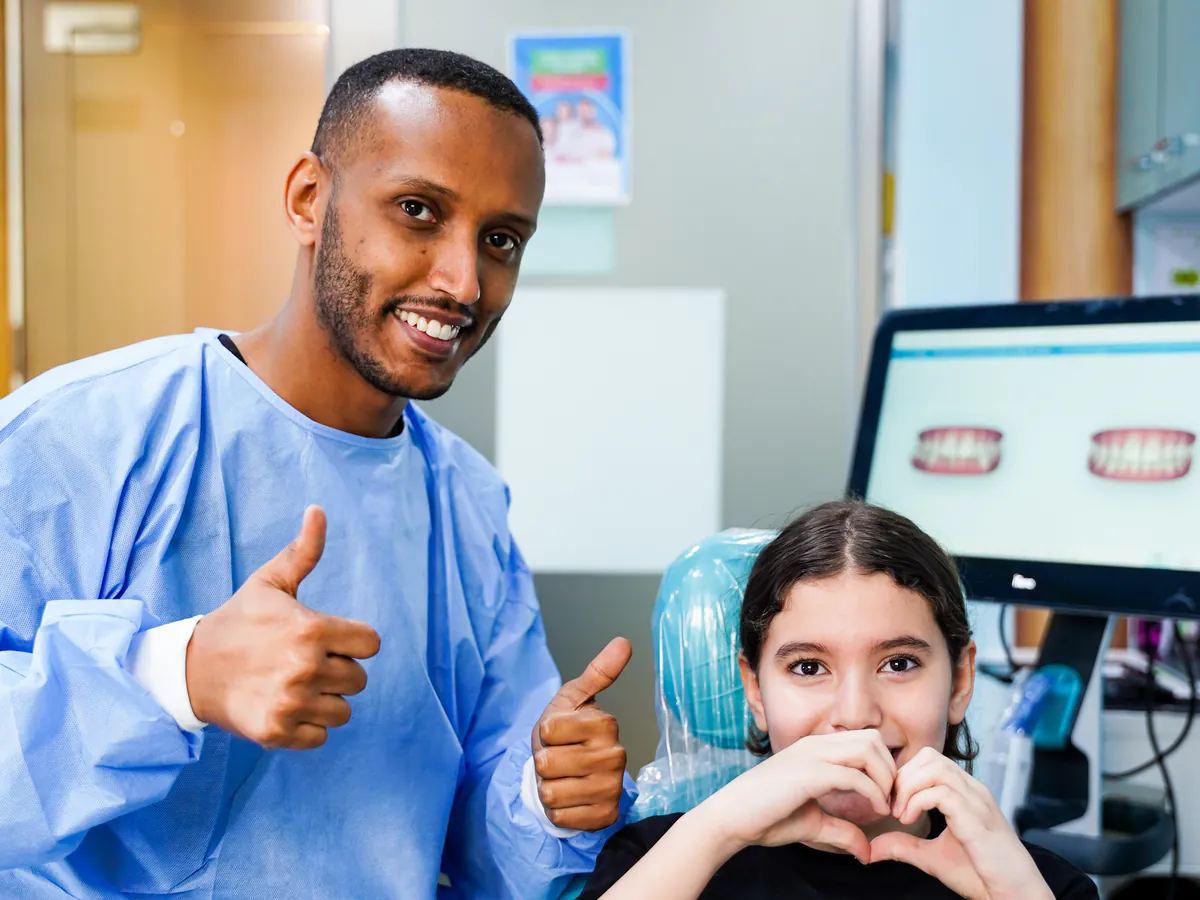
What happens at the first visit
- 01The orthodontist looksTeeth, bite, jaw, and how the face is growing. It is an examination, and there is nothing uncomfortable about it.
- 02Scans or x-rays, if they are neededTo see what is happening below the gum, where the permanent teeth are still sitting.
- 03You are told what is going onWhether anything needs doing now, later, or not at all. Many first visits end with “everything is developing well, see you in a year.”
- 04If treatment is right, you get the planWhat it would involve and what it would cost, set out in writing before anything is fitted.
Which braces, and why
The right option follows the case rather than the budget. A complex bite narrows the choice; a mild one opens it.
- Metal braces Brackets and wire, fixed on. They handle almost any case, including large rotations and vertical movements. Your child picks the colour of the ties.
- Ceramic braces The same work with tooth-coloured brackets, which teenagers who feel self-conscious often prefer.
- Clear aligners Removable trays worn in sequence. They suit mild to moderate cases, and a teenager who will keep wearing them. They come out for sport and photographs.
Aligners follow the same biology as braces, so they are not automatically faster. The complexity of the case sets the timeline, not the appliance.
How long it takes
Teeth move at the speed the bone around them reshapes, which cannot safely be rushed. The orthodontist gives an estimate after the examination and records.
- The case How much crowding there is, whether the bite needs correcting, whether a tooth has to be brought into position or space made, and whether the jaws are still growing.
- The bite takes longest Straightening the front teeth is usually the quicker part. Getting the back teeth to meet properly takes longer, and it is what makes the result last.
- Your child’s part Elastics worn as instructed, brackets kept safe from hard and sticky food, appointments kept and gums kept healthy.
The braces come off. The treatment is not quite finished.
Teeth drift back toward where they started, and in the early period after the braces come off they can move within weeks. A retainer holds the result while the bone settles around the new positions, and some level of wear continues indefinitely.
Who you would see

Every doctor consults in English and Arabic.
At what age should my child get braces?
An assessment at around seven; the braces themselves usually later. The early check is about spotting a developing problem while the jaw is still easy to guide. Most children assessed at seven are simply monitored, with a review every six to twelve months while they grow.
Is it too late if my child is already a teenager?
No. Many children start braces in their early teens, and orthodontic treatment works well into adulthood. The age-seven check is a guideline, not a deadline — it is the ideal moment to spot a problem, not the last one.
Will braces damage my child’s teeth?
The white marks people remember come from cleaning that slipped and from frequent sugary drinks, not from the braces themselves, and they are preventable with good habits. Teeth do feel tender and slightly loose during treatment, because the bone around each root is remodelling under gentle pressure. That is the treatment working, and it settles once the braces come off.
Can my child still play sport?
Yes. We recommend an orthodontic mouthguard for contact sports, to protect the lips and the braces. Swimming, running and most other activities need no special precautions.
Are clear aligners faster than braces?
No. Both move teeth at the speed the bone allows. What decides the timeline is how complicated the movements are, not which appliance is used — and for complex corrections fixed braces are often the more predictable route.
What will braces cost, and does insurance help?
We set out the full cost in writing after the assessment, before anything is fitted. Wherever you go, ask what the quote includes: the initial records and scans, the braces themselves, every adjustment visit, and the retainers at the end. A low headline price that leaves those out usually costs more by the finish. Some insurance policies contribute toward orthodontics, particularly where treatment is medically necessary rather than cosmetic — bring your policy to the assessment and we will check it with you. Payment plans are available; reception can confirm the current terms.
Your next step
Start with a conversation.
Tell us what is on your mind and reception will confirm the right specialist and a time.
- Opening hours
- Sat-Thu: 9AM - 7PM
- Insurance
- Direct billing with 15 insurers. Check yours
- Find us
- Al Razi Building 64, Block B
Dubai Healthcare City