


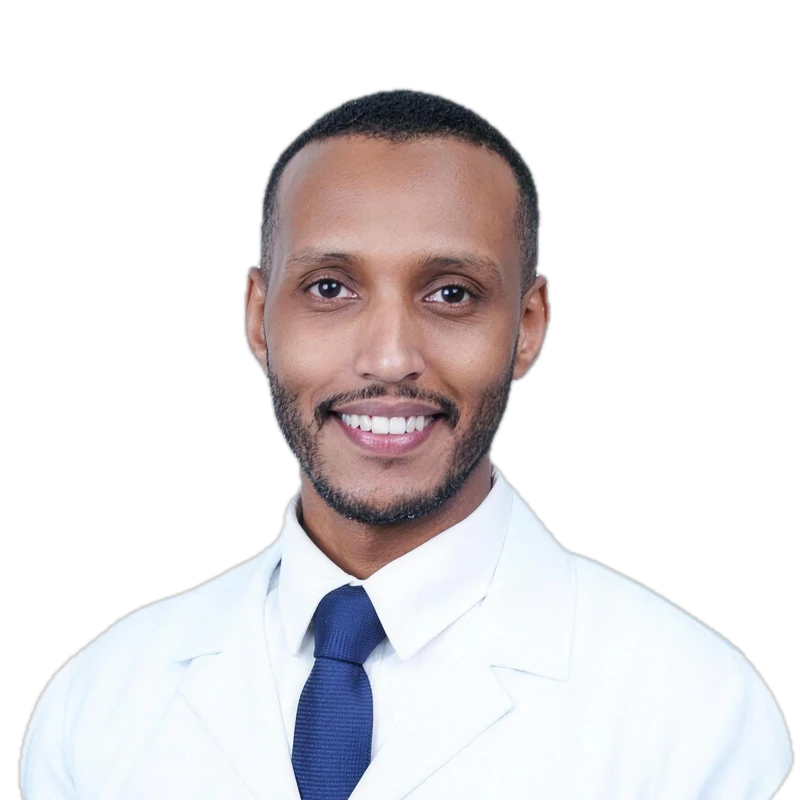
Dr. Mohamed Hassabu
Specialist Orthodontist
He provides early orthodontic care for children and treats teenagers and adults with braces and clear aligners.
- Membership
- Royal College of Surgeons
- Experience
- 15+ years
- Ages seen
- From age 5, including adults
- Languages
- English & Arabic
How Dr. Mohamed can help

Visiting Dr. Mohamed
- LocationDubai Healthcare CityAl Razi Building 64, Block B
- HoursSat-Fri: 9AM - 7PM04 430 5926
- Doctor’s consultation hoursFriday to Tuesday; contact reception for appointment times.
- InsuranceDirect billing15 accepted insurers
Reception will call you to confirm a time and your insurance.
Get to know Dr. Mohamed
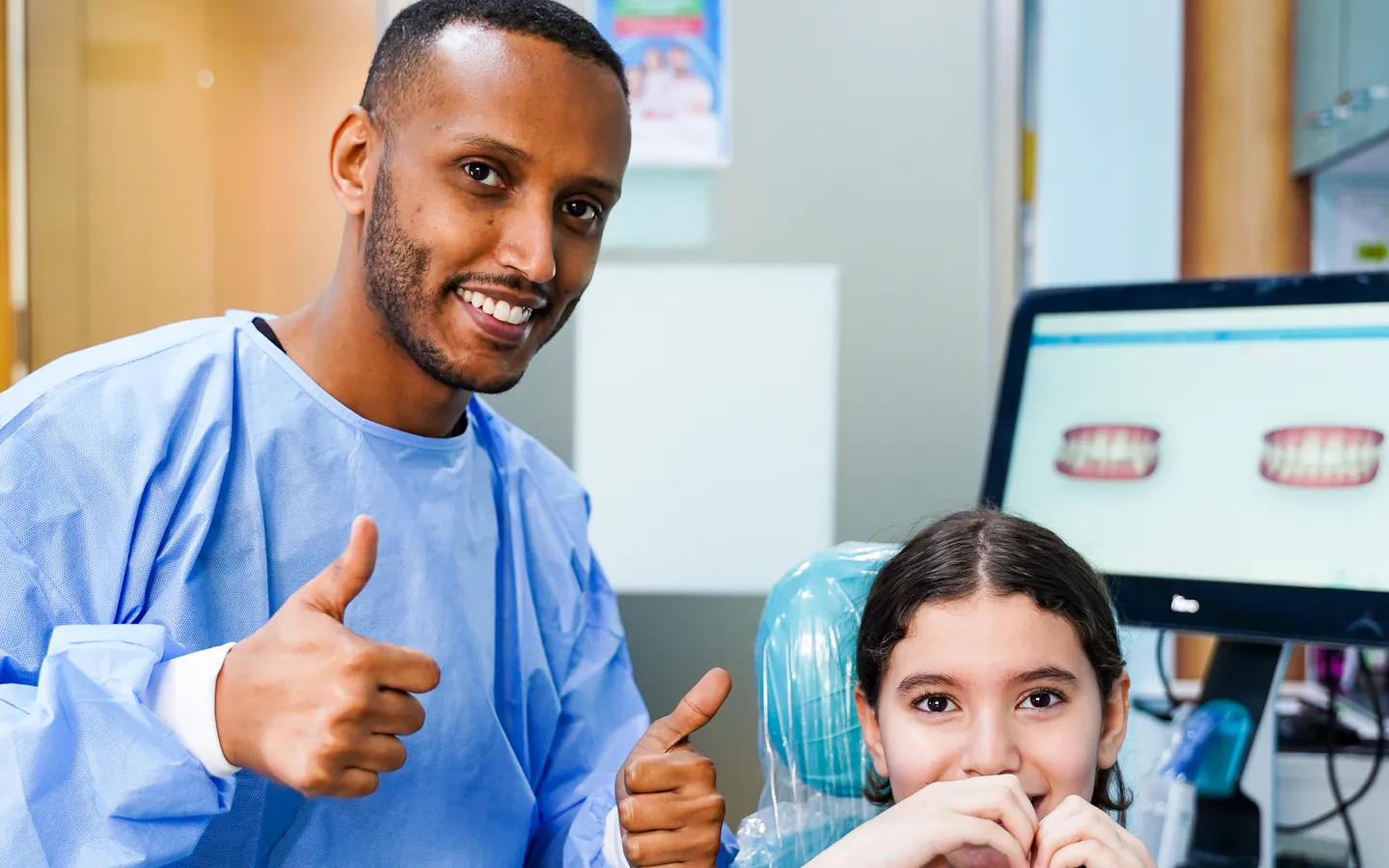
Crooked teeth made me hide my smile as a child. That experience inspired me to become an orthodontist and help children feel more confident about their teeth.
Dr. Mohamed recommends a first orthodontic assessment around age seven and sees children from age five when appropriate, as well as teenagers and adults. He assesses each patient individually and recommends treatment only when it is appropriate.
In Dr. Mohamed’s words
What made you become an orthodontist?
Since I was a teenager I wanted to become an orthodontist because of the way braces changed my life, from a shy kid who used to hide his smile to a more confident, outgoing and social teenager.
What makes you different from other doctors in your practice?
Honesty and integrity is my priority in all treatment plans to achieve the best possible smiles. Having good communication skills, with compassionate nature to put nervous patients at ease. In addition to being detail oriented.
What are your favourite activities outside the office?
Swimming, reading and video games, also I’m into nutrition and fitness.
What would you do for a living if you weren’t a doctor?
If I wasn’t a doctor for sure I’d be an Olympic swimmer as I’m very competitive plus I enjoy floating on the water.
Questions parents ask
At what age should a child have a first orthodontic check, and what happens at that visit?
I recommend a first orthodontic check around the age of 7. This doesn’t necessarily mean your child needs braces at that age. It allows us to check how the teeth and jaws are developing and identify any potential problems early. If early treatment is needed, it can sometimes be short and targeted, often taking around 6–9 months, depending on the child and the problem. And if treatment isn’t needed yet, we can simply monitor your child’s growth and choose the right time to intervene.
What is early (interceptive) treatment, and how do you decide whether a young child needs it now or should wait?
Early treatment is designed to guide jaw growth and address developing orthodontic problems before they become more difficult to manage. I usually recommend treatment when there is a clear reason not to wait—for example, a significant bite problem, harmful oral habits, jaw-growth concerns, or protruding teeth that are at higher risk of trauma. Every child develops differently, so I prefer to assess the child first and determine whether we should treat now, monitor growth, or wait for the right stage of development.
How do Myobraces work, and what does a child need to do at home for them to work?
Myobrace is an orthodontic appliance that can be used in selected growing children to help address certain oral habits and support healthier oral and muscle function. The most important part is consistency at home. The child needs to wear the appliance as prescribed and follow the exercises and instructions carefully. Because every child is different, I first assess the teeth, bite, jaw development, breathing, and oral habits to determine whether Myobrace is appropriate.
Braces or Invisalign: how do you help a teenager and their parents decide?
There isn’t one option that is best for every teenager. The decision depends on the complexity of the case, the teenager’s responsibility, lifestyle, and ability to wear aligners for around 22 hours a day. If I’m confident the teenager will be consistent with Invisalign, it can be an excellent option. If compliance is likely to be a concern, braces may provide a more predictable approach. My role is to explain the pros and limitations of each option so we can choose what is most suitable for the patient—not simply what looks better.
Show all questions (9)Show fewer questions
How long does treatment usually take, and how often will we need to visit?
Most comprehensive orthodontic treatments take around 16–18 months, but the exact duration varies from patient to patient. Three things can make a big difference: keeping your appointments regularly; taking good care of your braces or wearing aligners as instructed; and individual differences in how teeth and jaws respond to treatment. At your consultation, I can give you a more realistic estimate based on your specific case.
What can a child eat with braces, and what should we do if a bracket breaks?
Children can enjoy most foods with braces, but we recommend avoiding very hard, sticky, or chewy foods that can damage the brackets or wires. If a bracket becomes loose or breaks, don’t panic. Use orthodontic wax if it is causing irritation and contact the clinic so we can advise you and arrange an appointment if needed. With the right care and a few simple changes, most children adapt very quickly to eating with braces.
How do you help a nervous child or teenager feel comfortable about starting treatment?
We take the time to make every child feel comfortable and involved. I explain each step in simple terms, show them what we’re going to do, and let them ask questions and see the process using a mirror. Starting braces is usually much easier than children expect, and most patients who feel nervous at their first visit become much more confident by their next appointment.
What happens after braces come off, and how long are retainers needed?
Finishing the braces is not the end of treatment—it’s the beginning of the retention phase. This is an important part of keeping your new smile stable. I usually tell my patients: “Wear your retainers for as long as you want to keep your teeth straight.” Teeth can naturally shift over time, so long-term retention is the best way to protect the result we worked together to achieve.
Does early orthodontic treatment mean my child won’t need further treatment when they are older?
Not always. Early treatment can reduce the severity of future orthodontic problems and make any later treatment shorter and simpler. However, some children may still need a second phase when their permanent teeth have erupted and growth is more complete.
Experience
- myPediaclinic, DubaiSpecialist Orthodontist · 2023
- Ajman UniversityClinical advisor · 2020–2021
- Ministry of Health, UAE2019–2025
- Dubai Dental Hospital, UAE2016–2019
- European Jordanian Clinic, Saudi Arabia2014–2015
- Khartoum Dental Hospital, Sudan2012–2014
- Ribat University, Sudan2011–2012
Education
- Mohammed Bin Rashid University (MBRU)MSc Orthodontics · 2019
- National Ribat UniversityBDS · 2011
- MOrth, Royal College of Surgeons of Edinburgh — 2020
- MJDF, Royal College of Surgeons of England — 2014
- Invisalign Provider
Watch Dr. Mohamed
Also in Orthodontics
Dr. Mohamed is the clinic’s only specialist in orthodontics. For anything else, start at Orthodontics.
All seven specialists at the clinic