

Cleaning, fluoride & sealants
Preventive dental services for children, with advice on caring for teeth between visits.

Two windows worth knowing about
The first permanent molars arrive at about six or seven, and their cavity risk peaks in the two years straight after they come through, while the enamel is still hardening. That is the moment to seal them. The second window closes rather than opens: too much fluoride can only mark a tooth while it is still forming, and that risk is over by about eight.
Preventive dental care for children: a clean and a check every six months, fluoride varnish to strengthen the enamel, and sealants over the deep grooves in the back teeth where most childhood cavities begin. None of it involves a drill, and most of it is finished inside half an hour.
Is this your child?
Every child benefits from a six-monthly clean. Sealants are worth asking about sooner if:
- The first permanent molars have come through, usually around six or seven
- You can see deep, narrow grooves in the back teeth that trap food
- They have had a cavity before — one makes the next more likely
- They snack often, or the diet is high in sugar
- Brushing is difficult, whether because of additional needs or because it is simply a nightly battle
- A medication leaves their mouth dry
- A new tooth has come through discoloured or rough rather than smooth and white
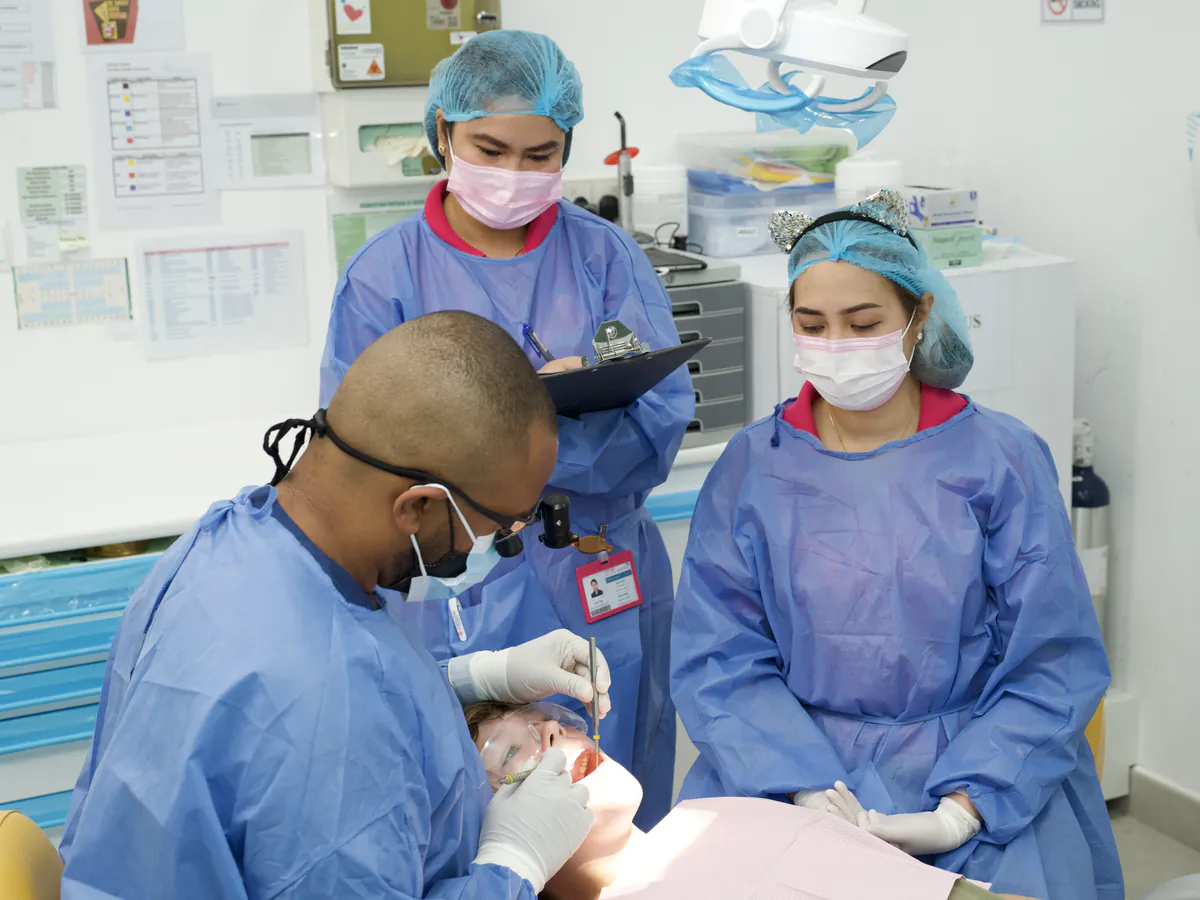
What a preventive visit involves
- 01The cleanPlaque and hardened tartar are removed from every surface, then the teeth are polished and flossed. About twenty to thirty minutes, with no numbing.
- 02Fluoride varnishA concentrated fluoride solution is painted straight onto the teeth. It takes a minute or two, sets to a coating that keeps releasing fluoride for weeks, and is applied at every six-month check.
- 03Sealants, where the grooves ask for themThe tooth is cleaned and dried, a mild etch is applied and rinsed off, the sealant is painted into the grooves and set with a blue light. Two to five minutes a tooth, no drill and no injection.
- 04The half you take homeWhich toothpaste, how much of it, and the technique. Prevention is mostly what happens in your bathroom rather than in our chair.
What each one does
Sealants and fluoride protect in different ways. Neither replaces a toothbrush.
- Where cavities start The chewing surfaces of the back teeth are full of narrow grooves, some too tight for a toothbrush bristle. Most cavities in children form there.
- Sealants A thin coating is painted into the grooves and set hard, so food and bacteria have nowhere to settle. Reviews of the research find they reduce decay on these surfaces.
- Fluoride It strengthens enamel, can repair the earliest decay before it becomes a hole, and makes it harder for bacteria to produce acid.
- Between the teeth Neither sealants nor fluoride reach between the teeth. That is what flossing is for.
How long a sealant lasts
A well-placed sealant usually lasts five to ten years, and it is checked at every six-month visit.
- Checked at every visit If a sealant has chipped or worn, it is topped up or replaced in a few minutes.
- Grinding wears it faster A partly worn sealant still protects the grooves it is bonded to.
- Why the check matters When a sealed tooth does get a cavity, it is usually where the sealant wore down and was not replaced.
Between visits, at home
Fluoride is the part parents most often get wrong, and they get it wrong in both directions. In Dubai the picture is specific:
Who you would see
 Dr. Mustafa AbdallaSpecialist Pediatric Dentist & Director of the Dental Department
 Dr. Shaima BuhamerSpecialist Pediatric Dentist
 Dr. Sharifa AlHajSpecialist Pediatric Dentist
 Dr. Sara Atif MustafaSpecialist Pediatric Dentist
Every doctor consults in English and Arabic.
Does any of this hurt?
A clean and a fluoride varnish need no numbing and no drill. A sealant needs no injection either. Your child feels a cotton roll keeping the tooth dry, some water, and a light held near the tooth for about twenty seconds. Afterwards the tooth feels slightly different to the tongue. That is the whole of it.
Do sealants mean my child already has a cavity?
No — the opposite. Sealants go onto healthy teeth to keep them healthy, and they work best before anything has started. If a dentist has suggested them it is because the grooves are deep, not because there is already a problem.
Is Dubai tap water fluoridated? Should we be supplementing?
DEWA water is safe to drink and carries some fluoride, typically 0.1 to 0.5 mg/L, which sits below the level considered optimal for preventing cavities. Bottled water varies enormously by brand. For most children the answer is better toothpaste habits rather than supplements — and supplements should only ever follow an assessment, because over-the-counter dosing is how children end up with mottled enamel.
What if a cavity has already started?
Not every cavity needs a drill. Silver diamine fluoride is a liquid painted onto the cavity that kills the bacteria and hardens the softened tooth. It takes one to three minutes a tooth, with no injection and no drilling, and arrests 60 to 90 per cent of active cavities. The trade-off is that the treated area turns permanently dark, which matters on a front tooth and rarely on a back one. Ask the dentist whether it suits your child’s case.
How often should we come?
Every six months for most children. That is when varnish is reapplied and existing sealants are checked. Your dentist may suggest a shorter interval if your child’s teeth build plaque quickly or have already had cavities.
What will this cost?
Tell reception your insurer when you book. We hold direct billing agreements with fifteen insurers, and cover differs between the pediatric and dental departments, so we check your eligibility before the appointment rather than at the desk. Anything not covered can be split into four payments with Tabby.
Your next step
Start with a conversation.
Tell us what is on your mind and reception will confirm the right specialist and a time.
- Opening hours
- Sat-Thu: 9AM - 7PM
- Insurance
- Direct billing with 15 insurers. Check yours
- Find us
- Al Razi Building 64, Block B
Dubai Healthcare City