

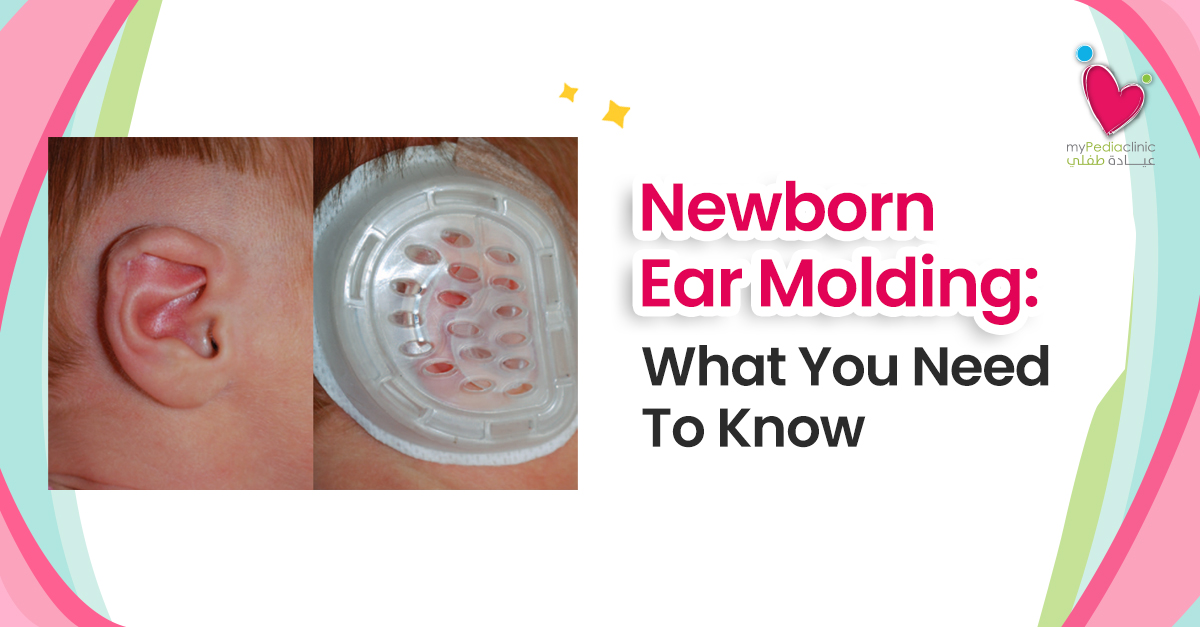
Newborn Ear Molding: What You Need To Know
Comprehensive guide to non-surgical ear correction for infants from the pediatric specialists at myPediaClinic Dubai
When parents first notice that their newborn’s ears do not look quite right, whether they appear folded, protruding, cupped, or misshapen, it can be concerning and emotionally challenging. Many parents wonder whether the ear deformity will improve on its own, whether treatment is necessary, and what options are available. The good news is that newborn ear molding offers a highly effective, non-surgical solution for correcting ear deformities in infants when treatment is started early.
At myPediaClinic in Dubai, we have helped numerous families navigate the decision-making process around newborn ear molding. We understand the questions and concerns parents have, and we are committed to providing clear, comprehensive information to help you make the best decision for your child. Ear deformities are more common than many people realize, affecting approximately 15 to 20 percent of newborns to some degree, and most can be successfully treated with early intervention.
Newborn ear molding takes advantage of the remarkable plasticity of infant ear cartilage, which remains soft and moldable for a limited time after birth due to circulating maternal estrogen. During this window of opportunity, gentle external molding devices can reshape the ear into a more normal appearance without any surgery, anesthesia, or discomfort for your baby. The results are often excellent and permanent.
This comprehensive guide will explain everything you need to know about newborn ear molding, including what ear deformities are, how molding works, who is a good candidate, what to expect during treatment, and the outcomes you can anticipate. By understanding this innovative treatment option, you can make an informed decision about whether ear molding is right for your child and take timely action to achieve the best possible results.
The key to successful ear molding is early action. The window for optimal treatment is brief, typically the first few weeks of life, so awareness and prompt evaluation are essential. If you have noticed any irregularity in your newborn’s ears, we encourage you to read on and consider scheduling an evaluation as soon as possible.
Understanding Ear Deformities in Newborns
Ear deformities in newborns can take many forms, ranging from subtle irregularities to more noticeable malformations. Understanding the different types of ear deformities helps parents identify potential issues and communicate effectively with healthcare providers about their concerns.
Types of Ear Deformities
Ear deformities are generally classified into two categories: deformational and malformational. Deformational ear abnormalities occur when all the ear components are present but shaped abnormally, often due to positioning in the womb, birth trauma, or external forces after birth. These deformities are typically excellent candidates for ear molding.
Malformational ear abnormalities involve missing or underdeveloped structural components of the ear. These conditions, such as microtia (underdeveloped ear) or anotia (absent ear), may require surgical reconstruction and are generally not suitable for molding alone. However, some malformations have components that can be improved with molding in conjunction with other treatments.
Common Deformational Ear Conditions
Prominent ears (protruding ears): The most common ear deformity, characterized by ears that stick out more than typical from the head. This is often caused by underdevelopment of the antihelical fold, the Y-shaped cartilage ridge that helps the ear lie flat against the head, or overdevelopment of the conchal bowl, the cup-shaped portion of the ear near the ear canal.
Lidding: The top portion of the ear folds over or droops downward, giving the ear a hooded appearance. This occurs when the upper helix, the outer rim of the ear, lacks sufficient cartilage support to maintain its shape.
Cup ear (constricted ear): The upper portion of the ear appears tight, hooded, or rolled over, with the helix wrapping inward. In more severe cases, the ear may appear significantly smaller than normal.
Stahl’s ear: An extra cartilage fold creates a pointed, elf-like appearance at the top of the ear. This deformity gives the ear a distinctive triangular shape.
Conchal crus: An abnormal cartilage bar crosses the conchal bowl, the cup-shaped area of the ear, creating an unusual indentation or ridge.
Cryptotia (hidden ear): The upper portion of the ear is buried beneath the scalp skin, making the ear appear smaller and partially hidden.
Helical rim abnormalities: Irregularities in the outer rim of the ear, including kinks, notches, or flattened areas. These can occur anywhere along the helix and may affect the ear’s appearance from various angles.
Causes of Ear Deformities
Most ear deformities develop during fetal development or during the birthing process. Positioning in the womb, particularly when space is limited (such as with twins or low amniotic fluid), can cause prolonged pressure on the ears that leads to deformation. The birth process itself, especially prolonged labor or instrumental delivery, can also contribute to ear deformities.
After birth, positioning during sleep or prolonged time in car seats and carriers can maintain or worsen ear deformities, particularly in the first few weeks when ear cartilage is most malleable. Genetic factors also play a role, as some ear shapes and tendencies toward deformity run in families.
Will the Ear Correct Itself?
Many parents and even some healthcare providers adopt a “wait and see” approach, hoping that the ear will improve on its own. While some mild ear deformities do self-correct in the first few days of life, research shows that most significant deformities do not resolve spontaneously. Studies indicate that only about 30 percent of ear deformities present at birth will fully self-correct, while the remaining 70 percent will persist without treatment.
The challenge is that by the time it becomes clear that an ear will not self-correct, the optimal window for molding treatment may have passed. For this reason, early evaluation is recommended for any ear deformity that does not appear to be resolving in the first week or two of life. It is better to evaluate and potentially treat early than to wait and miss the opportunity for non-surgical correction.
How Newborn Ear Molding Works
Newborn ear molding is a non-invasive treatment that uses specially designed external devices to gently reshape infant ear cartilage. The science behind ear molding relies on a critical biological window during which infant ear cartilage is exceptionally malleable and responsive to external forces.
The Science of Infant Ear Cartilage
During pregnancy, maternal estrogen crosses the placenta and enters the fetal circulation. This estrogen increases levels of hyaluronic acid in the infant’s cartilage, making it remarkably soft and pliable. At birth, this estrogen effect persists, allowing the ear cartilage to be molded and reshaped with gentle, sustained pressure.
Over the first six to eight weeks of life, maternal estrogen levels in the infant gradually decline. As this happens, the ear cartilage becomes progressively stiffer and less responsive to molding. By about three months of age, the ear cartilage has typically become firm enough that external molding is no longer effective, and any persistent deformities would require surgical correction.
This biological window explains why timing is so critical for ear molding. Treatment started in the first one to two weeks of life is most effective because cartilage malleability is at its peak. Treatment can still be successful when started up to six to eight weeks of age, but it may require longer treatment duration and may achieve less complete correction.
Types of Ear Molding Devices
Several ear molding systems are available, each using slightly different approaches to achieve ear reshaping. All work on the same basic principle of applying gentle, sustained pressure to guide the ear cartilage into a more normal shape.
EarWell Infant Ear Correction System: One of the most widely used systems, EarWell uses a set of custom-fitted components including a posterior shell, anterior shell, retractor, and conformer that work together to reshape the ear. The device is worn continuously for about four to six weeks.
Ear Buddies: A simpler splinting system using medical-grade silicone and surgical tape to mold the ear. Ear Buddies may be appropriate for milder deformities and are often less expensive than other systems.
Custom Molding Devices: Some practitioners create custom molding devices tailored to the specific deformity being treated. These may be made from various materials including soft silicone, dental putty, or other moldable materials.
The choice of molding system depends on the type and severity of the deformity, the age of the infant, practitioner experience, and family preferences. Your healthcare provider will recommend the most appropriate system for your child’s specific situation.
The Molding Process
Treatment begins with a thorough evaluation of the ear deformity to determine the most appropriate molding approach. The practitioner will examine your baby’s ears, assess the specific characteristics of the deformity, and discuss treatment options with you.
Once the decision to proceed with molding is made, the molding device is carefully fitted to your baby’s ear. This process is gentle and typically takes 15 to 30 minutes per ear. The device applies constant, gentle pressure to reshape the cartilage while holding the ear in the desired position.
The molding device is worn continuously, 24 hours a day, throughout the treatment period. Most devices are designed to be comfortable for the baby and do not interfere with feeding, sleeping, or normal activities. However, the ears need to be checked regularly to ensure proper fit and monitor for any skin irritation.
Treatment duration varies depending on the severity of the deformity, the age at which treatment is started, and how the ear responds to molding. Typical treatment duration ranges from two to six weeks. More severe deformities and treatment started later in the window may require longer treatment.
Who Is a Candidate for Ear Molding?
Determining candidacy for newborn ear molding involves evaluating the type of ear deformity, the age of the infant, and other factors that may affect treatment success. Not all ear abnormalities are suitable for molding, but many are.
Ideal Candidates
The best candidates for ear molding are newborns identified with ear deformities within the first one to two weeks of life. At this age, cartilage malleability is at its peak, and excellent results can often be achieved with relatively short treatment duration. Deformational ear abnormalities, where all ear components are present but shaped abnormally, typically respond very well to molding.
Specific conditions that respond well to early molding include prominent ears, lidding deformities, cup ears, Stahl’s ear, conchal crus, and various helical rim abnormalities. Even relatively severe deformities can often be significantly improved when treatment is started early.
Candidates Requiring Evaluation
Infants up to about six to eight weeks of age may still be candidates for ear molding, though treatment may take longer and results may be somewhat less complete than with earlier treatment. Your healthcare provider will assess cartilage firmness and the likely response to treatment based on your baby’s specific situation.
Some ear abnormalities involve both deformational and malformational components. In these cases, molding may be able to improve certain aspects of the ear appearance while surgical intervention may eventually be needed for other components. A thorough evaluation will help determine what can be achieved with molding alone.
When Molding Is Not Appropriate
Ear molding is generally not effective for purely malformational conditions where ear components are missing or severely underdeveloped, such as microtia (significant underdevelopment of the ear) or anotia (absence of the ear). These conditions typically require surgical reconstruction, usually performed when the child is older.
Molding is also not effective once the cartilage has become too firm to respond to external pressure, which typically occurs after about three months of age. For older infants and children with ear deformities, surgical correction (otoplasty) is usually the only option.
Certain medical conditions may affect candidacy for ear molding. Skin conditions affecting the ear area, active ear infections, or other factors identified during evaluation may require treatment before molding can proceed. Your healthcare provider will assess your baby’s overall health as part of the evaluation.
The Ear Molding Treatment Process
Understanding what to expect during ear molding treatment helps parents prepare for the process and ensures the best possible outcomes. From initial evaluation through treatment completion, here is what the journey typically looks like.
Initial Consultation and Evaluation
The treatment process begins with a consultation to evaluate your baby’s ear deformity. During this visit, the healthcare provider will examine the ears carefully, discuss the specific type of deformity present, and explain the treatment options available. This is an opportunity to ask questions, understand expected outcomes, and make an informed decision about proceeding with treatment.
The provider will also assess your baby’s age and estimate cartilage firmness to determine whether molding is likely to be effective. If your baby is within the optimal treatment window and the deformity is suitable for molding, treatment can often begin at this same visit.
Device Fitting and Application
Fitting the molding device is a careful process that requires attention to detail. The ear is first cleaned and prepared. Then, the molding components are positioned to address the specific deformity while ensuring the baby’s comfort. The device is secured in place, typically with medical-grade adhesive.
The fitting process is not painful for the baby, though some infants may fuss simply due to being handled. Most babies tolerate the device very well once it is in place and quickly adjust to its presence. The device is designed to be worn continuously without interfering with normal activities.
During Treatment
Throughout the treatment period, parents play an important role in monitoring the device and ensuring proper care. Key responsibilities include checking the device daily to ensure it remains properly positioned, watching for any signs of skin irritation or breakdown, keeping the area clean and dry, and attending scheduled follow-up appointments.
Follow-up visits are typically scheduled weekly or biweekly during treatment. At these visits, the healthcare provider will remove the device, examine the ear’s progress, and refit or adjust the device as needed. These visits allow for monitoring of both treatment progress and skin health.
Most babies tolerate ear molding very well with minimal fussiness. However, some infants may experience minor skin redness or irritation, which is usually managed with proper device positioning and skin care. If significant irritation occurs, the device may need to be temporarily removed to allow the skin to heal before resuming treatment.
Treatment Duration and Completion
Treatment duration varies based on several factors including the severity of the deformity, the age at which treatment was started, and how the ear responds to molding. On average, treatment takes four to six weeks, but some cases may be shorter or longer.
Treatment is complete when the ear has achieved satisfactory correction and the shape appears stable. At this point, the device is removed, and the ear is monitored to ensure the correction is maintained. In most cases, the correction achieved through molding is permanent and the ear maintains its new shape as the cartilage continues to firm up.
Some cases may benefit from a brief period of nighttime-only wear after the main treatment phase to help ensure the correction is stable. Your healthcare provider will advise on any post-treatment protocols based on your baby’s specific situation.
Outcomes and Results of Ear Molding
Understanding the potential outcomes of ear molding helps parents set realistic expectations and make informed decisions about treatment. The good news is that ear molding has high success rates, particularly when treatment is started early.
Success Rates
Studies have shown excellent outcomes with ear molding when treatment is initiated early. Research published in peer-reviewed medical journals reports success rates of 90 percent or higher for ear molding started in the first two weeks of life. Success rates remain good but somewhat lower for treatment started later in the window.
The definition of “success” varies across studies but generally refers to achieving a normal or near-normal ear appearance that does not require surgical correction. Most treated ears show significant improvement, and the majority achieve results that parents consider excellent.
Factors Affecting Outcomes
Several factors influence the outcomes of ear molding treatment. Age at treatment initiation is perhaps the most important factor. Treatment started in the first one to two weeks of life typically achieves the best results with the shortest treatment duration. Treatment started later, between four to six weeks, can still be successful but may require longer treatment and achieve somewhat less complete correction.
The type and severity of the deformity also affect outcomes. Some deformities respond very readily to molding, while others are more resistant. More severe deformities may require longer treatment and may achieve good but not perfect correction. Your healthcare provider can give you a realistic assessment of expected outcomes based on your baby’s specific deformity.
Compliance with treatment is crucial for success. The device must be worn consistently as directed, and follow-up appointments must be attended so adjustments can be made as needed. Partial compliance leads to suboptimal results.
Long-Term Results
One of the most reassuring aspects of ear molding is that results are typically permanent. Once the ear cartilage firms up after treatment, the ear maintains its corrected shape. Long-term studies have confirmed that ears treated with molding in infancy retain their improved appearance years later.
In rare cases, some regression of correction may occur, particularly if treatment was stopped before the correction was fully stable. Minor touch-up with a brief additional period of molding may be possible if regression occurs while the infant is still young enough for molding to be effective.
Comparison to Surgical Correction
For parents weighing the option of early molding versus waiting to see if surgical correction might be needed, there are several considerations. Ear molding is non-invasive, painless, and has no surgical risks. Surgery (otoplasty) requires anesthesia, involves surgical risks, may leave scars, and requires a recovery period.
From a timing perspective, ear molding must be done in early infancy to be effective, while surgical correction is typically performed at age five to six or later, meaning the child would live with the deformity for years before correction. Early molding allows for correction during a period when the child is not yet aware of the appearance of their ears.
Cost considerations also favor early molding in most cases. While ear molding does involve expense, it is generally less costly than surgical correction, particularly when considering anesthesia fees, facility fees, and potential time off work for parents caring for a child recovering from surgery.
Caring for Your Baby During Ear Molding Treatment
Parents are essential partners in the ear molding process. Proper care during treatment helps ensure the best possible outcomes while keeping your baby comfortable and healthy.
Daily Monitoring
Check the molding device daily to ensure it remains properly positioned. The device should sit securely against the ear without shifting or tilting. If you notice the device has moved out of position, contact your healthcare provider for guidance on repositioning or refitting.
Examine the skin around the device for any signs of irritation, redness, blistering, or breakdown. Some mild redness is normal, particularly in the first few days as your baby adjusts to the device. However, significant irritation, open areas, or drainage require prompt attention from your healthcare provider.
Keeping the Area Clean and Dry
Good hygiene is important during ear molding treatment. Keep the area around the device clean using gentle methods recommended by your healthcare provider. Avoid getting water inside the device during bathing, as moisture can contribute to skin irritation.
Some providers recommend specific cleaning protocols or products to maintain skin health during treatment. Follow your provider’s instructions carefully and ask questions if you are unsure about any aspect of care.
Bathing Your Baby
Bathing can continue during ear molding treatment, but care must be taken to protect the device. Most providers recommend sponge baths rather than submersion baths during treatment. If the device does get wet, pat it dry gently and allow it to air dry completely.
Hair washing can typically continue with careful technique to avoid wetting the device. Your healthcare provider will give you specific guidance on bathing protocols during treatment.
Sleeping and Positioning
Most babies can sleep in their normal positions during ear molding treatment. The device is designed to be comfortable and allow for normal sleep. However, if you notice your baby consistently sleeping on the side with the device, the device may need more frequent checking to ensure it stays in position.
Continue following safe sleep guidelines, placing your baby on their back to sleep on a firm, flat surface. The ear molding device does not change these recommendations.
Feeding and Normal Activities
Ear molding should not interfere with feeding, whether breastfeeding or bottle feeding. The device is positioned away from the mouth and should not affect your baby’s ability to nurse or feed comfortably.
Normal activities including tummy time, car seat use, and baby wearing can typically continue during treatment. However, be mindful of anything that might dislodge or put pressure on the device, and check device positioning more frequently on days with increased activity.
When to Contact Your Healthcare Provider
Contact your healthcare provider at myPediaClinic if you notice significant skin irritation, redness, blistering, or breakdown around the device. Also reach out if the device becomes dislodged and you cannot reposition it, if you notice any unusual drainage from the ear, if your baby seems to be in pain or is excessively fussy, or if you have any concerns about the treatment progress or your baby’s comfort.
Emotional Aspects of Ear Deformities and Treatment
Noticing that your newborn has an ear deformity can bring up a range of emotions for parents. Understanding and addressing these feelings is an important part of the treatment process.
Common Parental Emotions
Many parents experience feelings of guilt, wondering if they did something to cause the deformity. It is important to know that most ear deformities occur due to factors beyond anyone’s control, such as positioning in the womb or birth dynamics. Nothing you did or did not do caused your baby’s ear deformity.
Worry about your child’s future, including concerns about teasing or self-esteem issues, is also common. These concerns are valid, and they often motivate parents to pursue early treatment. Knowing that effective, non-surgical treatment is available can provide significant relief.
Some parents feel embarrassed about their baby’s ears or find themselves avoiding situations where the ears might be noticed or commented on by others. These feelings are understandable and usually resolve as treatment progresses and the ear appearance improves.
Explaining Treatment to Others
Family members, friends, and even strangers may notice the molding device and ask questions. Having a simple explanation prepared can make these interactions less stressful. Something like, “The baby has a molding device to help shape their ear. It is a simple, non-surgical treatment that works really well when done early,” is usually sufficient.
Most people are curious rather than judgmental, and many are impressed to learn about this innovative treatment option. You may find yourself educating others who were not aware that ear deformities could be treated so effectively without surgery.
Supporting Your Baby
Remember that your baby is not aware of or bothered by their ear appearance. Infants do not have the self-awareness to feel self-conscious about physical features. What they do sense is the love, care, and security provided by their parents.
The treatment process provides an opportunity to give your baby a gift, the gift of a normal ear appearance, before they ever become aware that there was anything different about their ears. By pursuing early treatment, you are taking positive action for your child’s benefit.
Finding Support
If you are struggling emotionally with your baby’s ear deformity or the treatment process, know that support is available. Talk to your healthcare provider about your feelings. Connect with other parents who have been through ear molding treatment. Consider seeking support from a mental health professional if feelings of guilt, worry, or sadness are overwhelming.
At myPediaClinic, we understand the emotional aspects of ear deformity treatment and are here to support you through the process. Do not hesitate to share your concerns and feelings with our team.
Cost and Insurance Considerations
Understanding the costs associated with ear molding and how to navigate insurance coverage helps families plan for treatment and make informed decisions.
Treatment Costs
The cost of ear molding treatment varies depending on several factors including the type of molding system used, the complexity of the deformity, the duration of treatment required, geographic location, and the specific provider. Treatment typically ranges from several hundred to several thousand dollars per ear.
Costs generally include the initial consultation and evaluation, the molding device or system itself, the fitting procedure, follow-up visits throughout treatment, and any device adjustments or replacements needed during treatment. Ask your healthcare provider for a detailed breakdown of expected costs before beginning treatment.
Insurance Coverage
Insurance coverage for ear molding varies widely. Some insurance plans cover the procedure, particularly when there is documentation of a medical diagnosis of ear deformity. Other plans consider ear molding to be cosmetic and do not provide coverage. Still others may cover part of the treatment, such as the physician visits but not the molding device itself.
To determine your coverage, contact your insurance company before treatment and ask specific questions about coverage for newborn ear molding or infant ear deformity correction. Get information in writing if possible. Your healthcare provider’s office may be able to assist with insurance verification and pre-authorization.
Financial Considerations
If insurance does not cover ear molding or covers only part of the cost, ask about payment options. Many providers offer payment plans that spread the cost over several months. Some accept health savings accounts (HSAs) or flexible spending accounts (FSAs) for payment.
When considering the cost, remember that ear molding is generally less expensive than the alternative, surgical ear correction (otoplasty) performed years later. Surgical correction involves surgeon fees, anesthesia costs, facility fees, and potential costs related to time off work and recovery care. Early molding is often the more economical choice in the long run.
The value of early correction extends beyond finances. Avoiding surgery means avoiding surgical risks, anesthesia exposure, recovery time, and potential scarring. It also means your child grows up with normal-appearing ears, without years of potentially noticeable deformity.
Choosing a Provider for Ear Molding
Selecting the right healthcare provider for your baby’s ear molding treatment is an important decision. The provider’s experience, approach, and availability all contribute to treatment success.
Types of Providers
Ear molding is performed by various healthcare providers including pediatricians with specialized training, pediatric plastic surgeons, pediatric otolaryngologists (ENT specialists), and specially trained nurses or physician assistants. What matters most is that the provider has specific training and experience in newborn ear molding.
Questions to Ask
When evaluating potential providers, consider asking how many ear molding cases they have performed and what their success rate is. Ask which molding system they use and why they prefer it. Inquire about how long treatment typically takes for cases similar to your baby’s and what the expected outcomes are.
Ask about the provider’s availability for follow-up visits and urgent concerns. Ear molding requires regular monitoring and occasional adjustments, so you need a provider who can see you frequently throughout the treatment period. Ask what happens if problems arise between scheduled visits.
Discuss costs upfront, including all components of treatment and any potential additional costs that might arise. Ask about their experience working with insurance companies and whether they can assist with authorization requests.
The Importance of Early Consultation
Given the time-sensitive nature of ear molding, it is important to seek consultation promptly if you notice any ear abnormality in your newborn. Do not wait to see if the ear will correct itself, as the treatment window may close while you are waiting. An early consultation allows for assessment and, if treatment is indicated, timely initiation.
At myPediaClinic in Dubai, we prioritize timely appointments for newborn ear molding consultations because we understand how important early treatment is for optimal results. If you have concerns about your baby’s ears, we encourage you to contact us promptly.
Conclusion: Taking Action for Your Baby’s Ears
Newborn ear molding represents a remarkable opportunity to correct ear deformities early in life, avoiding the need for surgical intervention and allowing your child to grow up with normal-appearing ears. The treatment is safe, effective, and comfortable for babies when performed within the critical early window.
The key to successful ear molding is early action. If you have noticed any irregularity in your newborn’s ears, we encourage you to seek evaluation as soon as possible. The window for optimal treatment is brief, typically the first few weeks of life, and early intervention produces the best results with the shortest treatment duration.
Remember that ear deformities are common, affecting up to one in five newborns to some degree. You are not alone in facing this situation, and effective help is available. Most ear deformities respond well to molding when treatment is started early, and the results are typically permanent.
At myPediaClinic in Dubai, our experienced team is ready to evaluate your baby’s ears, discuss treatment options, and guide you through the molding process. We understand the concerns parents have and are committed to providing compassionate, expert care for your little one.
Your baby’s future appearance is worth protecting. Take action now, while the window of opportunity is open, and give your child the gift of beautifully shaped ears.
Frequently Asked Questions About Newborn Ear Molding
What is the best age to start ear molding?
The optimal time to start ear molding is within the first one to two weeks of life. At this age, infant ear cartilage is at its most malleable due to circulating maternal estrogen, and treatment is most effective and efficient. Treatment can still be successful when started up to six to eight weeks of age, but it may require longer treatment duration and may achieve somewhat less complete correction. After about three months of age, ear cartilage has typically become too firm for molding to be effective. If you notice any abnormality in your newborn’s ears, we recommend seeking evaluation as soon as possible to take advantage of this critical window.
Is ear molding painful for my baby?
No, ear molding is not painful for babies. The molding devices apply gentle, sustained pressure to reshape the soft infant ear cartilage, but this pressure is not strong enough to cause discomfort. Most babies tolerate the device very well and quickly adjust to its presence. Some babies may fuss briefly during the fitting process simply because they are being handled, but this is not due to pain. The devices are designed for infant comfort and do not interfere with feeding, sleeping, or normal activities. Occasionally, mild skin irritation may occur from the device, but this is usually minor and managed with proper care and device adjustment.
How long does ear molding treatment take?
Treatment duration varies depending on the severity of the deformity, the age at which treatment is started, and how the ear responds to molding. On average, treatment takes four to six weeks, but some cases may be shorter or longer. Treatment started in the first two weeks of life, when cartilage is most malleable, often achieves correction in the shorter end of this range. More severe deformities or treatment started later in the window may require longer duration. Your healthcare provider will monitor progress at follow-up visits and continue treatment until the ear has achieved satisfactory, stable correction.
Will my baby need to wear the molding device all the time?
Yes, during active treatment, the ear molding device is worn continuously, 24 hours a day. Consistent wear is essential for achieving the best results, as the gentle sustained pressure is what gradually reshapes the cartilage. The device is designed to be comfortable for continuous wear and should not interfere with feeding, sleeping, bathing (with appropriate precautions), or normal daily activities. The only times the device is removed are during follow-up visits when the healthcare provider examines the ear and refits the device. After the main treatment phase, some cases may transition to nighttime-only wear for a brief period to help ensure the correction is stable.
Are the results of ear molding permanent?
Yes, in the vast majority of cases, the results of ear molding are permanent. Once the ear cartilage firms up after treatment, the ear maintains its corrected shape. Long-term follow-up studies have confirmed that ears treated with molding in infancy retain their improved appearance years later. In rare cases, some minor regression of correction may occur, particularly if treatment was stopped before the correction was fully stable. If regression occurs while the infant is still young enough, additional molding may be possible. However, for most babies, the correction achieved through molding is the permanent shape their ear will maintain as they grow.
What types of ear deformities can be treated with molding?
Ear molding is effective for treating deformational ear abnormalities, where all ear components are present but shaped abnormally. Common conditions that respond well to molding include prominent (protruding) ears, lidding deformities, cup or constricted ears, Stahl’s ear (pointed ear), conchal crus abnormalities, cryptotia (hidden ear), and various helical rim abnormalities. Molding is generally not effective for malformational conditions where ear components are missing or severely underdeveloped, such as microtia or anotia. A thorough evaluation by a qualified provider can determine whether your baby’s specific ear deformity is suitable for molding treatment.
What if we notice the ear deformity after the optimal treatment window?
If the ear deformity is noticed after the optimal treatment window (first two weeks of life), molding may still be possible if your baby is under six to eight weeks old, though results may be somewhat less complete than with earlier treatment. If your baby is older than about three months, ear cartilage has typically become too firm for molding to be effective. In this case, the options are either accepting the ear appearance as it is or pursuing surgical correction (otoplasty) when the child is older, typically around age five to six. If you are uncertain whether molding might still work for your baby’s age, seek evaluation promptly so you can explore all available options.
Will ear molding affect my baby’s hearing?
No, ear molding does not affect hearing. The molding devices work on the external ear (the visible part of the ear), which functions primarily to collect sound waves and direct them into the ear canal. The ear molding process does not involve or affect the ear canal, eardrum, or inner ear structures that are responsible for hearing. Your baby can hear normally throughout the ear molding treatment. If you have any concerns about your baby’s hearing for any reason, this should be evaluated separately from the ear molding treatment, as these are distinct aspects of ear health.
How much does ear molding treatment cost?
The cost of ear molding treatment varies depending on the type of molding system used, the complexity of the deformity, treatment duration, geographic location, and the specific provider. Treatment typically costs several hundred to several thousand dollars per ear. This generally includes the initial consultation, the molding device, fitting, follow-up visits, and any necessary adjustments. Insurance coverage varies widely; some plans cover the procedure while others consider it cosmetic. Contact your insurance company and your healthcare provider to understand the specific costs and coverage for your situation. Many providers offer payment plans, and HSA/FSA funds may be applicable.
Can both ears be treated at the same time?
Yes, if both ears have deformities that require treatment, they can be treated simultaneously. Each ear is fitted with its own molding device, and both are worn at the same time. Treating both ears together is efficient and ensures that both receive treatment within the optimal window. The care instructions are the same, just applied to both ears. Follow-up visits will assess both ears. If one ear requires longer treatment than the other, the device may be removed from the corrected ear while treatment continues on the other. Your healthcare provider will evaluate both ears and develop a treatment plan that addresses all deformities present.
Schedule Your Baby’s Ear Molding Consultation at myPediaClinic
If you have noticed any irregularity in your newborn’s ears, time is of the essence. The window for optimal ear molding treatment is brief, and early action leads to the best results. At myPediaClinic in Dubai, our experienced pediatric team is ready to evaluate your baby’s ears and discuss whether ear molding is right for your child.
We understand the concerns and questions parents have about ear deformities, and we are committed to providing clear information, compassionate care, and excellent outcomes. Our goal is to help your baby achieve the best possible ear appearance through safe, effective, non-surgical treatment.
Contact us today to schedule your consultation. Do not wait until the treatment window closes. Visit mypediaclinic.com or call our clinic to book your appointment. Your baby’s future appearance is worth protecting, and we are here to help.
Early action, expert care, and beautiful results. Trust myPediaClinic for your baby’s ear molding needs.