

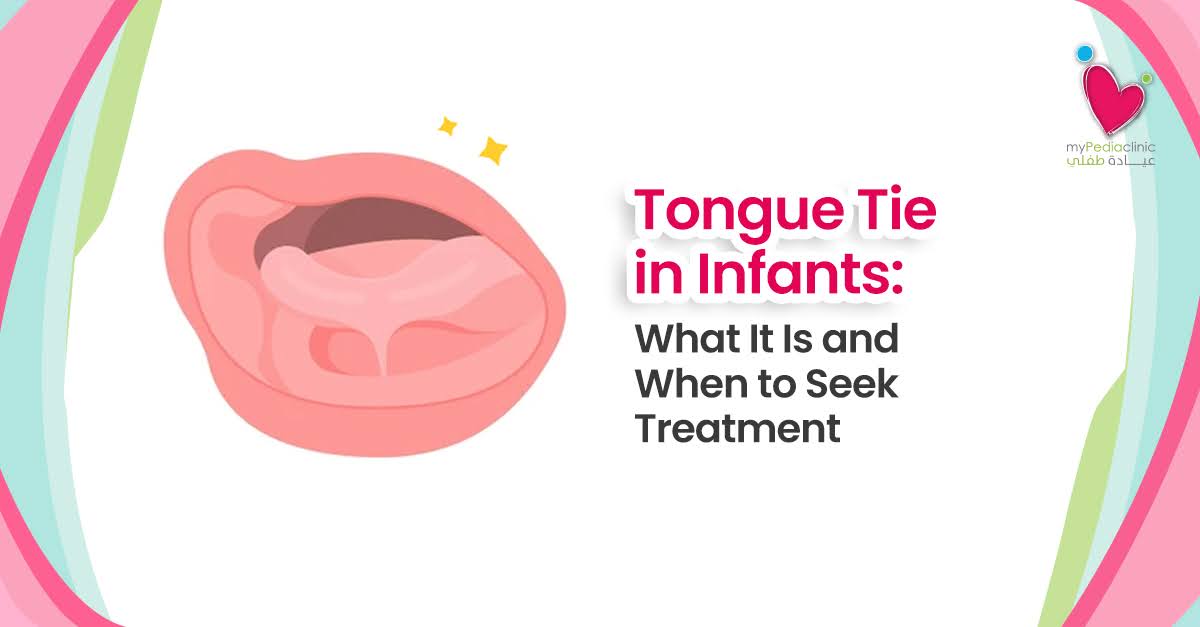
What is Tongue Tie in Infants?
Tongue tie, medically known as ankyloglossia, is a common oral condition affecting approximately 4-11% of newborns. It occurs when the lingual frenulum (the thin tissue connecting the tongue to the floor of the mouth) is abnormally short, tight, or thick, restricting the tongue’s natural movement.
This condition can significantly impact your baby’s ability to breastfeed, and if left untreated, may affect speech development and oral health as they grow. At myPediaClinic Dubai, our experienced pediatric dentists and pediatricians work collaboratively to diagnose and treat tongue tie early, ensuring your infant receives the comprehensive care they need.
How Does Tongue Tie Develop?
The lingual frenulum forms during fetal development in the womb. Normally, this tissue thins out before birth, allowing the tongue to move freely. However, in infants with tongue tie, the frenulum remains thick, short, or doesn’t separate properly from the tongue tip.
While the exact cause isn’t fully understood, research suggests genetic factors may play a role, as tongue tie tends to run in families. According to the American Academy of Pediatrics (AAP), boys are three times more likely to have tongue tie than girls.
Recognizing the Signs: Symptoms of Tongue Tie in Infants
Feeding Difficulties
The most immediate concern for parents in Dubai is breastfeeding challenges. Babies with tongue tie cannot extend their tongue over the lower gum, making it difficult to latch properly. You may notice:
- Poor latch causing your baby to slip off the breast repeatedly
- Extended feeding sessions (over 45 minutes) with frequent breaks
- Clicking or smacking sounds during feeding
- Inadequate weight gain or failure to thrive
- Excessive gassiness due to swallowing air
- Your baby appearing frustrated or falling asleep while feeding
Maternal Symptoms
Mothers often experience:
- Severe nipple pain, soreness, or cracking
- Bleeding or damaged nipples
- Incomplete breast drainage leading to mastitis
- Low milk supply due to ineffective feeding
- Frustration and anxiety about breastfeeding
Physical Indicators
When examining your baby’s mouth, you may observe:
- Heart-shaped tongue tip when extended
- Inability to stick tongue out past the lower lip
- Difficulty lifting tongue to the roof of the mouth
- Limited side-to-side tongue movement
- Tongue appearing anchored to the floor of the mouth
When Should You Seek Treatment in Dubai?
If you’re experiencing any of the following situations, schedule a consultation with a pediatric dentist in Dubai immediately:
- Immediate concerns: Your newborn cannot latch properly or you experience severe breastfeeding pain
- Growth issues: Your baby isn’t gaining weight according to WHO growth charts (approximately 5-7 ounces per week in the first few months)
- Feeding problems persist: Despite working with a lactation consultant, feeding difficulties continue
- Mother’s health at risk: You develop recurrent mastitis or blocked milk ducts
Early intervention is crucial. The AAP recommends evaluating tongue tie within the first few days of life if breastfeeding difficulties arise. At myPediaClinic Dubai, our specialists provide same-day assessments for urgent cases.
Diagnosis: What to Expect at Your Dubai Pediatric Clinic
A comprehensive tongue tie assessment at myPediaClinic includes:
Physical Examination
Our pediatric dentist will gently examine your baby’s mouth, checking:
- Frenulum appearance, thickness, and attachment point
- Tongue mobility and range of motion
- Palate shape and oral structures
- Signs of compensation (lip tie or buccal ties)
Functional Assessment
We observe your baby during feeding to evaluate:
- Latch quality and sustainability
- Sucking pattern and efficiency
- Tongue positioning during feeding
- Coordination of suck-swallow-breathe
Grading Severity
Using standardized assessment tools like the Hazelbaker Assessment Tool for Lingual Frenulum Function (HATLFF), we classify tongue tie from mild to severe to determine the most appropriate treatment approach.
Treatment Options: Frenectomy Procedure in Dubai
When is Surgery Necessary?
Not all tongue ties require immediate intervention. Treatment is recommended when:
- Breastfeeding is significantly impaired
- The baby isn’t gaining adequate weight
- The mother experiences persistent pain and trauma
- There’s a high risk of long-term speech or dental complications
The Frenectomy Procedure
At myPediaClinic Dubai, we perform laser frenectomy using advanced radiofrequency technology. This minimally invasive procedure offers several advantages:
- Quick procedure: Typically completed in 2-5 minutes
- Minimal discomfort: The frenulum has few nerve endings; most babies cry briefly then calm quickly
- Reduced bleeding: Laser technology cauterizes tissue, minimizing blood loss
- Immediate improvement: Many mothers notice better latching within the first feed
- Low infection risk: Laser sterilizes as it cuts
- No sutures required: The wound heals naturally
Procedure Steps
- Your baby is positioned safely with proper support
- The area is prepared (no anesthesia typically needed for newborns; older infants may receive topical anesthetic)
- The frenulum is gently lifted and released using precise laser technology
- Your baby can feed immediately after the procedure
Post-Procedure Care and Recovery
Immediate Aftercare
Following the frenectomy:
- Feed immediately: Breastfeeding right after helps with healing and comforts your baby
- Pain management: Most babies need no pain medication; if needed, pediatric acetaminophen may be recommended
- Monitor healing: The release site typically heals within 24-48 hours
- Gentle oral hygiene: Keep the area clean but avoid aggressive wiping
Stretching Exercises
To prevent reattachment, your pediatric dentist will demonstrate simple exercises to perform 4-6 times daily for 2-3 weeks:
- Gently lift the tongue to stretch the release site
- Perform exercises for 3-5 seconds, 4-6 times per day
- These exercises are brief and well-tolerated by most infants
Expected Outcomes
According to medical literature, 85-90% of families report significant improvement in feeding within 48 hours. Benefits include:
- Improved latch depth and sustainability
- Reduced feeding time (typically 15-30 minutes per feed)
- Elimination or significant reduction in maternal pain
- Better weight gain trajectory
- Reduced frustration for both mother and baby
Long-Term Implications of Untreated Tongue Tie
While some mild cases resolve without intervention, untreated moderate to severe tongue tie can lead to:
Speech Development Issues
- Difficulty pronouncing sounds requiring tongue elevation (L, R, T, D, N, TH, SH, Z)
- Articulation problems requiring speech therapy
- Reduced speech clarity affecting social interactions
Dental and Orthodontic Complications
- Increased gap between lower front teeth
- Altered jaw development
- Higher risk of decay due to difficulty with oral hygiene
- Potential need for orthodontic treatment
Feeding and Digestive Issues
- Difficulty transitioning to solid foods
- Messy eating and food spillage
- Challenges with licking ice cream or lollipops
Social and Psychological Impact
- Self-consciousness about speech differences
- Difficulty with social activities like kissing or playing wind instruments
- Potential bullying or teasing in school years
Why Choose myPediaClinic Dubai for Tongue Tie Treatment?
At myPediaClinic Dubai, we offer comprehensive, family-centered care for tongue tie:
- Multidisciplinary approach: Our pediatricians and pediatric dentists collaborate to ensure complete care
- Advanced technology: We use state-of-the-art radiofrequency laser for precise, comfortable treatment
- Experienced specialists: Our team has performed hundreds of successful frenectomies
- Lactation support: We work closely with certified lactation consultants to optimize feeding outcomes
- Convenient location: Centrally located in Dubai with flexible appointment scheduling
- Follow-up care: Comprehensive post-procedure support to ensure optimal healing
- Parent education: We empower parents with knowledge and skills for home care
Preparing for Your Consultation
To make the most of your appointment at myPediaClinic Dubai:
- Track feeding patterns for 2-3 days (duration, frequency, signs of difficulty)
- Document your baby’s weight gain trajectory
- Note any maternal symptoms (pain location, severity, timing)
- Bring your baby hungry so we can observe feeding if needed
- Prepare questions about the procedure, recovery, and expected outcomes
- Bring your partner or support person for emotional support
Frequently Asked Questions About Tongue Tie
At what age should tongue tie be treated?
Answer: Tongue tie can be treated at any age, but earlier is generally better. The ideal time is within the first few weeks of life if breastfeeding difficulties are present. The American Academy of Pediatrics recommends evaluation within the first week if feeding problems arise. However, successful frenectomies can be performed on older infants, toddlers, and even adults. Early treatment prevents the development of compensatory feeding patterns and potential speech issues.
Is the frenectomy procedure painful for my baby?
Answer: The lingual frenulum has very few nerve endings, so pain is minimal. Most babies cry briefly during the procedure due to being restrained rather than pain. Newborns typically require no anesthesia, though older infants may receive topical numbing gel. Babies usually calm immediately when returned to their mother and can breastfeed right away. Post-procedure discomfort is generally mild and short-lived, rarely requiring pain medication.
How quickly will breastfeeding improve after tongue tie release?
Answer: Many mothers notice immediate improvement in latch quality after the procedure. However, complete improvement typically occurs over 2-4 weeks as both baby and mother adjust to new feeding patterns. Studies show that 85-90% of families report significant improvement within 48 hours. Some babies who developed compensatory feeding habits may need 1-2 weeks to unlearn old patterns. Working with a lactation consultant after the procedure can accelerate improvement.
Can tongue tie reattach after frenectomy?
Answer: Reattachment is possible but uncommon when proper aftercare exercises are performed. The reattachment rate is approximately 3-5% when parents diligently perform the recommended tongue stretches 4-6 times daily for 2-3 weeks post-procedure. These brief exercises (lasting just 3-5 seconds each) prevent the wound edges from fusing back together. Your pediatric dentist at myPediaClinic will demonstrate proper technique and provide written instructions.
Will my child need speech therapy even after tongue tie treatment?
Answer: If treated early (in infancy), most children do not require speech therapy. The tongue gains full mobility and speech develops normally. However, children treated later (after age 3-4) may have developed compensatory speech patterns and could benefit from speech therapy to retrain proper tongue placement. The CDC notes that early intervention for tongue tie significantly reduces the likelihood of speech delays. If speech concerns arise, myPediaClinic can coordinate with pediatric speech therapists in Dubai for comprehensive care.
Take Action: Schedule Your Tongue Tie Assessment Today
If you suspect your infant has tongue tie or are experiencing breastfeeding difficulties, don’t wait. Early diagnosis and treatment can prevent weeks of struggle and set the foundation for healthy feeding and development.
Contact myPediaClinic Dubai today to schedule a comprehensive tongue tie assessment. Our caring team of pediatricians and pediatric dentists is here to support you and your baby every step of the way. We offer same-day appointments for urgent cases and work with your schedule to provide convenient care.
Remember, you don’t have to struggle alone. Tongue tie is a treatable condition, and with expert care, your baby can thrive. Let our experienced team at myPediaClinic help your family achieve successful, pain-free feeding and ensure your child’s healthy development.
Tongue-Tie & Lip-Tie: Related Guides
- 5 signs your baby has a tongue-tie — and how it’s treated
- 6 symptoms of tongue-tie in children
- Does tongue-tie hurt your baby?
- How tongue-tie affects speech in children
- Lip-tie and breastfeeding: how early diagnosis helps
- Is tongue-tie surgery the right choice for your baby?
- Before, during & after tongue-tie surgery: what to expect
Concerned about tongue-tie or lip-tie? Book a tongue-tie assessment at myPediaclinic in Dubai.