

Measles – Dr. Medhat Abu Shaaban Pediatrician in Dubai
Measles remains one of the most contagious infectious diseases known to medicine, and despite the availability of a safe and effective vaccine, it continues to affect millions of people worldwide and claim thousands of lives each year. At myPediaClinic in Dubai, Dr. Medhat Abu Shaaban is committed to educating families about this serious disease and the critical importance of vaccination in protecting children. While measles was once considered a common childhood illness that everyone experienced, we now understand that it can cause severe complications, including brain inflammation, pneumonia, and death. The good news is that measles is almost entirely preventable through vaccination. This comprehensive guide will help parents understand what measles is, how it spreads, what symptoms to watch for, the potential complications, and most importantly, how to protect their children through timely immunization.
Understanding Measles: What Is It?
Measles, also known as rubeola, is a highly contagious viral disease that primarily affects children but can occur at any age. At myPediaClinic, Dr. Medhat Abu Shaaban helps families understand this disease so they can recognize its symptoms and take appropriate preventive measures.
The Measles Virus
Measles is caused by the measles virus, a member of the paramyxovirus family. This virus is remarkably contagious, spreading primarily through respiratory droplets when an infected person coughs or sneezes. The virus can remain active and contagious on surfaces and in the air for up to two hours, making transmission incredibly easy in environments where people gather.
The measles virus is so contagious that if one person has it, up to 90 percent of the people close to that person who are not immune will also become infected. This makes measles one of the most transmissible diseases known, far more contagious than influenza, COVID-19, or Ebola. This extreme contagiousness is why maintaining high vaccination rates in the community is so crucial for preventing outbreaks.
Once the measles virus enters the body, typically through the respiratory tract or eyes, it multiplies in the cells lining the throat and lungs. From there, it spreads through the bloodstream to other parts of the body, causing the characteristic symptoms and potentially affecting multiple organ systems.
Historical Context
Before the introduction of the measles vaccine in 1963, measles was considered an inevitable part of childhood. Virtually everyone contracted the disease, with epidemics occurring every two to three years. In the United States alone, approximately three to four million people got measles each year, with 400 to 500 deaths, 48,000 hospitalizations, and 1,000 cases of encephalitis (brain swelling).
The introduction of widespread vaccination dramatically changed this picture. In countries with high vaccination rates, measles has become rare. However, in regions with lower vaccination coverage or in communities where vaccine hesitancy exists, measles continues to cause significant morbidity and mortality. Even in areas where measles was declared eliminated, outbreaks can occur when the virus is introduced to susceptible populations.
Global Situation
Despite the availability of a safe, effective, and affordable vaccine, measles remains a significant global health concern. The World Health Organization reports that measles caused an estimated 128,000 deaths worldwide in 2021, mostly among unvaccinated or under-vaccinated children under the age of five.
At myPediaClinic, Dr. Medhat Abu Shaaban emphasizes that vaccination is particularly important in Dubai and the UAE, where the diverse population includes travelers from around the world and new residents from countries with varying vaccination rates. This international mobility means that measles cases can be imported, making it essential for all eligible individuals to be vaccinated.
How Measles Spreads
Understanding how measles spreads is essential for prevention. Dr. Medhat Abu Shaaban at myPediaClinic educates families about transmission routes to help them protect their children.
Airborne Transmission
Measles spreads primarily through the air via respiratory droplets produced when an infected person coughs, sneezes, or even breathes. These tiny droplets can travel considerable distances and remain suspended in the air for extended periods. When a susceptible person inhales these droplets, they can become infected.
The virus can also linger in the air after an infected person has left a room. This means that a susceptible person can contract measles simply by being in a room where an infected person was present up to two hours earlier. This characteristic makes measles particularly difficult to contain and underscores the importance of vaccination as the primary prevention strategy.
Direct Contact
Direct contact with nasal or throat secretions from an infected person can also transmit measles. This can occur through sharing utensils, cups, or other items contaminated with respiratory secretions. Children, who often share items and have close physical contact during play, are particularly vulnerable to this mode of transmission.
Additionally, the measles virus can survive on surfaces for several hours. Touching a contaminated surface and then touching the nose, mouth, or eyes can lead to infection. Good hygiene practices, including regular handwashing and avoiding touching the face, can help reduce but not eliminate this risk.
Contagious Period
People with measles are contagious from approximately four days before the rash appears until about four days after. This is particularly problematic because infected individuals can spread the virus before they even know they are sick. During this pre-rash period, they may continue normal activities, unknowingly exposing others to the virus.
At myPediaClinic, Dr. Medhat Abu Shaaban advises that if you or your child have been exposed to someone with measles, you should contact the clinic immediately for guidance, even if no symptoms have appeared yet.
Symptoms and Signs of Measles
Recognizing the symptoms of measles is crucial for early diagnosis and appropriate care. Dr. Medhat Abu Shaaban at myPediaClinic helps parents understand the progression of this disease.
Incubation Period
After exposure to the virus, there is an incubation period of approximately 10 to 14 days before symptoms appear. During this time, the infected person shows no signs of illness but the virus is multiplying within the body. This silent period contributes to the spread of measles, as people may unknowingly expose others during this time.
Prodromal Stage
The first symptoms of measles typically begin with what is called the prodromal stage, lasting two to four days. These initial symptoms often resemble a severe cold or flu and include high fever that may reach 104 to 105 degrees Fahrenheit (40 to 40.6 degrees Celsius), cough that is typically dry and harsh, runny nose with clear nasal discharge, red and watery eyes (conjunctivitis) with sensitivity to light, and general malaise and fatigue.
During this stage, a distinctive sign called Koplik spots may appear inside the mouth. These are tiny white spots with bluish-white centers on a red background, found on the inside of the cheeks near the molars. Koplik spots are considered diagnostic of measles and typically appear one to two days before the rash. However, they may be easily missed and disappear once the rash appears.
The Measles Rash
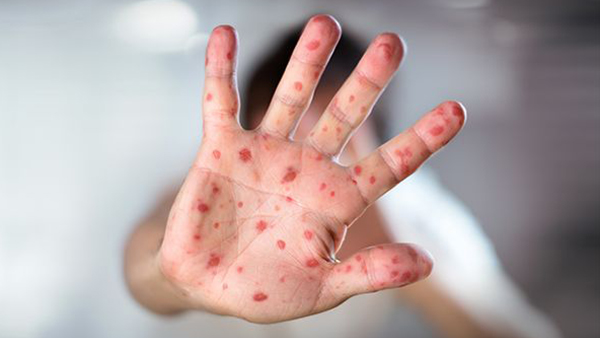
The characteristic measles rash typically appears three to five days after symptoms begin. It starts on the face, particularly around the hairline and behind the ears, then spreads downward to the neck, trunk, arms, legs, and feet over the next few days. As the rash spreads, the fever often spikes, sometimes reaching dangerous levels.
The rash consists of flat, red spots that may merge together as they spread. It is not typically itchy. The rash usually lasts five to six days and fades in the same order it appeared, starting from the face. As it fades, it may leave a brownish discoloration that eventually clears.
Recovery Period
Most children with uncomplicated measles begin to feel better once the rash starts to fade. The fever typically breaks around day four or five of the rash, and energy levels gradually return. Complete recovery usually takes about two weeks, though a cough may persist for up to two weeks after other symptoms resolve.
At myPediaClinic, Dr. Medhat Abu Shaaban monitors children with measles closely for signs of complications, which can occur even as the initial symptoms are resolving.
Complications of Measles
While many children recover from measles without lasting effects, the disease can cause serious, even life-threatening complications. Dr. Medhat Abu Shaaban at myPediaClinic emphasizes that these complications are why vaccination is so important.
Common Complications
Ear infections are one of the most common complications of measles, occurring in about one in ten children with the disease. These infections can lead to hearing loss if not properly treated. Middle ear infection (otitis media) occurs when the virus or secondary bacterial infection affects the ear.
Diarrhea occurs in about eight percent of measles cases and can be severe enough to cause dehydration, particularly in young children. Maintaining adequate fluid intake during measles illness is essential to prevent this complication.
Pneumonia
Pneumonia, or infection of the lungs, is the most common cause of death from measles. It occurs in about one in twenty children with measles and can be caused directly by the measles virus or by secondary bacterial infection. Symptoms of pneumonia include worsening cough, rapid or difficult breathing, chest pain, and persistent or returning fever after initial improvement.
Children under five years of age and adults over twenty are at highest risk for pneumonia and other serious complications from measles. At myPediaClinic, Dr. Medhat Abu Shaaban carefully monitors children with measles for signs of respiratory complications.
Encephalitis
Encephalitis, or inflammation of the brain, is one of the most feared complications of measles. It occurs in approximately one in every 1,000 measles cases and can lead to permanent brain damage, hearing loss, or intellectual disability. About 10 to 15 percent of people who develop measles encephalitis die from this complication.
Symptoms of encephalitis include severe headache, fever, vomiting, stiff neck, seizures, altered consciousness, and behavioral changes. If any of these symptoms occur in a child with measles, immediate medical attention is essential.
Subacute Sclerosing Panencephalitis (SSPE)
SSPE is a rare but fatal complication of measles that typically develops seven to ten years after a person has had measles. It is a progressive neurological disorder caused by persistent measles virus infection in the brain. SSPE causes progressive deterioration of cognitive and motor functions, personality changes, seizures, and eventually leads to coma and death.
Children who contract measles before age two are at highest risk for SSPE. There is no cure for this devastating condition, making prevention through vaccination critically important.
Complications During Pregnancy
Measles during pregnancy can have serious consequences for both the mother and the developing baby. Pregnant women with measles are at increased risk for pneumonia, premature delivery, and miscarriage. There is also a risk of low birth weight and other complications in infants born to mothers who had measles during pregnancy.
Women who are planning to become pregnant should ensure they are immune to measles before conception. The MMR vaccine cannot be given during pregnancy, so verification of immunity or vaccination should occur before pregnancy.
Immunocompromised Individuals
People with weakened immune systems, whether from conditions like HIV/AIDS, cancer treatment, or immunosuppressive medications, are at particularly high risk for severe measles and its complications. In these individuals, measles can progress rapidly and be fatal. Additionally, some immunocompromised individuals cannot receive the live measles vaccine, making them dependent on herd immunity for protection.
Prevention Through Vaccination
The most effective way to prevent measles is through vaccination. At myPediaClinic, Dr. Medhat Abu Shaaban strongly advocates for timely vaccination according to the recommended schedule.
The MMR Vaccine
The measles vaccine is typically given as part of the MMR (measles, mumps, rubella) vaccine or the MMRV vaccine, which also includes protection against varicella (chickenpox). This combination vaccine is highly effective at preventing all included diseases with a single shot.
The MMR vaccine contains weakened (attenuated) live viruses that cannot cause disease in healthy individuals but stimulate the immune system to produce antibodies. These antibodies provide long-lasting protection against infection. The vaccine has been used safely and effectively for over 50 years and has prevented millions of deaths worldwide.
Vaccination Schedule
The standard vaccination schedule recommends two doses of MMR vaccine. The first dose is typically given at 12 to 15 months of age, when maternal antibodies have waned enough to allow an effective immune response. The second dose is given at 4 to 6 years of age, before school entry, to ensure full protection.
One dose of MMR vaccine is approximately 93 percent effective at preventing measles. Two doses are approximately 97 percent effective. The small percentage of vaccinated individuals who may still contract measles typically have milder illness with fewer complications.
At myPediaClinic, Dr. Medhat Abu Shaaban follows the UAE immunization schedule and ensures that children receive their vaccines at the appropriate times for optimal protection.
Catch-Up Vaccination
Children who have not been vaccinated on schedule can receive catch-up vaccination at any time. Dr. Medhat Abu Shaaban can assess your child’s vaccination status and develop an appropriate catch-up schedule if needed. It’s never too late to get vaccinated against measles.
Adults who are unsure of their vaccination status or immune status can also be vaccinated. Those born before 1957 are generally considered immune due to widespread natural infection, but younger adults who have not been vaccinated or had measles should receive at least one dose of MMR.
Travel Considerations
International travel can increase the risk of measles exposure, especially in countries where the disease is more common. Before traveling, families should ensure all members are up to date on measles vaccination. Infants as young as 6 months can receive an early dose of MMR before international travel, though they will still need the standard two doses after their first birthday.
At myPediaClinic, Dr. Medhat Abu Shaaban can provide guidance on vaccination recommendations for specific travel destinations and help ensure your family is protected before departure.
The Importance of the MMR Vaccine
The MMR vaccine is one of the most important and successful public health interventions in history. Dr. Medhat Abu Shaaban at myPediaClinic emphasizes its critical role in protecting children and communities.
Vaccine Safety
The MMR vaccine has an excellent safety record supported by decades of research and billions of doses administered worldwide. Like all vaccines, it can cause mild side effects in some people, including soreness at the injection site, fever, and mild rash. These effects are typically short-lived and much less severe than the diseases the vaccine prevents.
Extensive scientific studies have confirmed that the MMR vaccine does not cause autism. This myth originated from a now-retracted 1998 study whose lead author lost his medical license due to ethical violations and scientific fraud. Numerous large-scale studies involving millions of children have found no link between MMR vaccination and autism.
Herd Immunity
Herd immunity occurs when a large enough proportion of the population is immune to a disease that its spread becomes unlikely, thereby protecting those who cannot be vaccinated. For measles, approximately 95 percent of the population needs to be immune to prevent sustained transmission.
Herd immunity is crucial for protecting vulnerable individuals who cannot be vaccinated, including infants too young for vaccination, people with certain medical conditions, and those with compromised immune systems. By vaccinating eligible children, families help protect not only their own children but also their most vulnerable community members.
Consequences of Declining Vaccination Rates
When vaccination rates decline, measles can return with devastating consequences. In recent years, outbreaks have occurred in various parts of the world, including regions that had previously eliminated the disease. These outbreaks serve as a stark reminder that measles remains a threat and that high vaccination coverage must be maintained.
Every unvaccinated individual represents a potential link in the chain of transmission. By ensuring your child is vaccinated, you help break this chain and protect your community. At myPediaClinic, Dr. Medhat Abu Shaaban works with families to address any concerns about vaccination and help them make informed decisions about their children’s health.
Treatment of Measles
While there is no specific antiviral treatment for measles, supportive care can help manage symptoms and prevent complications. Dr. Medhat Abu Shaaban at myPediaClinic provides guidance on caring for children with measles.
Supportive Care at Home
Most children with uncomplicated measles can be cared for at home with supportive measures. These include rest to allow the body to fight the infection, plenty of fluids to prevent dehydration (especially important if fever or diarrhea is present), fever reducers such as acetaminophen or ibuprofen (following appropriate dosing for the child’s age and weight), dimmed lights if the child is sensitive to light, and humidified air to ease cough and breathing.
Children with measles should be isolated to prevent spreading the infection to others. They should stay home from school, childcare, and public places until at least four days after the rash appears.
Vitamin A Supplementation
The World Health Organization recommends vitamin A supplementation for all children with measles. Vitamin A deficiency is associated with more severe measles and increased risk of complications and death. Studies have shown that vitamin A supplementation can reduce the severity of measles and decrease mortality, even in children who are not deficient.
Dr. Medhat Abu Shaaban may recommend vitamin A supplementation for children with measles, particularly those under age five or those with vitamin A deficiency.
When to Seek Medical Attention
While many cases of measles resolve on their own with supportive care, some situations require immediate medical attention. Contact myPediaClinic or seek emergency care if your child experiences difficulty breathing or rapid breathing, persistent high fever despite treatment, severe headache, stiff neck, seizures, changes in consciousness or behavior, severe ear pain, persistent vomiting or diarrhea leading to dehydration, or signs of dehydration (such as dry mouth, no tears when crying, or reduced urination).
Dr. Medhat Abu Shaaban emphasizes that prompt medical attention for complications can be life-saving. Parents should not hesitate to seek care if they are concerned about their child’s condition.
Hospital Treatment
Children with severe measles or complications may require hospitalization. Hospital treatment might include intravenous fluids for dehydration, antibiotics for secondary bacterial infections such as pneumonia, respiratory support for severe pneumonia, and management of encephalitis or other serious complications.
Outbreak Prevention and Control
Preventing measles outbreaks requires vigilance at both individual and community levels. At myPediaClinic, Dr. Medhat Abu Shaaban participates in efforts to maintain high vaccination coverage and responds appropriately when measles cases occur.
Maintaining High Vaccination Coverage
The most effective way to prevent outbreaks is to maintain high vaccination coverage in the community. When at least 95 percent of the population is immune to measles, the disease cannot spread easily, protecting even those who are not immune. This is why vaccination is considered not just a personal health decision but a community responsibility.
Families can contribute to outbreak prevention by ensuring all eligible family members are vaccinated, keeping vaccination records up to date, staying informed about local vaccination requirements, and encouraging others in their community to vaccinate.
Post-Exposure Prophylaxis
If an unvaccinated person is exposed to measles, there are measures that may prevent or reduce the severity of the disease. The MMR vaccine given within 72 hours of exposure may provide protection. Immune globulin (IG) given within six days of exposure can also provide temporary protection, though it does not provide long-lasting immunity.
If your child has been exposed to someone with measles, contact myPediaClinic immediately. Dr. Medhat Abu Shaaban can assess the situation and recommend appropriate measures based on your child’s vaccination status and health condition.
Isolation and Quarantine
When measles cases occur, isolation of infected individuals and quarantine of exposed susceptible individuals help prevent further spread. Infected individuals should remain isolated until at least four days after the rash appears. Exposed individuals who are not immune may need to be quarantined for 21 days (the maximum incubation period) to ensure they do not develop the disease and spread it to others.
Addressing Vaccine Concerns
Some parents have questions or concerns about the MMR vaccine. Dr. Medhat Abu Shaaban at myPediaClinic welcomes these discussions and provides evidence-based information to help families make informed decisions.
Common Questions and Misconceptions
Many concerns about the MMR vaccine are based on misconceptions or outdated information. Dr. Medhat Abu Shaaban addresses these concerns with scientific evidence and patience, understanding that parents want to make the best decisions for their children.
Some parents worry that giving multiple vaccines at once overwhelms the immune system. In reality, children’s immune systems are capable of handling thousands of antigens daily, and the antigens in vaccines represent only a tiny fraction of what children encounter in their environment. Studies have shown that combination vaccines like MMR are safe and effective.
Others may be concerned about vaccine ingredients. The MMR vaccine contains only small amounts of preservatives and stabilizers that have been thoroughly tested for safety. The benefits of vaccination far outweigh any theoretical risks from these trace ingredients.
The Risk-Benefit Analysis
When considering vaccination, it’s important to weigh the risks of the vaccine against the risks of the disease. The MMR vaccine has a very small risk of serious side effects, while measles carries significant risks of serious complications and death.
For every million doses of MMR vaccine given, fewer than 10 serious allergic reactions occur, and these are treatable. In contrast, for every million unvaccinated individuals who contract measles, approximately 1,000 will develop encephalitis, and 1 to 3 will die. The math clearly favors vaccination.
Open Communication
At myPediaClinic, Dr. Medhat Abu Shaaban maintains open communication with families about vaccination. He encourages parents to ask questions, voice concerns, and discuss their values and priorities. Through this dialogue, families can make informed decisions that protect their children’s health.
Frequently Asked Questions About Measles
How contagious is measles?
Measles is one of the most contagious diseases known. If one person has measles, up to 90 percent of nearby unvaccinated people will become infected. The virus spreads through the air and can remain infectious in a room for up to two hours after an infected person leaves. This extreme contagiousness is why high vaccination rates are essential for preventing outbreaks.
What are the first signs of measles?
The first symptoms of measles typically include high fever (often reaching 104-105 degrees Fahrenheit), cough, runny nose, and red, watery eyes. These symptoms usually appear about 10-14 days after exposure. Small white spots called Koplik spots may appear inside the mouth 1-2 days before the characteristic red rash develops. If you notice these symptoms, contact myPediaClinic immediately.
How serious is measles?
Measles can be very serious, especially for young children. Complications include ear infections, pneumonia (the most common cause of measles death), and encephalitis (brain inflammation) which can cause permanent brain damage. Approximately 1-2 of every 1,000 children who get measles will die from complications. This is why Dr. Medhat Abu Shaaban at myPediaClinic strongly recommends vaccination.
At what age should my child get the MMR vaccine?
The standard schedule recommends the first dose of MMR vaccine at 12-15 months of age and the second dose at 4-6 years of age. However, if traveling internationally, infants as young as 6 months can receive an early dose. Dr. Medhat Abu Shaaban at myPediaClinic follows the UAE immunization schedule and can advise on the appropriate timing for your child.
Is the MMR vaccine safe?
Yes, the MMR vaccine has been used safely for over 50 years and has an excellent safety record supported by extensive research. Common side effects are mild and may include soreness at the injection site, fever, and mild rash. Serious side effects are very rare. Extensive scientific studies have confirmed that the MMR vaccine does not cause autism. Dr. Medhat Abu Shaaban at myPediaClinic can address any specific concerns you may have.
Can measles be treated?
There is no specific antiviral treatment for measles. Treatment focuses on supportive care including rest, fluids, fever reducers, and vitamin A supplementation. Complications like pneumonia may require antibiotics or hospitalization. Because treatment options are limited, prevention through vaccination is the best approach. If your child has measles symptoms, contact myPediaClinic for guidance.
How long is someone with measles contagious?
A person with measles is contagious from about four days before the rash appears until about four days after. This means people can spread the virus before they know they are sick. Children with measles should stay home from school and public places until at least four days after the rash appears to prevent spreading the infection to others.
What should I do if my child is exposed to measles?
If your child has been exposed to someone with measles, contact myPediaClinic immediately. Dr. Medhat Abu Shaaban will assess your child’s vaccination status and health condition. If unvaccinated, the MMR vaccine given within 72 hours of exposure may prevent infection. Immune globulin may be an option for certain high-risk individuals. Early intervention is important, so don’t delay seeking advice.
Protect Your Child at myPediaClinic
Measles is a serious but preventable disease. The MMR vaccine provides safe, effective protection against this highly contagious illness and its potentially devastating complications. At myPediaClinic in Dubai, Dr. Medhat Abu Shaaban is committed to helping families protect their children through timely vaccination and comprehensive pediatric care.
By choosing to vaccinate your child, you are not only protecting them but also contributing to the health of your community. High vaccination rates prevent outbreaks and protect those who cannot be vaccinated, including young infants and immunocompromised individuals. Vaccination is both a personal choice for your family’s health and a gift to your community.
If you have questions about measles, the MMR vaccine, or your child’s vaccination status, we encourage you to reach out to myPediaClinic. Dr. Medhat Abu Shaaban welcomes the opportunity to discuss these important topics and help you make informed decisions about your child’s health.
Don’t wait until there’s an outbreak to think about vaccination. Ensure your child is protected today. If your child is due for their MMR vaccine, has missed doses, or if you’re unsure of their vaccination status, now is the time to act.
Contact myPediaClinic today to schedule an appointment with Dr. Medhat Abu Shaaban. Together, we can keep your child healthy and help eliminate measles from our community. Your child’s health is our top priority.