
Vision Screening at myPediaClinic: Advanced Technology for Your Child’s Eye Health in Dubai
Your child’s vision is fundamental to their learning, development, and daily experiences. At myPediaClinic in Dubai, we utilize cutting-edge vision screening technology that enables simultaneous measurement of both eyes, providing instant and accurate results. Our advanced approach to pediatric vision screening ensures that potential eye problems are detected early, giving your child the best possible chance for healthy vision development and academic success.
Vision problems in children are more common than many parents realize, affecting approximately one in four school-age children. What makes these statistics particularly concerning is that many vision problems go undetected because children often cannot recognize that their vision is impaired. They assume that everyone sees the world the way they do. This is why comprehensive vision screening at a trusted pediatric healthcare facility like myPediaClinic is essential for every child.
Unlike traditional vision tests that rely on children’s ability to identify letters or shapes, our advanced screening technology can assess eye health even in infants and toddlers who cannot yet communicate. This capability allows us to identify potential problems at the earliest possible stage, when intervention is most effective.
Understanding the Importance of Pediatric Vision Screening
Vision screening is a critical component of comprehensive pediatric healthcare that should begin in infancy and continue throughout childhood. The eyes and visual system undergo significant development during the first years of life, and this period represents a crucial window during which vision problems can be most effectively addressed.
The importance of early vision screening cannot be overstated. The visual system develops rapidly from birth through approximately age eight, with the most critical development occurring in the first few years of life. During this time, the brain learns to interpret signals from the eyes and develops the neural pathways necessary for clear, coordinated vision. If problems exist during this developmental window, they can often be corrected relatively easily. However, if left undetected and untreated, these same problems may become permanent.
Why Early Detection Matters
Many serious eye conditions can be treated successfully if caught early, but may cause permanent vision impairment if detection is delayed. Conditions such as amblyopia (lazy eye), which affects approximately 2-3% of children, respond extremely well to early treatment but become increasingly difficult to correct as children age. By the time a child reaches age seven or eight, the window for effective treatment of amblyopia begins to close.
Similarly, conditions like strabismus (misaligned eyes), significant refractive errors, and certain eye diseases are most effectively treated when identified early. The advanced vision screening technology at myPediaClinic enables us to detect these conditions at the earliest possible stage, maximizing the effectiveness of any necessary interventions.
Advanced Vision Screening Technology at myPediaClinic
At myPediaClinic, we have invested in state-of-the-art vision screening equipment that represents the latest advancement in pediatric eye care technology. Our screening devices utilize innovative optical technology to provide comprehensive assessment of both eyes simultaneously, delivering instant results that our pediatric specialists can interpret immediately.
Key Features of Our Vision Screening Technology
- Simultaneous Binocular Screening: Both eyes are assessed at the same time, providing a complete picture of visual function
- Non-invasive Procedure: No eye drops, no contact with the eye, and no discomfort for your child
- Instant Results: Results are available immediately, allowing for same-visit consultation
- Suitable for All Ages: Can screen infants as young as six months through adolescence
- Comprehensive Assessment: Screens for multiple conditions including refractive errors, strabismus, and media opacities
- Child-Friendly Design: Quick and engaging process that keeps children comfortable and cooperative
How Our Vision Screening Works
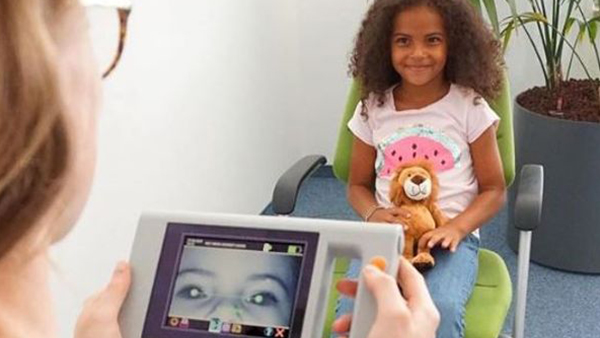
Our advanced vision screening equipment uses sophisticated optical technology to capture detailed information about your child’s eyes in just seconds. The process is remarkably simple from your child’s perspective, they simply look at the device while it captures the necessary measurements. There is no need for eye drops, no contact with the eye, and no discomfort whatsoever.
The device works by analyzing how light reflects off your child’s retinas. Different patterns of light reflection indicate various eye conditions, allowing the technology to screen for a wide range of potential problems simultaneously. This includes refractive errors such as myopia (nearsightedness), hyperopia (farsightedness), and astigmatism, as well as eye alignment issues and other conditions that could affect visual development.
Within seconds of completing the screening, our pediatric specialists have access to detailed results that provide valuable information about your child’s eye health. If the screening indicates any potential concerns, we can discuss next steps with you immediately and, if necessary, provide referrals to pediatric ophthalmologists for comprehensive evaluation.
Conditions Detected Through Vision Screening
Our comprehensive vision screening at myPediaClinic is designed to detect a wide range of conditions that can affect your child’s visual development and overall quality of life. Understanding these conditions can help parents appreciate the importance of regular vision screening.
Refractive Errors
Refractive errors are the most common vision problems in children and occur when the shape of the eye prevents light from focusing correctly on the retina. There are three main types of refractive errors that our screening can detect:
Myopia (Nearsightedness): Children with myopia can see nearby objects clearly but have difficulty seeing distant objects. This condition often develops during school age and may worsen as children grow. Early detection allows for appropriate correction with glasses and monitoring for progression.
Hyperopia (Farsightedness): While some degree of hyperopia is normal in young children, significant hyperopia can cause difficulty with near vision and may lead to eye strain, headaches, and problems with reading and other close-up tasks. Moderate to severe hyperopia should be corrected to prevent complications.
Astigmatism: Astigmatism occurs when the cornea or lens has an irregular shape, causing blurred or distorted vision at all distances. Children with significant astigmatism may experience eye strain, headaches, and difficulty with activities requiring clear vision.
Amblyopia (Lazy Eye)
Amblyopia is a condition in which one eye does not develop normal visual acuity, even with corrective lenses. It occurs when the brain favors one eye over the other, typically because one eye provides a clearer image or because the eyes are misaligned. Without treatment, the weaker eye may never develop normal vision.
Early detection of amblyopia is critical because treatment is most effective when started before age seven. Treatment typically involves forcing the weaker eye to work harder, often through patching the stronger eye or using special eye drops. When caught early, most children with amblyopia can achieve normal or near-normal vision.
Strabismus (Misaligned Eyes)
Strabismus is a condition in which the eyes do not align properly and point in different directions. One eye may turn inward, outward, upward, or downward while the other eye focuses normally. This misalignment can be constant or intermittent and may affect one or both eyes.
Beyond cosmetic concerns, strabismus can lead to amblyopia if not treated, as the brain may begin to ignore signals from the misaligned eye. Treatment options include glasses, eye exercises, eye patches, and in some cases, surgery. Our screening technology can detect even subtle forms of strabismus that might otherwise go unnoticed.
Anisometropia
Anisometropia is a condition in which the two eyes have significantly different refractive powers. When one eye sees clearly while the other does not, the brain may begin to favor the eye with better vision, potentially leading to amblyopia in the weaker eye. Early detection through screening allows for appropriate correction and monitoring.
When Should Your Child Have Vision Screening?
The timing of vision screening is important to ensure that potential problems are detected at the optimal stage for treatment. At myPediaClinic, we recommend the following screening schedule based on current pediatric guidelines:
Newborn Period
All newborns should have their eyes examined before leaving the hospital. This initial examination checks for obvious abnormalities and ensures that the eyes appear healthy. Our pediatric team performs this evaluation as part of comprehensive newborn care.
Infancy (6 months)
By six months of age, babies should have another eye evaluation during their well-child visit. At this age, our advanced screening technology can begin to assess for conditions like significant refractive errors and strabismus, even though babies cannot yet participate in traditional vision tests.
Preschool Age (3-4 years)
Comprehensive vision screening becomes particularly important during the preschool years. At this age, children are still within the critical period for visual development, meaning that problems detected now can often be corrected effectively. Additionally, children are developmentally ready for more detailed screening.
School Age
Vision screening should continue throughout the school years, ideally on an annual basis. Vision problems can develop at any age, and conditions like myopia often begin or worsen during the school years. Regular screening ensures that any changes in vision are detected promptly and addressed appropriately.
Signs Your Child May Have a Vision Problem
While regular screening is essential, parents should also be aware of signs that may indicate vision problems between screenings:
- Squinting, closing, or covering one eye
- Holding books or devices very close to the face
- Sitting too close to the television
- Frequent eye rubbing
- Tilting the head to see better
- Complaints of headaches or tired eyes
- Difficulty with reading or schoolwork
- Losing place while reading
- Avoiding activities that require good vision
- One eye appearing to turn in or out
The Vision Screening Experience at myPediaClinic
We understand that medical visits can be stressful for children and parents alike. That is why we have designed our vision screening process to be as comfortable and child-friendly as possible while still providing comprehensive, accurate results.
A Welcoming Environment
From the moment you enter myPediaClinic, you will find a warm, welcoming environment designed specifically for children. Our waiting areas feature child-friendly decorations and activities to help children feel at ease. Our staff are trained to work with children of all ages and temperaments, ensuring that every child feels safe and comfortable throughout their visit.
The Screening Process
The actual vision screening takes only seconds to complete. Your child will be asked to look at the screening device, which may display lights or images to capture their attention. The device captures all necessary measurements in a single, quick scan. There is no need for your child to identify letters, shapes, or pictures, which makes the screening suitable for even very young children or those who may be shy or uncooperative.
Throughout the process, our skilled technicians work to keep your child calm and engaged. For younger children, we may use toys, games, or songs to maintain their attention. For older children, we explain what is happening in age-appropriate terms to help them feel comfortable and involved in their healthcare.
Immediate Results and Consultation
One of the key advantages of our advanced screening technology is the availability of instant results. As soon as the screening is complete, our pediatric specialists can review the findings and discuss them with you. If the screening indicates normal results, you can leave with peace of mind knowing that your child’s vision is developing appropriately.
If the screening suggests potential concerns, our team will explain the findings clearly and discuss recommended next steps. This may include a referral to a pediatric ophthalmologist for comprehensive evaluation, or it may involve scheduling a follow-up screening to monitor a borderline finding. Whatever the outcome, you will leave with a clear understanding of your child’s eye health status and any actions that may be needed.
The Connection Between Vision and Learning
Research consistently demonstrates that vision plays a crucial role in children’s academic success and overall development. It is estimated that approximately 80% of learning in the classroom is visual, making good vision essential for academic achievement.
How Vision Problems Affect Learning
Children with uncorrected vision problems may struggle in school for reasons that are not immediately apparent. They may have difficulty seeing the board, reading textbooks, or completing worksheets. These challenges can lead to frustration, behavioral problems, and declining academic performance.
Importantly, children often do not complain about vision problems because they do not realize their vision is impaired. A child who has always seen blurry letters may assume that this is normal, not understanding that other children see clearly. This is why vision screening is so important, as it can detect problems that children cannot report themselves.
The Impact of Early Intervention
When vision problems are detected and corrected early, children can achieve their full academic potential. Studies have shown that children who receive appropriate vision correction show improvements in reading, mathematics, and overall academic performance. Additionally, correcting vision problems can improve children’s self-esteem and social interactions.
At myPediaClinic, we believe that every child deserves the opportunity to see clearly and succeed academically. Our vision screening program is designed to identify problems early, when intervention is most effective, giving children the best possible start in their educational journey.
Beyond Screening: Comprehensive Eye Care Support
While vision screening is a critical first step in maintaining your child’s eye health, myPediaClinic offers comprehensive support throughout the entire process of caring for your child’s vision.
Coordination with Specialists
If screening indicates that your child needs further evaluation, we facilitate seamless referrals to trusted pediatric ophthalmologists in Dubai. We maintain relationships with leading eye care specialists and can help you navigate the process of obtaining comprehensive care for your child.
Ongoing Monitoring
For children with identified vision concerns or those at risk for developing problems, we provide ongoing monitoring as part of regular well-child visits. This ensures that any changes in your child’s vision are detected promptly and managed appropriately.
Parent Education
We believe that informed parents are empowered parents. Our team provides education about eye health, warning signs of vision problems, and ways to support healthy visual development at home. We are always available to answer questions and address concerns about your child’s eye health.
Frequently Asked Questions About Vision Screening
At what age should my child have their first vision screening?
Children should have their eyes examined at birth and again at six months of age. Comprehensive vision screening is recommended at 3-4 years of age when children are still within the critical period for visual development. At myPediaClinic, our advanced screening technology can assess children as young as six months, allowing for early detection of potential problems.
Is vision screening painful or uncomfortable for children?
No, vision screening at myPediaClinic is completely painless and non-invasive. Our advanced technology requires no eye drops, no contact with the eye, and no discomfort. The screening takes only seconds to complete, and children simply need to look at the device while it captures measurements. Most children find the experience interesting rather than stressful.
What conditions can vision screening detect?
Our comprehensive vision screening can detect a wide range of conditions including refractive errors (myopia, hyperopia, astigmatism), amblyopia risk factors, strabismus (misaligned eyes), anisometropia (significant difference in refractive power between eyes), and media opacities. Early detection of these conditions allows for timely intervention and optimal outcomes.
How often should my child have vision screening?
We recommend vision screening at all well-child visits during infancy and toddlerhood, comprehensive screening at 3-4 years of age, and annual screening throughout the school years. Children with known risk factors or previously identified concerns may need more frequent screening. Your pediatrician at myPediaClinic can recommend an appropriate screening schedule based on your child’s individual needs.
What happens if the screening detects a problem?
If vision screening indicates a potential concern, our team will discuss the findings with you immediately and explain what they mean. Depending on the specific findings, we may recommend a follow-up screening, refer your child to a pediatric ophthalmologist for comprehensive evaluation, or provide guidance on monitoring the situation. We ensure you understand the next steps and help coordinate any additional care needed.
Can vision screening replace a comprehensive eye exam?
Vision screening is an effective tool for identifying children who may have vision problems and need further evaluation, but it is not a substitute for a comprehensive eye exam by an ophthalmologist or optometrist. If screening indicates concerns, or if your child has symptoms of vision problems, a comprehensive eye exam should be performed. Screening serves as an important first step in ensuring your child receives appropriate eye care.
What is the advantage of simultaneous eye measurement?
Simultaneous measurement of both eyes provides several advantages. It allows for direct comparison of both eyes during the same viewing condition, which is important for detecting conditions like anisometropia and strabismus. It also makes the screening faster and more efficient, which is particularly beneficial for young children who may have limited attention spans. The technology captures all necessary data in a single, quick scan.
How do I prepare my child for vision screening?
Little preparation is needed for vision screening at myPediaClinic. You can explain to your child that the doctor wants to check how well their eyes work and that they will look at a camera that takes pictures of their eyes. Reassure them that it does not hurt and only takes a moment. Bringing your child when they are well-rested and comfortable can help ensure cooperation during the quick screening process.
Protecting Your Child’s Vision for a Lifetime
Vision screening at myPediaClinic is more than just a routine test, it is an investment in your child’s future. Clear vision is essential for learning, development, and quality of life. By taking advantage of our advanced screening technology and expert pediatric care, you are giving your child the best possible foundation for visual health.
Our commitment to your child’s eye health extends beyond the screening room. We are partners in your child’s healthcare journey, providing education, support, and coordination of care to ensure optimal outcomes. Whether your child’s screening reveals normal results or identifies areas of concern, you can trust that our team will guide you through every step of the process.
Why Choose myPediaClinic for Vision Screening?
- State-of-the-art screening technology with simultaneous eye measurement
- Instant results for immediate peace of mind or prompt action
- Child-friendly environment designed for comfort and cooperation
- Expert pediatric team trained in working with children of all ages
- Comprehensive approach that includes education and follow-up support
- Seamless coordination with pediatric ophthalmologists when needed
- Convenient location in Dubai with flexible scheduling options
Do not leave your child’s vision to chance. Early detection of vision problems can make the difference between lifelong challenges and clear, healthy vision. Schedule a vision screening at myPediaClinic today and take the first step toward protecting your child’s precious sight.
Schedule Your Child’s Vision Screening Today
Give your child the gift of clear vision. Our advanced screening technology and expert team are ready to assess your child’s eye health quickly, comfortably, and accurately. Book your appointment now and ensure your child’s vision is developing as it should.
At myPediaClinic, we believe that every child deserves to see the world clearly. Our advanced vision screening technology, combined with our compassionate, child-centered approach, makes us the ideal choice for families in Dubai seeking comprehensive pediatric eye care. Contact us today to learn more about our vision screening services and how we can help protect your child’s sight for a lifetime of clear vision.