
MIH: Understanding Molar Incisor Hypomineralization in Dubai Children
As a parent in Dubai, you expect your child’s permanent teeth to come in strong and healthy. However, an increasingly recognized dental condition called Molar Incisor Hypomineralization (MIH) is affecting children worldwide, including here in the UAE. This condition causes permanent molars and incisors to develop with weakened enamel, making them vulnerable to decay, sensitivity, and cosmetic concerns. Understanding MIH helps parents recognize the condition early and seek appropriate treatment to protect their children’s dental health.
At myPediaClinic, one of Dubai’s leading pediatric healthcare centers, Dr. Yasmin Kottait, our experienced pediatric dentist, regularly diagnoses and treats MIH in children throughout Dubai. With specialized knowledge of this challenging condition and access to modern treatment options, Dr. Kottait helps families navigate MIH to preserve children’s dental health and beautiful smiles.
What Is Molar Incisor Hypomineralization (MIH)?
Molar Incisor Hypomineralization is a developmental defect of tooth enamel that affects specific permanent teeth: the first molars (which erupt around age 6) and often the permanent incisors (front teeth, erupting between ages 6-8). The condition occurs during tooth development before teeth erupt into the mouth.
Understanding Hypomineralization
Tooth enamel is the hard, protective outer layer of teeth, composed primarily of minerals (mainly hydroxyapatite crystals). In MIH, something disrupts the normal mineralization process during enamel formation, resulting in enamel that is:
- Softer and more porous than normal enamel
- More prone to breaking down
- Highly sensitive to temperature and touch
- More susceptible to decay
- Cosmetically altered in color
The enamel defect is permanent – it doesn’t develop after teeth erupt, but rather forms during the tooth development process that occurs before eruption. This is important to understand: parents didn’t cause MIH through anything they did or didn’t do after birth.
Which Teeth Are Affected?
MIH has a characteristic pattern of affecting specific teeth:
- First permanent molars: The four “6-year molars” are most consistently affected. These large back teeth are crucial for chewing and maintaining proper jaw positioning
- Permanent incisors: The front teeth are affected in many but not all cases. When involved, it’s usually the upper front teeth more than lower
- Asymmetric pattern: All four first molars may be affected, or only some of them, and severity can differ between teeth
- Baby teeth typically spared: Primary (baby) teeth are usually normal, which is one way to distinguish MIH from other enamel conditions
Dr. Yasmin Kottait at myPediaClinic carefully examines children’s newly erupted permanent molars and incisors to identify MIH early, when intervention can be most effective.
What Does MIH Look Like?
Recognizing MIH is the first step toward appropriate treatment. Parents in Dubai should watch for these signs when their children’s permanent teeth begin erupting around age 6:
Color Changes
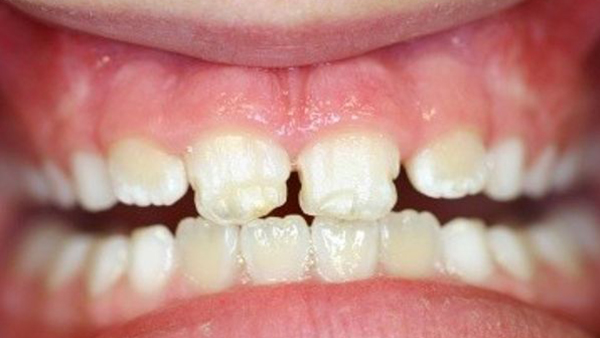
MIH-affected teeth show distinct discoloration that differs from normal white enamel:
- White or cream opacities: Well-defined areas that are whiter or more opaque than surrounding enamel
- Yellow or brown discoloration: Ranging from light yellow to dark brown patches
- Demarcated borders: The colored areas have clear boundaries between affected and normal enamel, unlike the diffuse appearance of fluorosis
- Variable severity: Some teeth show mild discoloration while others are severely affected
Enamel Breakdown
In more severe cases, the weakened enamel cannot withstand normal chewing forces:
- Chunks of enamel break away, creating rough, irregular surfaces
- The underlying dentin (the softer layer beneath enamel) becomes exposed
- Teeth appear pitted or cratered
- Breakdown often occurs soon after teeth erupt, even before cavities develop
Sensitivity
Children with MIH often complain that affected teeth are extremely sensitive:
- Pain when eating or drinking hot or cold foods
- Discomfort during tooth brushing
- Sensitivity to air when breathing through the mouth
- Pain when biting down on affected teeth
This sensitivity can make dental care and even eating challenging for affected children in Dubai, impacting their quality of life and nutrition.
How Common Is MIH in Dubai and Worldwide?
MIH is increasingly recognized as a significant dental health issue globally. Research shows:
- Global prevalence ranges from 2.4% to 40%, with most studies finding 10-20% of children affected
- Rates appear to be increasing, though this may partly reflect better recognition and diagnosis
- No consistent geographic pattern, suggesting multiple contributing factors
- Both boys and girls are affected equally
While specific data for Dubai is limited, Dr. Yasmin Kottait at myPediaClinic sees MIH regularly in her practice, consistent with global prevalence rates. The condition affects children from all backgrounds and socioeconomic groups in Dubai’s diverse international community.
What Causes MIH? Understanding Risk Factors
The exact cause of MIH remains incompletely understood, which can be frustrating for parents seeking answers. Research suggests it’s a multifactorial condition involving genetic susceptibility and environmental exposures during the critical period of tooth development.
When Does MIH Develop?
The defect occurs during enamel formation of first permanent molars and incisors, which happens:
- In the womb (third trimester of pregnancy)
- During the first three years of life
- Different teeth mineralize at different times, which explains why some are affected and others aren’t
Suspected Contributing Factors
Research has identified various factors associated with increased MIH risk, though no single cause has been definitively proven:
Medical Conditions During Early Life:
- Premature birth or low birth weight
- Complications during pregnancy or delivery
- Respiratory infections and pneumonia in early childhood
- High fever during infancy or early childhood
- Chickenpox during the first three years of life
- Asthma and respiratory problems
- Gastrointestinal disorders
- Kidney disease
Medications and Exposures:
- Antibiotics during pregnancy or early childhood (particularly amoxicillin)
- Some medications used to prevent preterm labor
- Dioxin exposure
- Certain environmental toxins
Nutritional Factors:
- Vitamin D deficiency during pregnancy or early childhood
- Calcium or phosphate imbalances
- Malnutrition or malabsorption disorders
Other Factors:
- Genetic predisposition (MIH tends to run in families)
- Maternal illness during pregnancy
- Breastfeeding duration (some studies suggest protective effect of extended breastfeeding)
Dr. Yasmin Kottait emphasizes to families at myPediaClinic that parents should not blame themselves for MIH. The condition develops from factors beyond parental control, and recognizing it early to provide appropriate treatment is what matters now.
Why Is MIH a Significant Problem?
Parents might wonder why MIH is concerning beyond cosmetic issues. The condition creates multiple challenges for affected children in Dubai:
Increased Cavity Risk
MIH teeth are significantly more prone to decay than normal teeth:
- Porous enamel allows bacteria to penetrate more easily
- Breakdown areas create crevices where food and bacteria accumulate
- Sensitivity makes thorough brushing painful, leading to inadequate cleaning
- Decay progresses more rapidly in hypomineralized enamel
Difficulty with Dental Care
Managing oral hygiene and receiving dental treatment becomes challenging:
- Children avoid brushing sensitive teeth, perpetuating poor hygiene
- Standard local anesthesia may not work as effectively on MIH teeth
- Dental restorations (fillings) don’t bond as well to hypomineralized enamel
- Treatment often requires more appointments and specialized approaches
Functional Problems
Severely affected teeth can impact eating and jaw development:
- Pain when chewing may cause children to favor one side, affecting jaw development
- Avoidance of certain foods due to sensitivity can impact nutrition
- Breakdown of molars can affect bite and jaw positioning
- Early loss of first permanent molars can cause orthodontic problems
Psychosocial Impact
Discolored or broken front teeth affect children emotionally:
- Self-consciousness about smile appearance
- Potential for teasing from peers
- Reduced self-esteem during critical developmental years
- Anxiety about dental visits due to previous painful experiences
In Dubai’s international school environment, where children are already navigating cultural differences and social dynamics, dental appearance concerns can add additional stress.
Diagnosing MIH: What to Expect at myPediaClinic
Early diagnosis of MIH allows for proactive management before severe problems develop. Here’s what parents can expect during evaluation:
Visual Examination
Dr. Yasmin Kottait carefully examines newly erupted permanent molars and incisors, looking for:
- Characteristic discoloration patterns
- Demarcated opacities with clear boundaries
- Enamel breakdown or roughness
- Asymmetric involvement of teeth
Clinical Assessment
Beyond visual inspection, Dr. Kottait evaluates:
- Extent and severity of enamel defects
- Number of teeth affected
- Child’s sensitivity and pain levels
- Presence of decay or breakdown
- Risk factors for progression
Differentiation from Other Conditions
MIH must be distinguished from other enamel conditions:
- Fluorosis: Affects more teeth with diffuse white lines or spots, not well-demarcated opacities
- Amelogenesis imperfecta: Genetic condition affecting all teeth (primary and permanent), not just molars and incisors
- Enamel hypoplasia: Shows pits or grooves rather than discoloration, different appearance
- Early decay (white spot lesions): Located at gum line, different distribution
Documentation and Treatment Planning
At myPediaClinic, Dr. Kottait documents MIH findings with photos and detailed notes, then develops a personalized treatment plan based on severity and your child’s specific needs.
Treatment Approaches for MIH at myPediaClinic Dubai
There is no cure for MIH – the enamel defect is permanent. However, comprehensive management can protect affected teeth, reduce sensitivity, prevent decay, and address cosmetic concerns. Dr. Yasmin Kottait tailors treatment to each child’s specific situation.
Prevention-Focused Strategies
For mild to moderate MIH, preventive approaches form the foundation:
Enhanced Oral Hygiene:
- Gentle but thorough brushing with soft toothbrushes
- Fluoride toothpaste (prescription strength may be recommended)
- Technique modifications to minimize discomfort
- Parental supervision to ensure adequate cleaning despite sensitivity
Professional Fluoride Applications:
- Regular fluoride varnish treatments at myPediaClinic (every 3-6 months)
- Prescription fluoride products for home use
- Fluoride helps remineralize and strengthen vulnerable enamel
Dietary Counseling:
- Limiting sugary and acidic foods and drinks
- Avoiding foods that trigger sensitivity
- Calcium-rich diet to support dental health
- Particular attention in Dubai where sweet treats are culturally prominent
Desensitizing Treatments:
- Professional desensitizing agents applied at myPediaClinic
- Prescription toothpastes for sensitive teeth
- Products containing calcium phosphate compounds
- These reduce pain and make oral hygiene more tolerable
Restorative Treatments
When enamel has broken down or decay has developed, restoration becomes necessary:
Dental Sealants:
- Protective coating applied to MIH molars
- Prevents decay in vulnerable grooves and pits
- Best for mild MIH without significant breakdown
- May need to be reapplied periodically
Composite Fillings:
- Tooth-colored restorations to repair breakdown areas
- Bonding can be challenging with hypomineralized enamel
- Dr. Kottait uses specialized techniques to improve bonding
- May require more frequent replacement than fillings in normal teeth
Stainless Steel Crowns:
- For severely affected molars with extensive breakdown
- Provides full coverage protection
- Lasts until permanent tooth replacement in teenage years
- Highly durable despite appearance concerns
Ceramic or Zirconia Crowns:
- For front teeth with severe discoloration or breakdown
- Natural appearance important for incisors
- More expensive but cosmetically superior
- Available at myPediaClinic for Dubai families prioritizing aesthetics
Pain Management
Sensitivity management is crucial for MIH children:
- Desensitizing treatments before dental procedures
- Modified local anesthesia techniques (MIH teeth may require different approaches)
- Gentle treatment protocols
- Sedation options for anxious children or extensive treatment needs
- Regular pain medication if needed for persistent sensitivity
Long-Term Monitoring
MIH requires ongoing surveillance:
- More frequent dental checkups (every 3-4 months rather than every 6 months)
- Early intervention at first sign of breakdown or decay
- Adjustment of treatment approach as child matures
- Transition planning for adult dental care
Extraction Considerations
In severe cases, strategic extraction of first permanent molars may be considered:
- Reserved for teeth with extreme breakdown, persistent pain, or treatment failure
- Timing is critical – ideally before age 9-10 when second molars are developing
- Allows second and third molars to drift forward, naturally filling the space
- Requires orthodontic consultation and careful planning
- Dr. Kottait at myPediaClinic coordinates with orthodontists when this approach is considered
Managing MIH in Dubai’s Unique Environment
Living in Dubai presents specific considerations for families managing MIH:
Climate and Sensitivity
Dubai’s extreme heat means children frequently consume cold drinks, which can trigger pain in sensitive MIH teeth. Strategies include:
- Using straws to direct cold liquids past sensitive teeth
- Room temperature or slightly cool rather than ice-cold beverages
- Avoiding ice chips or frozen treats that require biting
- Ensuring adequate desensitizing treatment before summer months
Food Culture
Dubai’s international food scene and prominence of sweets in many cultures create cavity risk:
- Extra vigilance about limiting sugary foods despite cultural celebrations
- Immediate water rinsing after consuming sweets
- Choosing less sticky sweet options when treats are unavoidable
- Balancing cultural food traditions with dental health needs
International Healthcare
Many Dubai families are expats who may move or travel frequently:
- Comprehensive documentation of MIH diagnosis and treatment at myPediaClinic
- Treatment plans that consider potential relocation
- Coordination with dentists in home countries when families visit
- Ensuring continuity of care despite transitions
School Environment
International schools in Dubai have diverse awareness of MIH:
- Educating teachers about your child’s dental sensitivity
- Ensuring school nurses understand special dental needs
- Having pain medication available at school if needed
- Communication about dietary restrictions during celebrations
Supporting Children with MIH: Practical Tips for Dubai Parents
Beyond professional dental care, parents play a crucial role in managing MIH:
Making Oral Hygiene Manageable
- Extra-soft toothbrushes to minimize discomfort
- Desensitizing toothpaste used consistently
- Breaking brushing into shorter, more frequent sessions if needed
- Positive reinforcement and rewards for cooperative brushing
- Electric toothbrushes with gentle settings
- Brushing immediately after eating to prevent prolonged acid exposure
Diet Management
- Water as the primary beverage throughout the day
- Calcium-rich foods (dairy, fortified plant milks, leafy greens)
- Limiting acidic foods that weaken enamel further (citrus, sodas)
- Cheese after meals (helps neutralize acid)
- Avoiding sticky, hard, or very chewy foods that stress weakened teeth
- Meal and snack schedule rather than constant grazing
Addressing Emotional Needs
- Open, age-appropriate explanation of the condition
- Emphasizing that it’s not their fault
- Focusing on what can be controlled (good oral care, treatment compliance)
- Addressing appearance concerns with compassion
- Connecting with other families managing MIH if helpful
- Professional counseling if dental anxiety or self-esteem issues develop
Practical Adaptations
- Always carry water to rinse after eating when out in Dubai
- Pack tooth-friendly snacks for outings
- Keep desensitizing toothpaste in travel bags
- Build extra time into dental appointments (they may take longer)
- Maintain consistent dental visit schedule despite busy Dubai lifestyle
The Importance of Early Detection
MIH is best addressed early, ideally as soon as first permanent molars erupt around age 6. Early intervention at myPediaClinic provides several advantages:
- Preventive treatments can be applied before breakdown occurs
- Sensitivity can be managed before it becomes severe
- Children develop positive dental experiences before fear sets in
- Treatment is less extensive and less expensive when started early
- Better long-term outcomes for affected teeth
Dr. Yasmin Kottait recommends that all Dubai children have their first dental visit by age 1, with regular checkups every 6 months. This schedule ensures that when permanent molars begin erupting around age 6, MIH can be identified immediately.
Research and Future Directions
MIH research continues to evolve, with several promising areas:
- Better understanding of genetic factors and specific causes
- Development of improved bonding agents for restorations on hypomineralized enamel
- Novel remineralization treatments to strengthen defective enamel
- Prevention strategies if specific causes are confirmed
- Improved pain management techniques
- Standardized diagnostic criteria and treatment protocols
Dr. Yasmin Kottait stays current with emerging research and incorporates evidence-based innovations into practice at myPediaClinic, ensuring Dubai families have access to the latest advances in MIH management.
Frequently Asked Questions About MIH
What is Molar Incisor Hypomineralization and how is it different from regular cavities?
MIH is a developmental defect where permanent molars and incisors form with weakened, poorly mineralized enamel during tooth development before they erupt. This differs fundamentally from cavities, which are bacterial infections that develop after teeth have erupted. MIH makes teeth more susceptible to cavities, but the initial enamel defect itself is not caused by bacteria or poor oral hygiene. At myPediaClinic Dubai, Dr. Yasmin Kottait can distinguish between MIH and cavities through careful examination and treat each appropriately.
Did I do something wrong during pregnancy or infancy to cause my child’s MIH?
No, parents should not blame themselves for MIH. While various factors during pregnancy and early childhood are associated with increased MIH risk, the exact cause remains unclear and likely involves multiple factors beyond parental control, including genetics. Most children who experience these risk factors don’t develop MIH, and many children with MIH have no identifiable risk factors. Dr. Yasmin Kottait at myPediaClinic emphasizes that what matters now is early detection and appropriate treatment to protect affected teeth, not assigning blame for something that occurred years ago.
Will my child’s baby teeth also be affected by MIH?
MIH specifically affects permanent first molars and incisors, not baby teeth. If baby teeth show enamel defects, it’s likely a different condition called enamel hypoplasia or hypomineralization of primary teeth. However, children with enamel problems in baby teeth may be at higher risk for MIH in permanent teeth. At myPediaClinic, Dr. Kottait monitors children with any enamel defects in baby teeth carefully when permanent teeth begin erupting to catch MIH early if it develops.
Can MIH be cured or reversed?
Unfortunately, MIH cannot be cured or reversed – the enamel defect is permanent. However, comprehensive management can protect affected teeth, reduce sensitivity, prevent decay, improve appearance, and maintain function. Treatment focuses on strengthening remaining enamel through fluoride and remineralization treatments, protecting vulnerable teeth with sealants or restorations, managing pain and sensitivity, and preventing complications. While we cannot change the defective enamel structure itself, Dr. Yasmin Kottait at myPediaClinic can help children with MIH maintain healthy, functional teeth through adolescence and into adulthood.
How severe is my child’s MIH and what does that mean for treatment?
MIH severity varies widely from mild discoloration requiring minimal intervention to severe breakdown requiring extensive treatment. Dr. Yasmin Kottait at myPediaClinic assesses severity based on extent of discoloration, degree of enamel breakdown, number of teeth affected, level of sensitivity, and presence of decay. Mild MIH may only need enhanced prevention (fluoride treatments, sealants, careful monitoring), while severe cases might require fillings, crowns, or in extreme cases, strategic extractions. Your child’s specific treatment plan depends on their individual severity and needs.
Why are my child’s MIH teeth so sensitive?
MIH teeth are extremely sensitive because the defective, porous enamel doesn’t provide normal protection for the underlying dentin layer, which contains tiny tubules connecting to the tooth’s nerve. Temperature changes, pressure, and even air can trigger pain signals through these exposed tubules. Additionally, areas where enamel has broken away leave dentin completely exposed. This sensitivity is a hallmark of MIH and can significantly impact children’s quality of life. At myPediaClinic Dubai, Dr. Kottait provides desensitizing treatments that can dramatically reduce this sensitivity and make eating and oral hygiene more comfortable for affected children.
Will my other children also have MIH?
MIH tends to run in families, suggesting a genetic component, so siblings of affected children may have increased risk. However, it’s not a simple genetic inheritance – many siblings of MIH children have normal teeth. Dr. Yasmin Kottait at myPediaClinic recommends that siblings of children with MIH have their permanent molars carefully examined as they erupt around age 6. Early detection in siblings allows for prompt preventive treatment. The family history also helps Dr. Kottait maintain higher vigilance for early signs of MIH in younger siblings.
Can fluoride treatments help MIH teeth?
Yes, fluoride treatments are an important component of MIH management. While fluoride cannot reverse the enamel defect, it can strengthen remaining enamel structure, reduce sensitivity, and help prevent decay in vulnerable teeth. At myPediaClinic, Dr. Yasmin Kottait applies professional fluoride varnish every 3-6 months for children with MIH and may prescribe high-fluoride toothpaste or rinses for home use. In Dubai, where tap water is not fluoridated, professional fluoride treatments are especially important for protecting MIH-affected teeth.
Why don’t fillings stay in my child’s MIH teeth?
Dental fillings bond to tooth enamel through adhesive materials. In MIH teeth, the poorly mineralized, porous enamel provides a weak bonding surface, making fillings more prone to failure than in normal teeth. Additionally, the ongoing breakdown of hypomineralized enamel can create gaps between filling and tooth structure. Dr. Yasmin Kottait at myPediaClinic uses specialized bonding techniques and materials designed to improve adhesion to compromised enamel. For severely affected teeth, crowns that don’t rely on bonding may be more successful long-term solutions than repeated fillings.
Should MIH teeth be extracted?
Extraction of MIH-affected first permanent molars is considered only in severe cases where teeth have extensive breakdown, persistent pain unresponsive to treatment, or repeated treatment failures. If extraction is chosen, timing is critical – ideally between ages 8-10 when the second permanent molars are developing, allowing them to drift forward and partially fill the space. This requires careful orthodontic planning. Dr. Yasmin Kottait at myPediaClinic exhausts conservative treatment options before considering extraction and always coordinates with orthodontic specialists when extraction might be appropriate for Dubai children with severe MIH.
How often should my child with MIH visit the dentist?
Children with MIH need more frequent dental visits than the standard every-6-months schedule. Dr. Yasmin Kottait at myPediaClinic typically recommends checkups every 3-4 months for children with MIH. This allows for close monitoring of tooth condition, early detection of breakdown or decay, regular fluoride applications, and prompt intervention if problems develop. More frequent visits also help children become comfortable with dental care despite their sensitivity, reducing anxiety. The exact frequency depends on MIH severity and individual risk factors, which Dr. Kottait assesses for each child.
Can MIH affect adult teeth beyond the first molars and incisors?
By definition, MIH specifically affects first permanent molars and permanent incisors. Other permanent teeth (second molars, premolars, canines) develop during different timeframes and are typically normal in children with MIH. However, the timing of insult that causes MIH occasionally overlaps with early development of other teeth, potentially affecting them as well. Additionally, if MIH teeth develop severe problems, it can indirectly affect neighboring teeth through bite changes or hygiene difficulties. Dr. Kottait at myPediaClinic monitors all of your child’s teeth carefully, though MIH-specific management focuses on the characteristically affected molars and incisors.
What happens to MIH teeth when my child becomes a teenager and adult?
With proper management during childhood, MIH teeth can often be preserved into adulthood, though they may require ongoing care. The sensitivity often decreases as children get older and the tooth’s nerve chamber becomes smaller through natural processes. However, affected teeth remain more vulnerable to decay and wear throughout life. As children mature into adults, treatment options expand – severely affected incisors can be addressed with veneers or crowns for improved aesthetics, and molars can receive more definitive restorations. Dr. Yasmin Kottait provides transition planning to ensure continuity of care as MIH children grow up.
How can I help my child brush their MIH teeth when it causes so much pain?
Tooth sensitivity is one of the biggest challenges with MIH. Strategies to make brushing more tolerable include: using extra-soft toothbrushes, applying desensitizing toothpaste (let it sit on teeth for a minute before brushing), using lukewarm rather than cold water, breaking brushing into shorter sessions, applying gentle pressure, and using distraction techniques. At myPediaClinic, Dr. Kottait can apply professional desensitizing treatments that significantly reduce pain, making home oral care much easier. She can also prescribe prescription-strength desensitizing products. Don’t skip brushing due to sensitivity – poor hygiene will lead to decay that causes even worse problems in vulnerable MIH teeth.
Are there any new treatments or research developments for MIH?
MIH research is active and evolving. Current areas of investigation include better understanding of genetic and environmental causes, development of improved remineralization treatments using calcium phosphate compounds, innovations in bonding materials specifically for hypomineralized enamel, and prevention strategies. Some research explores using casein phosphopeptide compounds to strengthen defective enamel. Dr. Yasmin Kottait at myPediaClinic stays current with emerging research and incorporates evidence-based innovations into practice, ensuring Dubai families have access to the latest advances in MIH care as they become available.
Does diet affect MIH severity or progression?
Diet doesn’t cause MIH or change the existing enamel defect, but it significantly impacts whether affected teeth develop decay and further breakdown. Sugary and acidic foods increase decay risk in already-vulnerable MIH teeth. A calcium-rich diet supports overall dental health. In Dubai’s food culture where sweets are prominent, extra dietary vigilance is important for children with MIH. Dr. Kottait at myPediaClinic provides personalized dietary counseling, helping families balance cultural food traditions with protecting vulnerable teeth. Limiting sugar, ensuring adequate calcium, avoiding frequent snacking, and drinking water as the primary beverage all help protect MIH teeth from decay.
Can my child participate in sports with MIH-affected teeth?
Yes, children with MIH can participate in sports, but protecting vulnerable teeth is important. A custom mouthguard from myPediaClinic provides better protection than over-the-counter options, especially important for teeth with weakened enamel prone to chipping. For contact sports popular in Dubai like football (soccer), rugby, or martial arts, mouthguards are essential. Even non-contact sports may warrant protection if affected teeth are particularly fragile. Dr. Yasmin Kottait can create custom mouthguards that protect MIH teeth while being comfortable enough for children to wear consistently during athletic activities.
What should I tell my child’s school about their MIH?
Inform your child’s teacher and school nurse at Dubai schools about MIH, especially regarding: extreme tooth sensitivity that may require avoiding very cold drinks or ice, potential need for pain medication during school day if sensitivity is severe, possible dental appointments requiring absence from school, and dietary restrictions during class celebrations. Provide written information from Dr. Kottait if helpful. Most teachers are accommodating once they understand this is a legitimate medical condition affecting your child’s comfort and oral health. Good school communication ensures your child receives appropriate support in the classroom environment.
How much will MIH treatment cost in Dubai?
Treatment costs vary widely depending on MIH severity and required interventions. Simple preventive care (fluoride treatments, sealants) is relatively inexpensive, while extensive restorations (multiple crowns, repeated fillings) can be more costly. Many dental insurance plans cover preventive and restorative treatments for children. At myPediaClinic, the team can provide detailed cost estimates and work with your insurance provider. The investment in proper MIH management during childhood often prevents more expensive and complex problems later, making it worthwhile despite upfront costs. Dr. Kottait develops treatment plans that balance clinical needs with family financial considerations.
Will my child’s MIH affect their orthodontic treatment later?
MIH can complicate orthodontic treatment in several ways: severely affected teeth may not tolerate orthodontic forces well, bonding brackets to hypomineralized enamel can be challenging, and strategic extraction of severely affected first molars might be incorporated into orthodontic planning. However, many children with MIH successfully undergo orthodontic treatment. At myPediaClinic, Dr. Yasmin Kottait coordinates with orthodontists when children with MIH need braces, ensuring comprehensive treatment planning that accounts for both dental and orthodontic needs. Early communication between pediatric dentist and orthodontist optimizes outcomes for Dubai children with MIH who need orthodontic care.
Conclusion: Partnering for Optimal MIH Management in Dubai
Molar Incisor Hypomineralization presents unique challenges for affected children and their families in Dubai, but with early detection, comprehensive treatment, and consistent care, children with MIH can maintain healthy, functional teeth throughout childhood and into adulthood. While the enamel defect itself is permanent and cannot be cured, modern dentistry offers numerous strategies to protect vulnerable teeth, manage sensitivity, prevent complications, and address cosmetic concerns.
At myPediaClinic, Dr. Yasmin Kottait brings specialized expertise in pediatric dentistry and comprehensive understanding of MIH to help Dubai families navigate this challenging condition. Through thorough evaluation, personalized treatment planning, state-of-the-art preventive and restorative techniques, and compassionate care, she helps children with MIH achieve the best possible outcomes.
The key to successful MIH management is partnership between dental professionals, parents, and children themselves. Regular dental visits at myPediaClinic, diligent home oral care, dietary awareness, and prompt attention to problems all contribute to protecting affected teeth. Understanding that MIH is a chronic condition requiring ongoing management helps families maintain realistic expectations and long-term commitment to dental care.
If you notice discolored, sensitive, or broken permanent molars or front teeth in your child, don’t wait to seek evaluation. Early intervention provides the best opportunity to protect teeth before severe problems develop. Even if MIH has already caused significant breakdown, it’s never too late to start appropriate treatment and prevent further complications.
Contact myPediaClinic Dubai today to schedule a comprehensive dental evaluation with Dr. Yasmin Kottait. Whether you suspect your child might have MIH or have already received an MIH diagnosis elsewhere and seek expert management, our experienced pediatric dental team is here to help. Together, we can protect your child’s teeth, manage sensitivity and pain, prevent complications, and ensure that MIH doesn’t prevent your child from enjoying a healthy, confident smile throughout their growing years and beyond.