
Orthodontic Treatment at the Age of 12 – Dr. Abdel Hakim El Gheriani Orthodontist in Dubai
When parents think about braces and orthodontic treatment, they often picture teenagers with mouths full of metal, and there is good reason for this association. The age of 12 represents a sweet spot in orthodontic treatment timing for many children, a period when the conditions are often ideal for comprehensive orthodontic correction. At this age, most permanent teeth have erupted, the jaws are still growing, and children are mature enough to participate in their treatment while young enough to complete it before the social pressures of high school intensify. As an orthodontist serving families throughout Dubai and the UAE, I help parents understand why timing matters in orthodontic treatment and how starting at the right age can lead to the best possible outcomes for their child’s smile. At myPediaClinic, we are dedicated to providing orthodontic care that is timed optimally for each individual patient.
Understanding why age 12 is often considered ideal for orthodontic treatment requires an appreciation of dental development, jaw growth, and the practical considerations of orthodontic care. While some children may benefit from earlier intervention (Phase 1 treatment) and others may not begin treatment until later in adolescence, the majority of orthodontic patients start comprehensive treatment around age 11-13, with age 12 being particularly common. This comprehensive guide will explore the reasons behind this timing, what happens developmentally at this age, the types of treatment options available, and what parents and pre-teens can expect from the orthodontic experience. Whether your child is approaching this age and you are considering braces, or you are simply planning ahead, this information will help you make informed decisions about your child’s orthodontic care.
Understanding Dental Development: Why Age 12 Matters
The timing of orthodontic treatment is closely linked to the stages of dental development. Understanding this development helps explain why age 12 is often optimal for beginning comprehensive treatment.
The Transition from Primary to Permanent Teeth
Children are born with developing tooth buds for both their primary (baby) teeth and permanent teeth. Primary teeth begin erupting around 6 months of age, with the full set of 20 primary teeth typically in place by age 3. The process of losing primary teeth and having permanent teeth replace them begins around age 6 with the eruption of the first permanent molars and the shedding of the lower central incisors. This transition continues over several years, with the last primary teeth typically lost between ages 10 and 12. By age 12 or 13, most children have all of their permanent teeth except for the wisdom teeth (third molars), which typically do not erupt until the late teens or early twenties.
The Significance of Complete Permanent Dentition
For comprehensive orthodontic treatment, it is generally preferable to wait until most or all permanent teeth have erupted. This is because braces and aligners work by moving teeth, and the treatment plan is based on the positions and relationships of the permanent teeth. If primary teeth are still present, the orthodontist cannot know exactly where the permanent replacements will erupt, making treatment planning less precise. Additionally, primary teeth have different root structures than permanent teeth and may not move in the same way. By age 12, when most permanent teeth are present, the orthodontist can create a comprehensive treatment plan that addresses the final positions of all teeth.
The Second Molars: The Final Piece
The second permanent molars, often called the “12-year molars,” are typically the last permanent teeth to erupt (excluding wisdom teeth). These teeth usually appear between ages 11 and 13. Having these teeth present is important for orthodontic treatment because they are the anchoring teeth at the back of the arch, and their position affects the overall bite relationship. In some cases, treatment may begin before the second molars are fully erupted, but the orthodontist will plan for their eruption and may include specific mechanics to guide them into proper position.
Jaw Growth and Its Role in Treatment Timing
In addition to dental development, jaw growth plays a crucial role in orthodontic treatment timing. The years around age 12 are significant in terms of growth potential, which can be harnessed to enhance treatment outcomes.
The Pubertal Growth Spurt
Humans experience a significant growth spurt around the time of puberty. This growth spurt typically occurs earlier in girls (around ages 10-12) than in boys (around ages 12-14). During this period, growth in height accelerates, and importantly for orthodontics, jaw growth also increases. Orthodontists can take advantage of this growth potential to correct certain skeletal discrepancies – differences in the size or position of the upper and lower jaws. Treatments such as functional appliances that modify jaw growth are most effective when used during this period of active growth.
Assessing Skeletal Maturity
Orthodontists can assess skeletal maturity through various methods to help time treatment optimally. Hand-wrist X-rays can show growth plate development and predict remaining growth. Cervical vertebrae analysis, which can be done from a lateral cephalometric X-ray already taken for orthodontic evaluation, provides information about skeletal maturity. Standing height measurements over time indicate whether a child is in the accelerating or decelerating phase of their growth spurt. By understanding where a child is in their growth process, the orthodontist can time treatment to maximize the benefits of growth modification when needed.
Growth Considerations for Different Types of Problems
Different orthodontic problems may have different ideal treatment timing relative to growth. Class II malocclusion (where the lower jaw is positioned behind the upper jaw) is often treated effectively during the growth spurt using functional appliances that encourage forward growth of the lower jaw. Class III malocclusion (underbite) may be treated early to take advantage of growth or may require waiting until growth is complete for definitive treatment, as the lower jaw often continues to grow longer than the upper jaw. Skeletal open bites or deep bites may also have timing considerations based on growth patterns. Your orthodontist at myPediaClinic will consider growth potential when planning treatment for your child.
The Benefits of Starting Treatment at Age 12
Beginning orthodontic treatment around age 12 offers several advantages that contribute to successful outcomes and positive patient experiences.
Complete or Nearly Complete Permanent Dentition
As discussed, having most or all permanent teeth present allows for comprehensive treatment planning. The orthodontist can see exactly what needs to be corrected and develop a plan that addresses all the teeth that will be in the mouth for a lifetime. This avoids the uncertainty that comes with treating before all permanent teeth have erupted and reduces the likelihood of needing additional treatment later.
Optimal Growth Potential
The period around age 12 coincides with the pubertal growth spurt for many children. This provides an opportunity to harness natural growth to correct skeletal discrepancies and achieve results that might require surgery in adulthood. Even for cases that do not require growth modification, active growth means that teeth and bone respond well to orthodontic forces.
Patient Maturity and Cooperation
Successful orthodontic treatment requires patient cooperation in maintaining oral hygiene, wearing rubber bands or other auxiliaries as instructed, keeping appointments, and following care instructions. Pre-teens and young teenagers are generally mature enough to understand the importance of cooperation and to participate actively in their treatment. They can communicate their concerns and preferences, making them partners in the process. At the same time, parents are still very involved in their children’s lives at this age and can provide oversight and support.
Social and Psychological Considerations
Orthodontic treatment typically takes 18-24 months, and starting at age 12 means treatment is often completed by age 14 or 15. This timing allows many patients to finish treatment and enjoy their new smiles during the high school years, a time of significant social development. While braces are increasingly common and accepted at all ages, many pre-teens prefer to complete treatment before the more socially conscious high school years. Additionally, the self-esteem boost from a beautiful smile can be particularly valuable as adolescents navigate the challenges of growing up.
Reduced Risk of Trauma
Children with protruding front teeth are at increased risk for dental trauma. If early treatment (Phase 1) was not performed to address significant protrusion, beginning comprehensive treatment around age 12 can reduce the risk of injury before participation in high school sports and other activities where trauma is more likely.
The Permanent Teeth and Their Eruption Timeline
Understanding the typical timeline for permanent tooth eruption helps parents know what to expect and when orthodontic evaluation and treatment are appropriate.
Typical Eruption Sequence and Timeline
While there is variation among individuals, permanent teeth typically erupt in the following sequence: First molars erupt around age 6-7, followed by central incisors at age 6-8, lateral incisors at age 7-8, first premolars at age 9-11, canines at age 9-12, second premolars at age 10-12, second molars at age 11-13, and finally third molars (wisdom teeth) at age 17-21. By age 12-13, most children have 28 of their 32 permanent teeth (not counting wisdom teeth).
Variations in Eruption Timing
The timing of tooth eruption varies among individuals and can be influenced by genetics, nutrition, overall health, and other factors. Girls generally experience earlier dental development than boys, just as they experience earlier puberty. Some children may have all their permanent teeth (except wisdom teeth) by age 11, while others may still be losing primary teeth at age 13. If your child’s dental development seems significantly early or late, discuss this with your pediatric dentist or orthodontist, but keep in mind that a wide range is normal.
Eruption Problems and Their Impact on Treatment
Sometimes permanent teeth do not erupt on schedule or follow an abnormal path of eruption. Teeth may become impacted (stuck beneath the gum or bone), erupt in the wrong position, or fail to develop entirely (congenital absence). These issues can affect the timing and complexity of orthodontic treatment. Regular dental checkups and the recommended age 7 orthodontic evaluation help identify eruption problems early. If problems are detected, the orthodontist may recommend intervention to guide eruption or may plan treatment that accounts for the issue.
Treatment Options at Age 12: Braces and Beyond
Several orthodontic treatment options are available for pre-teens and teenagers. The right choice depends on the specific orthodontic issues, patient preferences, and practical considerations.
Traditional Metal Braces
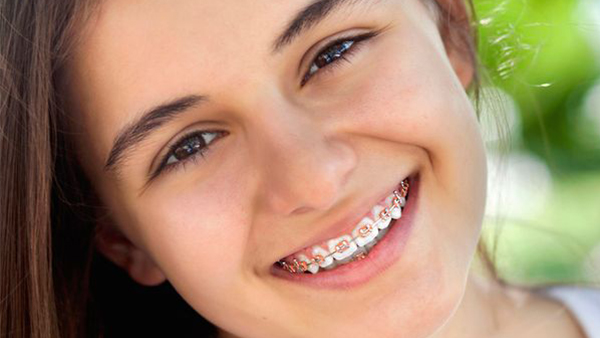
Traditional metal braces remain the most common orthodontic treatment and are highly effective for correcting a wide range of orthodontic issues. Modern metal braces are smaller and more comfortable than those of the past. They consist of metal brackets bonded to the teeth and connected by archwires that apply gentle, continuous force to move teeth into proper positions. Colored elastic bands (ligatures) hold the wire to the brackets and can be changed at each adjustment appointment, allowing patients to personalize their braces with different colors. Metal braces are durable, effective, and typically the most affordable option.
Ceramic (Clear) Braces
Ceramic braces function similarly to metal braces but use tooth-colored or clear brackets that are less visible. They are a popular choice for patients who want a more aesthetic option but still need the treatment capabilities of traditional braces. Ceramic braces are generally more expensive than metal braces and require careful attention to oral hygiene, as the brackets can stain if not properly cleaned. They may also be slightly more fragile than metal brackets. Ceramic braces are a good option for pre-teens who are concerned about the appearance of braces and are committed to maintaining excellent oral hygiene.
Lingual Braces
Lingual braces are placed on the inside (tongue side) of the teeth, making them invisible from the outside. They offer the treatment capabilities of traditional braces with complete aesthetic concealment. However, lingual braces are more technically demanding to place and adjust, can affect speech initially, may be more uncomfortable for the tongue, and are typically the most expensive option. They are less commonly used in pre-teens but may be an option for some patients.
Clear Aligners
Clear aligner systems, such as Invisalign, use a series of custom-made, removable clear plastic trays to gradually move teeth. Each set of aligners is worn for about two weeks before being replaced by the next set in the series. Clear aligners are nearly invisible and can be removed for eating, brushing, and flossing. Invisalign Teen is specifically designed for adolescent patients and includes features such as compliance indicators and accommodation for erupting teeth. Clear aligners are effective for many types of orthodontic issues but may not be suitable for complex cases. They require significant patient compliance, as they must be worn 20-22 hours per day to be effective. They are typically more expensive than metal braces.
Self-Ligating Braces
Self-ligating braces use specialized brackets that hold the archwire with a built-in clip rather than elastic ligatures. This can reduce friction in the system, potentially allowing for faster tooth movement and fewer adjustment appointments. Self-ligating braces are available in both metal and ceramic versions. They may be slightly more expensive than traditional braces. The evidence for their advantages over traditional braces is mixed, but some orthodontists and patients prefer them.
Choosing the Right Option
The choice of treatment depends on several factors including the specific orthodontic issues that need correction, patient preferences regarding aesthetics and removability, the ability to maintain oral hygiene with different appliance types, lifestyle factors such as participation in contact sports, and budget considerations. During the consultation at myPediaClinic, Dr. Abdel Hakim El Gheriani will discuss the options suitable for your child’s case and help you make an informed decision.
What to Expect During Orthodontic Treatment
Understanding what orthodontic treatment involves helps pre-teens and parents prepare for the experience and sets realistic expectations.
The Initial Consultation and Records
Treatment begins with a comprehensive evaluation including clinical examination, photographs, X-rays (panoramic and cephalometric), and dental impressions or digital scans. These records allow the orthodontist to diagnose the orthodontic issues, develop a treatment plan, and predict outcomes. The orthodontist will discuss findings, recommended treatment options, estimated treatment time, costs, and payment options. This is an opportunity for parents and patients to ask questions and express preferences.
Appliance Placement
If braces are the chosen treatment, the placement appointment typically takes 1-2 hours. The teeth are cleaned and prepared, brackets are bonded to the teeth using a special adhesive, and the archwire is placed and secured. This process is not painful, though patients may experience some pressure. If separators are needed to create space between teeth (for bands around back teeth), they may be placed a week before bracket placement. After braces are placed, the orthodontist or staff will provide detailed instructions on care and what to expect.
Adjustment Appointments
Patients with braces typically have adjustment appointments every 4-8 weeks. At these visits, the orthodontist checks progress, changes archwires as treatment progresses, adjusts brackets if needed, and provides any necessary rubber bands or other auxiliaries. Adjustment appointments usually take 15-30 minutes. Some discomfort may be experienced for a few days after adjustments as the teeth respond to the new forces.
Discomfort Management
Some discomfort is normal with orthodontic treatment, especially in the first few days after braces are placed and after adjustment appointments. This discomfort typically includes soreness of the teeth when biting, sensitivity to pressure, and irritation of the cheeks and lips from the brackets. Over-the-counter pain relievers such as ibuprofen or acetaminophen can help, as can soft foods during periods of soreness. Orthodontic wax can be placed over brackets that irritate soft tissues. Most patients find that discomfort decreases significantly after the first week and becomes manageable after adjustments.
Treatment Duration
The average duration of comprehensive orthodontic treatment is 18-24 months, though this varies based on the complexity of the case, the type of appliance used, patient cooperation, and individual response to treatment. Some straightforward cases may be completed in 12 months, while complex cases may take 30 months or more. The orthodontist will provide an estimated treatment time at the beginning, but this may be adjusted as treatment progresses.
Retention: Keeping the Results
After active treatment is complete and braces are removed, retention is necessary to maintain the results. Teeth have a tendency to shift back toward their original positions, especially in the months immediately after treatment. Retainers – removable or fixed – are used to hold teeth in their new positions. Most patients wear removable retainers full-time initially, then transition to nighttime wear. Fixed retainers (thin wires bonded to the back of the front teeth) may also be used. Retention is a lifelong commitment; many orthodontists recommend wearing retainers at least occasionally for life to prevent relapse.
The Role of Patient Cooperation in Treatment Success
Orthodontic treatment is a partnership between the orthodontist and the patient. The orthodontist provides the expertise and appliances, but the patient’s cooperation is essential for achieving excellent results efficiently.
Oral Hygiene During Treatment
Maintaining excellent oral hygiene is crucial during orthodontic treatment. Braces create additional surfaces where plaque can accumulate, and food particles can become trapped around brackets and wires. Without meticulous cleaning, patients are at increased risk for cavities, gum disease, and white spot lesions (areas of decalcification on the enamel). Patients with braces should brush after every meal and before bed, using a soft-bristled brush and fluoride toothpaste. Special orthodontic brushes, interdental brushes, and floss threaders can help clean around brackets and under wires. Water flossers can be helpful. Regular dental checkups and cleanings should continue during orthodontic treatment.
Dietary Considerations
Certain foods can damage braces or increase the risk of cavities. Hard foods like ice, hard candy, popcorn kernels, and nuts can break brackets. Sticky foods like caramel, taffy, and chewing gum can pull brackets off and are difficult to clean from braces. Crunchy foods like raw carrots and apples should be cut into small pieces rather than bitten into. Sugary foods and drinks should be limited to reduce cavity risk. Following dietary guidelines helps prevent damage to braces, which can extend treatment time and require additional appointments for repairs.
Wearing Rubber Bands and Other Auxiliaries
Rubber bands (elastics) are often used to help correct bite relationships. They attach between the upper and lower braces and must be worn consistently as instructed, typically 20-22 hours per day. Other auxiliaries such as headgear or other appliances may also be prescribed for specific cases. These devices only work when they are worn. Inconsistent wear leads to slower progress, longer treatment, and potentially compromised results. Patients who wear their rubber bands as instructed typically complete treatment faster and achieve better outcomes.
Keeping Appointments
Regular appointments are necessary to keep treatment progressing. Missing appointments or rescheduling frequently can significantly extend treatment time. If an appointment must be missed, it should be rescheduled as soon as possible. Additionally, patients should contact the orthodontic office promptly if a bracket breaks, a wire is poking, or any other problem occurs.
Protecting Braces During Sports and Activities
Patients who participate in sports should wear a mouthguard to protect their teeth and braces. Orthodontic mouthguards are designed to fit over braces. Contact sports pose the greatest risk, but mouthguards are recommended for many activities. Wind instrument players may need an adjustment period with braces but typically adapt well.
Treatment at Different Ages: Comparing Options
While age 12 is often ideal, orthodontic treatment can be performed at various ages. Understanding how treatment at different ages compares helps parents make informed decisions about timing.
Early Treatment (Phase 1) at Ages 7-10
As discussed in other resources from myPediaClinic, some children benefit from early orthodontic treatment during the mixed dentition stage. Phase 1 treatment addresses specific issues such as crossbite, severe crowding, significant jaw discrepancies, or protruding teeth that benefit from early intervention. Phase 1 treatment typically lasts 9-18 months and is followed by a period of observation before Phase 2 (comprehensive) treatment if needed. Not all children need Phase 1 treatment; it is reserved for specific conditions where early intervention provides significant benefits.
Comprehensive Treatment at Ages 11-14
This is the most common time for comprehensive orthodontic treatment. Most permanent teeth are present, growth potential is available, and patients are mature enough to cooperate with treatment. Treatment at this age can address the full range of orthodontic issues effectively. Starting in this age range also means treatment is typically complete before the later teenage years.
Treatment in Later Adolescence (Ages 15-18)
Orthodontic treatment remains highly effective in later adolescence. By this age, all permanent teeth including wisdom teeth may be present, and growth is nearing completion. Treatment approaches are similar to those used at age 12, though some growth modification techniques may be less effective if growth is complete. Aesthetic concerns may be more prominent for older teenagers, making clear aligners or ceramic braces popular choices. Some teens prefer to complete treatment before leaving for college or entering the workforce.
Adult Orthodontic Treatment
Orthodontic treatment can be performed at any age as long as the teeth and supporting structures are healthy. Adult treatment differs from adolescent treatment in that there is no growth potential to harness, so skeletal problems that could be modified by growth in adolescents may require jaw surgery in adults. Treatment may take longer in adults due to denser bone and slower biological response. However, many adults successfully complete orthodontic treatment and enjoy beautiful, healthy smiles. Adult patients often demonstrate excellent compliance, which can contribute to efficient treatment.
Addressing Common Concerns About Orthodontic Treatment
Parents and pre-teens often have questions and concerns about orthodontic treatment. Addressing these concerns helps families approach treatment with confidence.
Will It Hurt?
Orthodontic treatment involves some discomfort, but it is generally manageable. The process of placing braces is not painful, though it may feel awkward. Soreness typically develops within a few hours and lasts for a few days as the teeth begin to move. Adjustments may cause similar temporary discomfort. The level of discomfort varies among individuals but is usually well-controlled with over-the-counter pain relievers and soft foods. Most patients find that the discomfort is much less than they anticipated and becomes routine over time.
Will My Child Be Teased About Braces?
Braces are extremely common among pre-teens and teenagers, which has reduced the stigma associated with them. In many peer groups, braces are seen as normal or even cool, with the ability to customize colors seen as a fun aspect. While some teasing may occur, it is generally minor and temporary. The end result of a beautiful smile often boosts confidence far more than any temporary self-consciousness about braces. For patients who are very concerned about appearance, clear aligners or ceramic braces offer less visible options.
How Will Braces Affect School and Activities?
Braces generally do not significantly interfere with school or activities. Students can participate fully in academics, and adjustment appointments can usually be scheduled outside of school hours. Sports participation continues with the use of an orthodontic mouthguard. Playing musical instruments, especially wind instruments, may require a brief adjustment period but is typically not a long-term problem. Drama, debate, and other activities involving speaking are not significantly affected. Most students find that braces quickly become a normal part of their lives.
What If We Cannot Afford Treatment?
Orthodontic treatment is an investment, but there are options to make it more affordable. Many orthodontic offices offer payment plans that spread the cost over the treatment period. Dental insurance plans increasingly include orthodontic coverage. Flexible spending accounts (FSAs) or health savings accounts (HSAs) can be used for orthodontic expenses. Some families choose to prioritize orthodontic treatment given the lifelong benefits of a healthy, beautiful smile. During your consultation at myPediaClinic, we can discuss costs and payment options.
What If My Child Does Not Cooperate?
Patient cooperation is important for treatment success. However, pre-teens who are involved in the decision to get braces and understand the benefits are generally motivated to cooperate. The orthodontic team can help by providing clear instructions, positive reinforcement, and education about the importance of compliance. Parents can support treatment by helping with oral hygiene, ensuring appointments are kept, and encouraging wear of rubber bands or other auxiliaries. If cooperation becomes an issue, open communication between the patient, parents, and orthodontist is important to address concerns and find solutions.
Frequently Asked Questions About Orthodontic Treatment at Age 12
Why is age 12 often considered the ideal age for braces?
Age 12 is often ideal for several reasons: Most or all permanent teeth (except wisdom teeth) have erupted by this age, allowing for comprehensive treatment planning. The second permanent molars (“12-year molars”) are typically erupting, providing important anchoring teeth. Children are at or near their pubertal growth spurt, allowing orthodontists to harness growth for correcting certain problems. Pre-teens are mature enough to cooperate with treatment requirements. Starting at this age often means treatment is complete before high school. However, the ideal age varies for each individual, and some children benefit from earlier or later treatment.
What types of braces are available for 12-year-olds?
Several options are available for pre-teens. Traditional metal braces are the most common and affordable option, highly effective for all types of cases. Ceramic (clear) braces use tooth-colored brackets for a less noticeable appearance. Self-ligating braces use specialized brackets that may reduce friction and appointment frequency. Clear aligners like Invisalign Teen are nearly invisible and removable but require excellent compliance and may not be suitable for complex cases. The best option depends on the specific orthodontic needs, patient preferences, lifestyle factors, and budget. Your orthodontist will help determine which options are suitable for your child’s case.
How long does orthodontic treatment typically take for a 12-year-old?
The average duration of comprehensive orthodontic treatment is 18-24 months, though this varies based on the complexity of the case and individual factors. Mild cases may be completed in 12-15 months, while complex cases may take 24-30 months or longer. Factors that affect treatment time include the severity of the orthodontic issues, the type of appliance used, patient compliance with instructions (oral hygiene, wearing rubber bands, keeping appointments), and individual biological response to treatment. Your orthodontist will provide an estimated treatment time based on your child’s specific case.
Will my child need to have teeth extracted for orthodontic treatment?
Tooth extraction for orthodontic purposes is less common than it was in the past, thanks to advances in orthodontic techniques and a greater emphasis on growth modification and arch development. However, extractions may still be recommended in some cases, particularly when there is severe crowding that cannot be resolved by expansion alone, when significant protrusion needs to be corrected, when there is a significant size discrepancy between the upper and lower jaws, or when teeth are severely damaged and cannot be saved. The decision to extract teeth is made carefully after thorough evaluation. If extractions are recommended for your child, your orthodontist will explain the reasons and alternatives.
How do I know if my 12-year-old is ready for braces?
Readiness for braces involves both physical and emotional factors. Physically, most children are ready when they have most of their permanent teeth, though the orthodontist can determine this through examination and X-rays. Emotionally and behaviorally, readiness includes the maturity to maintain good oral hygiene, follow dietary restrictions, wear rubber bands or other appliances as instructed, and keep regular appointments. Involving your child in the decision and ensuring they understand the commitment can help assess readiness. If you are unsure, an orthodontic consultation can help determine whether your child is ready or whether waiting would be preferable.
What happens if my child gets braces and does not take care of them properly?
Poor care during orthodontic treatment can lead to several problems. Inadequate oral hygiene can cause cavities, gum disease, and white spot lesions (permanent marks on the teeth) that become visible when braces are removed. Eating prohibited foods can break brackets, extending treatment time and requiring additional appointments. Not wearing rubber bands as instructed can result in incomplete bite correction or extended treatment. Missing appointments disrupts the treatment plan and prolongs treatment. In severe cases of non-compliance, the orthodontist may recommend removing braces early, potentially before treatment goals are achieved. Clear expectations and support from parents can help ensure good compliance.
Is it too late for orthodontic treatment if my child is older than 12?
It is never too late for orthodontic treatment. While age 12 is often optimal, excellent results can be achieved at any age as long as the teeth and supporting structures are healthy. Many people get braces in their later teenage years or as adults. Treatment approaches are similar, though some growth-dependent techniques are only effective during adolescence. Older teenagers and adults often demonstrate excellent compliance, which can contribute to efficient treatment. If your child is older than 12 and has not had orthodontic treatment, schedule an evaluation to discuss options. The best time to start is whenever you are ready.
How do I choose the right orthodontist for my child in Dubai?
Choosing the right orthodontist involves several considerations. Look for a qualified specialist who has completed advanced training in orthodontics beyond dental school. Consider experience, particularly with patients similar to your child’s age and orthodontic issues. Evaluate the office environment to ensure it is child-friendly and the staff is welcoming. Consider location and appointment availability for convenience. During the consultation, assess communication – the orthodontist should explain findings and recommendations clearly and answer your questions. Ask about treatment options, costs, and payment plans. Read reviews and ask for referrals from friends, family, or your pediatric dentist. At myPediaClinic, Dr. Abdel Hakim El Gheriani provides experienced, compassionate orthodontic care in a family-friendly environment.
Expert Orthodontic Care at myPediaClinic
At myPediaClinic, we understand that orthodontic treatment is a significant investment in your child’s future, and we are committed to providing exceptional care that achieves beautiful, lasting results. Dr. Abdel Hakim El Gheriani brings extensive experience and expertise in orthodontic treatment for children, adolescents, and adults. Our approach combines advanced techniques with personalized care, ensuring that each patient receives treatment tailored to their specific needs and goals.
We believe that orthodontic treatment should be a positive experience for patients and families. Our welcoming office environment puts pre-teens at ease, and our team takes the time to educate patients and parents about every aspect of treatment. We offer a range of treatment options including traditional metal braces, ceramic braces, and clear aligners, and we help families choose the option that best fits their needs and preferences. From the initial consultation through the final reveal of your child’s beautiful new smile, we are with you every step of the way.
Conclusion: Investing in Your Child’s Smile at the Right Time
Age 12 represents a unique opportunity in orthodontic treatment – a time when most permanent teeth are present, growth can be harnessed for optimal results, and children are mature enough to participate in their treatment. By understanding the factors that make this timing ideal and the options available, parents can make informed decisions that set their children up for a lifetime of healthy, beautiful smiles.
Orthodontic treatment is more than just straightening teeth. It improves oral health by making teeth easier to clean and reducing the risk of decay and gum disease. It optimizes function by correcting bite problems that can affect chewing, speaking, and jaw joint health. It enhances appearance and boosts confidence during the formative teenage years and beyond. The investment of time and resources during adolescence pays dividends throughout your child’s life.
If your child is approaching age 12 or is already in this age range, now is an excellent time to schedule an orthodontic evaluation. Even if your child has been previously evaluated and was told to wait, development may have progressed to the point where treatment can begin. We invite you to contact myPediaClinic to schedule a consultation with Dr. Abdel Hakim El Gheriani. Together, we can determine the optimal path to your child’s best smile.
Schedule Your Child’s Orthodontic Consultation Today
Is your child ready for orthodontic treatment? Is it time to explore braces or other options for a beautiful smile? Dr. Abdel Hakim El Gheriani and the orthodontic team at myPediaClinic are here to help. We provide comprehensive evaluations, personalized treatment plans, and expert care for pre-teens and teenagers.
Contact myPediaClinic today to schedule an orthodontic consultation. Give your child the gift of a confident, healthy smile that will last a lifetime!