

Protect Your Child’s Vision
Your child’s eyes are their windows to the world, enabling them to learn, explore, play, and connect with those around them. Vision plays a crucial role in virtually every aspect of child development, from cognitive growth and academic success to social interactions and physical coordination. Yet despite its fundamental importance, children’s vision is often overlooked until problems become obvious—sometimes after significant developmental opportunities have been missed. At myPediaClinic in Dubai, we believe that proactive vision care beginning in infancy provides the foundation for optimal development and lifelong eye health.
The developing visual system is remarkably adaptable but also vulnerable. During the critical early years, the brain is learning to interpret visual information, and this process depends on receiving clear images from both eyes. When vision problems go undetected and untreated, the brain may not develop the neural pathways necessary for optimal vision, leading to permanent deficits that no glasses or surgery can fully correct. This is why early vision screening, beginning as young as six months of age, is so essential.
This comprehensive guide explores everything parents need to know about protecting their child’s vision: when screening should begin, what modern technology like auto-refraction can detect, how to recognize signs of vision problems at home, understanding common childhood eye conditions, and practical strategies for preventing digital eye strain in our increasingly screen-filled world. Armed with this knowledge, you can ensure your child’s precious eyesight receives the attention and care it deserves.
The Importance of Early Vision Screening
Many parents assume that vision problems will be obvious—that a child who cannot see well will complain or struggle visibly. Unfortunately, this is often not the case. Young children do not know what normal vision looks like and therefore cannot recognize when their own vision is impaired. They adapt to their visual limitations in ways that may mask problems until significant damage has occurred or critical developmental windows have closed.
Why Start Vision Screening at Six Months
Leading pediatric organizations, including the American Academy of Pediatrics and the American Academy of Ophthalmology, recommend that all children receive vision screening beginning at six months of age. This early timeline may surprise parents who expect vision testing to wait until their child can read an eye chart or follow complex instructions. However, modern screening technology has made it possible to assess vision in preverbal infants, and the benefits of early detection are substantial.
By six months of age, important visual milestones should be emerging. Babies should be able to focus on objects near and far, track moving objects smoothly, and coordinate both eyes to work together. Screening at this age can identify conditions like strabismus (eye misalignment), significant refractive errors, and structural abnormalities that, if left untreated, could lead to amblyopia (lazy eye) and permanent vision loss.
At myPediaClinic, we incorporate vision screening into well-child visits beginning at six months, ensuring that potential problems are identified during the window when intervention is most effective.
The Concept of Critical Periods in Visual Development
The human visual system develops rapidly during the first years of life, with particularly critical periods for the development of visual acuity, depth perception, and eye coordination. During these periods, the brain is highly plastic and responsive to visual input—but this plasticity also means the brain is vulnerable to developing abnormally if visual input is impaired.
Amblyopia, commonly known as lazy eye, illustrates this concept. When one eye provides significantly clearer images than the other (due to refractive error, misalignment, or obstruction), the brain may begin to ignore input from the weaker eye and preferentially develop neural connections with the stronger eye. If this continues through the critical period without intervention, the neural pathways from the weaker eye may never develop fully, resulting in permanent vision impairment that cannot be corrected even with perfect glasses or contact lenses.
Treatment for amblyopia is most effective when initiated early—ideally before age seven, and preferably much earlier. By detecting amblyopia risk factors through infant vision screening, we can intervene before permanent damage occurs, giving children the best chance for normal vision development.
Vision Screening Throughout Childhood
While infant screening is crucial, it is just the beginning. Vision screening should continue throughout childhood, as new problems can develop at any age. The myPediaClinic team follows recommended screening schedules:
At six months, we screen for major eye abnormalities, strabismus, and significant refractive errors. At age three, more comprehensive testing becomes possible as children can participate in simple vision tests. At age five or six, before school entry, detailed screening helps ensure children have the visual capabilities needed for learning. Throughout school years, regular screenings monitor for developing myopia and other changes.
These ongoing screenings catch problems that may not have been present or detectable earlier and monitor children who have been diagnosed with conditions requiring treatment or follow-up.
Auto-Refraction Technology at myPediaClinic
Traditional vision testing requires children to respond verbally or point to symbols—tasks that are impossible for infants and challenging for toddlers or children with developmental differences. Fortunately, advances in technology have made objective vision assessment possible for patients of all ages. At myPediaClinic, we utilize state-of-the-art auto-refraction technology to provide accurate, child-friendly vision screening.
How Auto-Refraction Works
Auto-refraction uses infrared light and sophisticated sensors to measure how light focuses within the eye, determining the refractive error (near-sightedness, farsightedness, or astigmatism) without requiring any response from the child. The device captures multiple measurements quickly and automatically, calculating the prescription needed for clear vision.
This technology represents a significant advancement over traditional methods that depend on subjective responses. Even when children can verbally respond, their answers may be unreliable due to inattention, misunderstanding, or the difficulty of comparing subtle differences in clarity. Auto-refraction provides objective data that can be compared across visits to track changes over time.
Child-Friendly Screening Experience
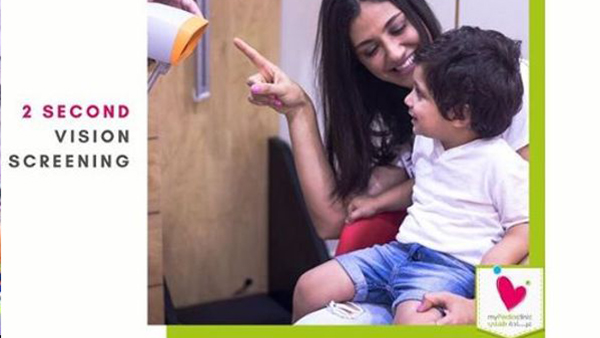
At myPediaClinic, we understand that medical procedures can be intimidating for children. Our vision screening protocol is designed to be quick, comfortable, and even enjoyable for young patients.
The auto-refraction device used at our clinic operates from a comfortable distance—typically about one meter—so children do not feel crowded or intimidated. There is no physical contact with the eye, no drops required for basic screening, and no discomfort of any kind. The device often incorporates engaging visual targets like animated images or lights that naturally attract children’s attention, making it easy to obtain accurate measurements even from wiggly toddlers.
The entire screening process takes just seconds, minimizing any stress for the child and providing immediate results that our pediatric team can discuss with parents during the same visit.
What Auto-Refraction Detects
Auto-refraction can detect several important vision problems:
Myopia (nearsightedness) causes distant objects to appear blurry while near objects remain clear. This condition is increasingly common in children and tends to worsen during school years. Early detection allows for intervention to slow progression.
Hyperopia (farsightedness) makes it difficult to focus on near objects, which can affect reading and close work. Moderate to severe hyperopia can also contribute to eye strain and alignment problems.
Astigmatism causes blurred or distorted vision at all distances due to irregular curvature of the cornea or lens. It often occurs alongside myopia or hyperopia.
Anisometropia refers to a significant difference in prescription between the two eyes, a major risk factor for amblyopia. Auto-refraction can detect this difference before any symptoms become apparent.
Beyond Auto-Refraction: Comprehensive Vision Assessment
While auto-refraction is a powerful screening tool, comprehensive vision care involves additional assessments. At myPediaClinic, our screening may also include evaluation of eye alignment and movement, assessment of pupil responses, external examination of the eyes and surrounding structures, and when indicated, referral for dilated examination and detailed assessment by a pediatric ophthalmologist.
This layered approach ensures that we catch not only refractive errors but also the full range of conditions that can affect your child’s vision and eye health.
Recognizing Signs of Vision Problems in Children
While professional screening is essential, parents are often the first to notice when something seems wrong with their child’s vision. Understanding what to watch for empowers you to seek evaluation promptly when concerns arise.
Signs in Infants (Birth to 12 Months)
In the earliest months, watch for appropriate visual development milestones. By three months, babies should be able to follow moving objects with their eyes and focus on faces. By six months, both eyes should move together in coordinated fashion, and babies should be reaching for objects, indicating depth perception is developing.
Warning signs that warrant evaluation include eyes that appear crossed or misaligned (though brief crossing in newborns can be normal), one eye that drifts outward, eyes that appear cloudy or have a white appearance in the pupil, excessive tearing or discharge, extreme light sensitivity, and failure to make eye contact or track faces and objects appropriately.
Signs in Toddlers and Preschoolers (1-5 Years)
As children grow, vision problems may manifest through behavior and preferences. Signs to watch for include sitting very close to the television or holding books and devices very close to the face, frequent squinting, tilting the head to one side when looking at things, frequent eye rubbing (not related to tiredness), one eye turning in or out, closing or covering one eye, poor depth perception (frequent tripping, difficulty with stairs, reaching past or falling short of objects), and avoiding activities that require focusing like puzzles, coloring, or looking at books.
Many of these behaviors may seem like preferences or habits, but they often represent children’s attempts to compensate for vision problems. A child who always sits close to the screen may be nearsighted. A child who tilts their head may be compensating for a muscle imbalance or refractive error.
Signs in School-Age Children (5+ Years)
Once children enter school, vision problems often manifest through academic challenges. Children with uncorrected vision issues may have difficulty copying from the board, lose their place when reading, avoid reading or have poor reading comprehension, experience frequent headaches especially after visual tasks, have poor handwriting with difficulty staying on lines, become fatigued quickly during homework, and exhibit declining academic performance despite apparent effort.
Unfortunately, these signs are often attributed to learning disabilities, attention problems, or lack of effort before vision is properly evaluated. At myPediaClinic, we recommend comprehensive vision screening for any child struggling academically to rule out correctable visual factors.
Behavioral and Emotional Signs
Vision problems can affect children’s behavior and emotional well-being. A child who cannot see the ball during sports may withdraw from physical activities and be labeled as unathletic. A child who struggles to read facial expressions due to blurred vision may have social difficulties. Frustration with visual tasks can lead to acting out or avoidance behaviors.
If your child seems frustrated, anxious, or avoidant about activities that rely on vision, consider whether uncorrected vision problems might be contributing to their distress.
Common Childhood Eye Conditions
Understanding the eye conditions that commonly affect children helps parents recognize potential problems and understand treatment options. The team at myPediaClinic is experienced in identifying these conditions and coordinating appropriate care.
Amblyopia (Lazy Eye)
Amblyopia is the most common cause of vision impairment in children, affecting approximately two to three percent of the population. It occurs when the brain favors one eye over the other during development, leading to reduced vision in the weaker eye that cannot be fully corrected with glasses alone.
Causes of amblyopia include strabismus (eye misalignment), significant difference in prescription between the eyes (anisometropia), obstruction of vision in one eye (from cataract or droopy eyelid), and severe uncorrected refractive error in both eyes.
Treatment for amblyopia typically involves correcting any underlying cause (such as providing glasses), then strengthening the weaker eye through patching the stronger eye, using atropine drops to blur the stronger eye, or other techniques that encourage the brain to use the amblyopic eye. Treatment is most effective when initiated early, ideally before age seven, underscoring the importance of early screening.
Strabismus (Eye Misalignment)
Strabismus refers to any condition where the eyes are not properly aligned—one eye may turn in (esotropia), out (exotropia), up, or down while the other looks straight ahead. Strabismus can be constant or intermittent, and it may affect the same eye consistently or alternate between eyes.
Beyond the cosmetic concern, strabismus has significant functional implications. When eyes are misaligned, the brain receives conflicting images and may learn to ignore input from one eye, leading to amblyopia. Depth perception is also affected, as binocular vision (using both eyes together) is required for accurate depth perception.
Treatment for strabismus depends on its cause and severity and may include glasses (especially for accommodative esotropia, where focusing effort causes crossing), vision therapy, patching (if amblyopia has developed), Botox injections in some cases, or surgical correction of eye muscle positioning.
Refractive Errors
Refractive errors are the most common vision problems in children and occur when the shape of the eye prevents light from focusing correctly on the retina.
Myopia (nearsightedness) typically develops in school-age children and tends to progress through adolescence. Children with myopia can see near objects clearly but distant objects appear blurred. Rates of myopia are increasing worldwide, particularly in urban environments, and research suggests both genetic factors and environmental influences (including limited outdoor time and extensive near work) play roles.
Hyperopia (farsightedness) is actually normal in young children, as their eyes are naturally shorter than adult eyes. Most children outgrow mild hyperopia. However, significant hyperopia can cause eye strain, headaches, and may contribute to the development of strabismus or amblyopia if not corrected.
Astigmatism causes blurred or distorted vision at all distances due to irregular curvature of the cornea or lens. It is common, often occurring alongside myopia or hyperopia, and is easily corrected with glasses or contact lenses.
Color Vision Deficiency
Color blindness (more accurately called color vision deficiency) affects approximately eight percent of males and less than one percent of females. While not a medical emergency, color vision deficiency can affect school performance and should be identified so appropriate accommodations can be made.
Children with color vision deficiency may have difficulty with color-coded learning materials, problems identifying colors in art or everyday contexts, challenges with color-based tasks in school, and potential confusion with traffic signals or other color-coded safety information. Screening for color vision deficiency is typically done around age five or before school entry at myPediaClinic.
Blocked Tear Ducts
Congenital nasolacrimal duct obstruction (blocked tear duct) is common in newborns, affecting up to twenty percent of infants. Symptoms include excessive tearing, discharge from the eye (especially upon waking), and occasionally recurrent eye infections.
Most blocked tear ducts resolve spontaneously within the first year of life. Conservative treatment includes gentle massage of the tear duct area to help open the blockage. If the condition persists beyond twelve months, a minor surgical procedure to open the duct may be recommended.
Pediatric Cataracts
While cataracts are typically associated with aging, children can also develop them. Congenital cataracts present at birth may be hereditary or associated with metabolic conditions or infections during pregnancy. Acquired cataracts can develop due to trauma, medication effects, or other conditions.
Cataracts in children are particularly serious because they can interfere with visual development during critical periods, leading to amblyopia. Treatment involves surgical removal of the cataract and may require extensive follow-up care to optimize visual development.
Preventing Digital Eye Strain in Children
In today’s world, children are exposed to screens from an early age. While technology offers valuable educational and entertainment opportunities, excessive screen time and poor viewing habits can contribute to eye strain, dry eyes, headaches, and potentially accelerate myopia progression. Parents can take proactive steps to protect their children’s eyes in the digital age.
Understanding Digital Eye Strain
Digital eye strain (also called computer vision syndrome) encompasses a range of symptoms resulting from prolonged screen use. These include eye fatigue and discomfort, headaches (often in the forehead or around the eyes), blurred vision (especially when looking away from the screen), dry, irritated eyes, neck and shoulder pain related to posture, and difficulty concentrating.
Children may be even more susceptible than adults to digital eye strain because they are less likely to take breaks, may not recognize or report symptoms, often use devices designed for adult ergonomics, and may view screens at close distances or poor angles.
The 20-20-20 Rule
One of the simplest and most effective strategies for preventing digital eye strain is the 20-20-20 rule: every 20 minutes, look at something 20 feet away for at least 20 seconds. This gives the focusing muscles of the eyes a chance to relax and reduces fatigue.
For children, implementing this rule may require parental involvement and reminders. Consider setting a timer or using apps that prompt breaks at regular intervals. During breaks, encourage children to stand up, stretch, and ideally look out a window or at distant objects.
Proper Viewing Distance and Ergonomics
The distance between eyes and screen significantly affects strain. For computer screens, a distance of at least 50 centimeters (about an arm’s length) is recommended, with the screen positioned slightly below eye level. Tablets and phones should be held at a comfortable distance—not inches from the face as children often prefer.
Proper posture also matters. Children should sit with their feet flat on the floor (or on a footrest), back supported, and screen at appropriate height and angle. Workstations designed for adults may need modification for smaller users.
Lighting and Screen Settings
Glare and improper lighting contribute to eye strain. Position screens to avoid reflections from windows or overhead lights. Ambient lighting should be comfortable—neither too bright nor too dim compared to the screen. Many devices offer “night mode” or “warm light” settings that reduce blue light emission; while research on blue light effects is ongoing, many users find these settings more comfortable for evening viewing.
Screen brightness should be adjusted to match the surrounding environment. If the screen looks like a light source in the room, it is too bright; if it seems dull and gray, it is too dim.
Encouraging Outdoor Time
Research increasingly suggests that outdoor time protects against myopia development and progression in children. Studies show that children who spend more time outdoors have lower rates of nearsightedness, regardless of how much near work or screen time they engage in.
The protective mechanism is not fully understood but may involve exposure to bright outdoor light, the opportunity for distance viewing, or other factors. Current recommendations suggest at least one to two hours of outdoor time daily for children—a goal that has benefits extending far beyond eye health.
At myPediaClinic, we encourage families to balance screen time with outdoor play, especially for children who show signs of developing myopia or have family history of significant nearsightedness.
Limiting Screen Time
While screens are an inevitable part of modern life, excessive screen time carries health implications beyond eye strain. Current guidelines from pediatric organizations recommend no screen time (except video calling) for children under 18-24 months, limited high-quality screen time for children two to five years (no more than one hour daily), and consistent limits for older children that ensure adequate time for sleep, physical activity, and face-to-face interaction.
Setting appropriate limits, modeling healthy screen habits, and providing alternative activities help protect children’s eyes and overall health in the digital age.
Supporting Your Child’s Vision Health
Beyond screening and addressing specific problems, parents can take many steps to promote optimal eye health throughout childhood.
Nutrition for Eye Health
The nutrients that support eye health include Vitamin A (essential for vision, found in orange and yellow vegetables, leafy greens, eggs, and dairy), omega-3 fatty acids (important for retinal health and tear production, found in fatty fish, flaxseed, and walnuts), lutein and zeaxanthin (antioxidants that protect the retina, found in leafy greens, eggs, and corn), Vitamin C and E (antioxidants that support overall eye health, found in citrus fruits, berries, nuts, and seeds), and zinc (essential for transporting vitamin A to the retina, found in meat, shellfish, legumes, and nuts).
A varied, nutritious diet that includes plenty of fruits, vegetables, and healthy fats provides the nutrients children need for healthy eyes—and bodies.
Eye Safety
Many childhood eye injuries are preventable with appropriate precautions. Ensure children wear protective eyewear for sports (especially those involving projectiles or physical contact), supervise activities involving potential eye hazards (scissors, pointed objects, chemicals), choose age-appropriate toys and check for small parts or sharp edges, install safety gates and corner guards to prevent falls and collisions, keep household chemicals and cleaners out of reach, and model and enforce sunglass wearing for outdoor activities.
If an eye injury does occur, seek prompt medical evaluation. Even seemingly minor injuries can have serious consequences if not properly treated.
Sun Protection
Children’s eyes are more susceptible to UV damage than adult eyes, and sun damage accumulates over a lifetime. Protect young eyes with sunglasses that block 99-100 percent of UVA and UVB rays, wide-brimmed hats that shade the eyes, awareness of peak sun hours (typically 10 AM to 4 PM), and avoiding direct sun exposure for infants under six months.
Make sun protection a habit from an early age—children who grow up wearing sunglasses are more likely to continue this protective behavior throughout life.
Frequently Asked Questions About Children’s Vision
At what age should my child have their first eye exam?
Children should receive their first vision screening at six months of age. This early screening can detect serious conditions like strabismus (eye misalignment), significant refractive errors, and structural abnormalities. Additional screenings should occur at age three, before starting school (around age five or six), and regularly throughout school years. At myPediaClinic, vision screening is incorporated into well-child visits to ensure no child misses this important assessment. Children with risk factors or symptoms may need more frequent or comprehensive evaluations.
How can I tell if my child has a vision problem?
Signs of vision problems vary by age but may include squinting, tilting the head, sitting very close to screens or holding books close to the face, frequent eye rubbing, one eye turning in or out, difficulty copying from the board, losing place while reading, avoiding reading or close work, frequent headaches (especially after visual tasks), poor depth perception (tripping, difficulty catching balls), and declining academic performance. Many children cannot recognize or report that they are not seeing clearly, so regular professional screening is essential even if no symptoms are apparent.
What is amblyopia and can it be treated?
Amblyopia (lazy eye) occurs when the brain favors one eye over the other during development, leading to reduced vision in the weaker eye. Causes include eye misalignment (strabismus), significant difference in prescription between eyes, or obstruction of vision. Yes, amblyopia can be treated, but early intervention is crucial—treatment is most effective before age seven. Treatment typically involves correcting any underlying cause (such as providing glasses), then strengthening the weaker eye through patching, atropine drops, or vision therapy. Early screening at myPediaClinic helps detect amblyopia risk factors before permanent vision loss occurs.
Is it true that screen time can damage my child’s eyes?
While screens do not directly damage eyes, excessive screen time can contribute to eye strain, dry eyes, and headaches. Research also suggests that increased screen time and reduced outdoor time may accelerate myopia (nearsightedness) progression in children. To protect your child’s eyes, implement the 20-20-20 rule (every 20 minutes, look at something 20 feet away for 20 seconds), ensure proper viewing distance and ergonomics, adjust lighting to reduce glare, encourage regular breaks, and balance screen time with outdoor activities. Limiting overall screen time benefits both eye health and overall well-being.
Why is outdoor time important for children’s eye health?
Research consistently shows that children who spend more time outdoors have lower rates of myopia (nearsightedness) and slower progression if myopia is already present. The exact mechanism is not fully understood but may involve exposure to bright outdoor light, opportunities for distance viewing, and other factors. Current recommendations suggest at least one to two hours of outdoor time daily for children. This is especially important for children with family history of myopia or who are already showing signs of nearsightedness. At myPediaClinic, we encourage families to prioritize outdoor activities as part of overall eye health.
How often should my child have their eyes examined?
For children without known vision problems or risk factors, screening is recommended at six months, three years, before starting school, and every one to two years during school years. Children who wear glasses or have been diagnosed with eye conditions need more frequent monitoring—typically annually or as recommended by their eye care provider. Children with risk factors such as family history of eye problems, prematurity, or developmental delays may also need more frequent or comprehensive evaluations. The team at myPediaClinic can recommend an appropriate schedule based on your child’s individual needs.
Can vision problems affect my child’s learning and behavior?
Yes, uncorrected vision problems can significantly affect learning and behavior. Children who cannot see clearly may struggle with reading, copying from the board, and completing visual tasks, leading to poor academic performance. The frustration of struggling with visual tasks can cause behavioral issues, avoidance, or acting out. Vision problems can also affect social development if children cannot see facial expressions or participate fully in activities. Unfortunately, these difficulties are often attributed to learning disabilities, ADHD, or behavioral problems before vision is properly evaluated. Any child struggling academically should have comprehensive vision screening to rule out correctable visual factors.
What is auto-refraction and why is it used for children?
Auto-refraction is a technology that uses infrared light to measure how light focuses in the eye, determining any refractive error (nearsightedness, farsightedness, or astigmatism) without requiring responses from the patient. This is particularly valuable for children because traditional vision testing requires verbal responses or following complex instructions—impossible for infants and difficult for young children or those with developmental differences. At myPediaClinic, auto-refraction allows accurate, objective vision assessment even for preverbal babies, performed quickly and comfortably from about one meter away with no eye contact or drops required.
Is my child’s crossed eye normal?
Brief, intermittent eye crossing in newborns (up to about three months) can be normal as the visual system develops. However, constant crossing at any age, crossing that persists beyond three to four months, or eyes that turn outward at any age should be evaluated promptly. Eye misalignment (strabismus) can lead to amblyopia if untreated, as the brain may learn to ignore input from the misaligned eye. Early treatment is important to prevent permanent vision loss and ensure proper visual development. If you are concerned about your child’s eye alignment, seek evaluation at myPediaClinic rather than waiting to see if the condition resolves.
How can I help my child who needs to wear glasses?
Help your child adapt to glasses by involving them in choosing frames they like, making glasses-wearing a positive experience rather than a punishment, reading books or watching shows featuring characters with glasses, establishing consistent routines for wearing glasses, praising your child for wearing their glasses, ensuring glasses fit properly and comfortably, and having a backup pair in case of loss or damage. Most children adapt quickly once they experience clear vision. If your child resists wearing glasses, discuss strategies with the team at myPediaClinic—we can help troubleshoot fit issues, address concerns, and ensure your child receives the visual correction they need.
Partner with myPediaClinic for Your Child’s Vision Health
At myPediaClinic, we are committed to protecting and optimizing your child’s vision from infancy through adolescence. Our state-of-the-art screening technology, child-friendly environment, and experienced pediatric team ensure that vision problems are detected early when treatment is most effective.
We understand that your child’s eyes are precious—and that clear vision is foundational to learning, playing, and thriving in every aspect of life. Whether your child needs routine screening, evaluation of concerning symptoms, or ongoing management of a diagnosed condition, our team provides compassionate, comprehensive care tailored to your child’s unique needs.
Schedule Your Child’s Vision Screening Today
Do not wait until problems become obvious to protect your child’s vision. Early screening can detect conditions that, without treatment, might lead to permanent vision loss—but with timely intervention can often be fully corrected.
Contact myPediaClinic today to schedule your child’s comprehensive well-child visit, including vision screening with our advanced auto-refraction technology. Our caring team will assess your child’s visual development, answer your questions, and provide guidance to support optimal eye health.
Give your child the gift of clear vision—reach out to myPediaClinic and take the first step toward protecting their precious eyesight for life.