

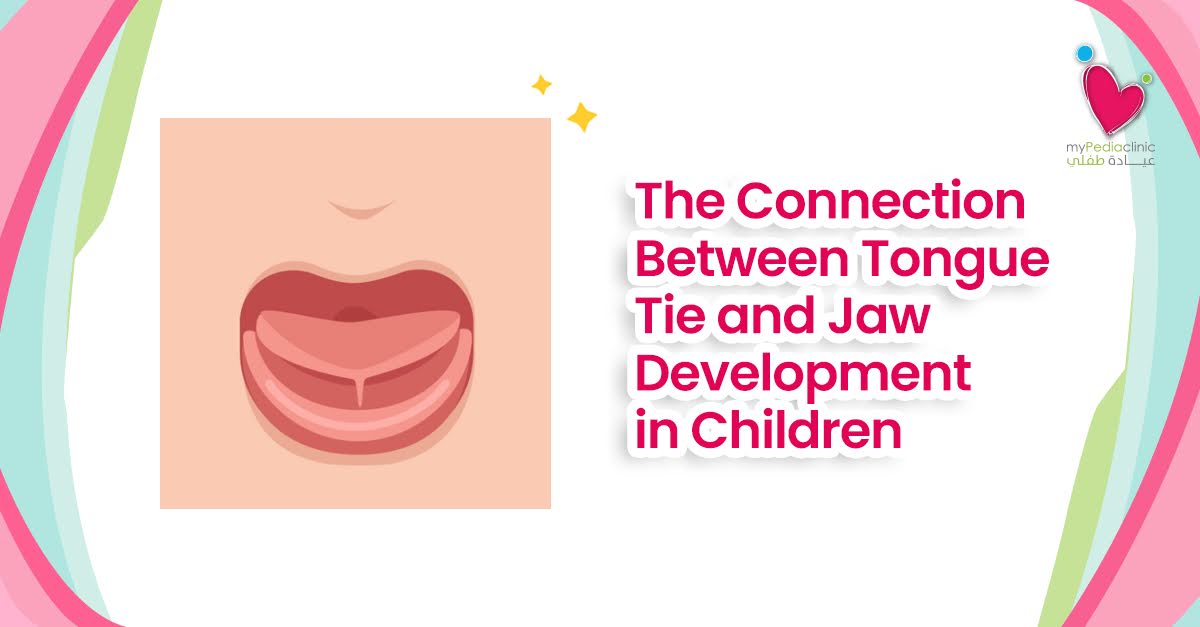
The Connection Between Tongue Tie and Jaw Development in Children
Tongue tie, medically known as ankyloglossia, is a congenital condition where the lingual frenulum—the band of tissue connecting the underside of the tongue to the floor of the mouth—is abnormally short, tight, or thick. This restriction limits tongue movement and can significantly impact various aspects of a child’s development. One critical area affected by tongue tie is jaw development, which has far-reaching implications for dental health, facial structure, breathing, and overall well-being. At myPediaClinic Dubai, our experienced pediatric dentists and pediatricians understand the complex relationship between tongue tie and jaw development, providing comprehensive assessment and treatment to ensure optimal growth for your child.
Understanding this connection empowers parents to recognize symptoms early and seek appropriate intervention to prevent long-term complications.
Understanding Tongue Tie in Children
Tongue tie occurs when the frenulum restricts the tongue’s range of motion, preventing it from moving freely. This condition affects approximately 4-11% of newborns and can range from mild to severe. The best pediatric dentists in Dubai identify tongue tie during routine examinations, though some cases may not become apparent until feeding or speech difficulties emerge.
Types of Tongue Tie
Anterior tongue tie: The frenulum attaches near the tip of the tongue, often creating a heart-shaped appearance when the tongue is extended. This type is typically easier to identify.
Posterior tongue tie: The frenulum attaches further back under the tongue, making it less visible but equally restrictive. This type may be missed during initial examinations.
Both types can significantly impact jaw development and require professional evaluation by the best pediatric dentist in Dubai for accurate diagnosis and treatment planning.
The Role of the Tongue in Jaw Development
The tongue plays a crucial role in shaping the oral cavity and guiding jaw growth from infancy through adolescence. Understanding this relationship is essential for recognizing why tongue tie can cause developmental issues.
Normal Tongue Posture and Function
In healthy oral development, the tongue naturally rests against the palate (roof of the mouth) with the tip positioned behind the upper front teeth. This resting position exerts gentle, constant pressure on the palate and upper dental arch, promoting:
- Proper width and shape of the upper jaw
- Correct positioning of the upper teeth
- Adequate nasal airway development
- Forward growth of the mid-face
- Balanced facial proportions
During swallowing (which occurs 1,000-2,000 times daily), the tongue exerts significant upward and outward force on the palate, further contributing to proper jaw development. This constant, repetitive stimulation is essential for optimal growth patterns.
How Tongue Tie Affects Jaw Development in Children
1. Limited Tongue Movement and Altered Positioning
When tongue tie restricts movement, the tongue cannot reach its proper resting position against the palate. Instead, it remains lower in the mouth or pulls backward. This altered positioning has cascading effects on jaw development:
- Loss of natural palatal expansion stimulus
- Narrow, high-arched palate development
- V-shaped instead of U-shaped dental arch
- Insufficient space for permanent teeth
- Dental crowding and misalignment
The best pediatric dentists in Dubai can identify these developmental patterns and recommend early intervention to guide proper growth.
2. Poor Oral Posture Leading to Developmental Issues
Tongue tie prevents the tongue from resting against the roof of the mouth, which is critical for proper upper jaw development. Without this consistent pressure, several problems can develop:
Narrow palate: The upper jaw doesn’t widen adequately, creating a narrow, vaulted palate. This reduces space for teeth and can affect nasal breathing capacity.
Long face syndrome: Without proper upward and forward palatal pressure, the face may develop a characteristic elongated appearance with:
- Narrow facial proportions
- Gummy smile
- Recessed chin
- Open mouth posture
- Dark circles under eyes
Early treatment from the best pediatric dentist in Dubai helps prevent these structural changes by addressing tongue tie before abnormal growth patterns become established.
3. Altered Chewing Patterns and Jaw Stress
Limited tongue mobility affects how children chew food. Unable to use the tongue effectively to manipulate food, children may rely more heavily on their teeth and jaw muscles, causing:
- Inefficient chewing patterns
- Increased stress on jaw joints (TMJ)
- Uneven jaw muscle development
- Asymmetrical jaw growth
- Jaw pain or clicking sounds
- Headaches and facial discomfort
Over time, these compensatory patterns can contribute to temporomandibular joint (TMJ) disorders and chronic pain. Pediatric dentists and pediatricians in Dubai work together to identify and address these issues early.
4. Speech Difficulties and Their Developmental Impact
Tongue tie affects the ability to produce specific speech sounds that require precise tongue positioning and elevation. While primarily a speech issue, these difficulties can influence jaw development through altered oral motor patterns:
Affected sounds include:
- “T,” “D,” “N” (tongue tip to ridge behind front teeth)
- “L” (tongue tip elevation)
- “R” (tongue elevation and curling)
- “S,” “Z” (precise tongue grooving)
- “TH” (tongue placement between teeth)
Children compensate for these limitations by using alternative oral motor strategies that may reinforce poor jaw positioning and development. Speech therapists and the best pediatric dentists in Dubai collaborate to address both the structural and functional aspects of speech difficulties related to tongue tie.
5. Impact on Breathing Patterns and Airway Development
Perhaps one of the most significant connections between tongue tie and jaw development involves breathing patterns. Proper tongue position supports nasal breathing and healthy airway development, while tongue tie often leads to mouth breathing with serious consequences:
Effects of mouth breathing on jaw development:
- Downward and backward growth of the lower jaw
- Narrow upper jaw and reduced nasal airway
- Increased vertical facial growth (long face)
- Changes in head and neck posture
- Sleep-disordered breathing risks
- Obstructive sleep apnea in children
Airway dentists and pediatric dentists in Dubai increasingly recognize tongue tie as an airway issue requiring early intervention to prevent breathing difficulties and associated developmental problems.
Identifying Tongue Tie: Signs Parents Should Watch For
Early recognition enables timely treatment before significant developmental issues occur. Watch for these signs:
In infants:
- Difficulty latching during breastfeeding
- Clicking sounds while feeding
- Poor weight gain or slow growth
- Inability to stick tongue out past lower lip
- Heart-shaped tongue tip when extended
- Gumming or chewing nipple instead of sucking
In toddlers and older children:
- Limited tongue movement (cannot touch upper lip or palate)
- Speech sound difficulties
- Difficulty licking ice cream or popsicles
- Messy eating or food falling from mouth
- Dental problems (cavities, gum disease)
- Narrow palate or crowded teeth
- Mouth breathing habit
- Sleep disturbances or snoring
If you notice these signs, consult the best pediatrician or pediatric dentist in Dubai for comprehensive evaluation.
Treatment Options for Tongue Tie in Dubai
Frenectomy: Releasing the Restriction
Frenectomy is a simple surgical procedure to release tongue tie by dividing the restrictive frenulum. At myPediaClinic, the best pediatric dental clinic in Dubai, we perform frenectomies using advanced radiofrequency equipment offering significant advantages:
Benefits of radiofrequency frenectomy:
- Minimal discomfort during and after procedure
- Virtually no bleeding
- Quick healing time (1-2 weeks)
- Precision cutting with reduced tissue damage
- Lower risk of reattachment
- Can be performed on infants through adults
- Usually completed in single appointment
The procedure is performed under safe local anesthesia (or general anesthesia for very young children when appropriate), ensuring comfort and safety.
Post-Procedure Exercises and Follow-Up
After frenectomy, pediatricians and pediatric dentists in Dubai recommend specific exercises to:
- Strengthen tongue muscles
- Improve range of motion
- Develop proper tongue posture
- Prevent tissue reattachment
- Maximize treatment benefits
These exercises are crucial for successful outcomes, and our team provides detailed guidance and support throughout the healing process.
Collaborative Care Approach
Comprehensive tongue tie treatment often involves multiple specialists:
- Pediatric dentists for diagnosis and frenectomy
- Pediatricians for overall health monitoring
- Speech therapists for articulation improvement
- Lactation consultants for breastfeeding support
- Myofunctional therapists for oral muscle retraining
- Orthodontists for dental alignment
At myPediaClinic, we coordinate care among these specialists to ensure comprehensive, effective treatment for your child.
The Importance of Early Intervention
Addressing tongue tie early provides the best outcomes for jaw development and overall health:
Benefits of early treatment:
- Allows normal jaw development patterns to proceed
- Prevents compensatory growth patterns
- Reduces need for extensive orthodontic treatment
- Prevents speech difficulties or reduces therapy duration
- Supports healthy breathing patterns
- Improves feeding and nutrition
- Easier recovery for young children
- More cost-effective than treating complications later
However, tongue tie can be successfully treated at any age. Children, teenagers, and adults can all benefit from release, though earlier intervention typically produces more comprehensive benefits for jaw development.
FAQs: Tongue Tie and Jaw Development in Children
1. At what age should tongue tie affecting jaw development be treated?
The best pediatric dentists in Dubai recommend treating symptomatic tongue tie as early as possible to prevent developmental complications. For infants showing feeding difficulties, treatment can be performed within the first weeks of life. For older children, treatment timing depends on symptoms and their impact on development. Early treatment (before age 7-8) allows intervention during active jaw growth phases when developmental guidance is most effective. However, tongue tie can be successfully treated at any age. Consult pediatric dentists at myPediaClinic for personalized timing recommendations based on your child’s specific situation, age, and developmental status.
2. Can tongue tie release prevent the need for braces later?
Early tongue tie release can significantly reduce the likelihood of needing extensive orthodontic treatment, though it doesn’t guarantee braces won’t be needed. When tongue tie is released early (ideally before permanent teeth erupt), the tongue can assume its proper position against the palate, guiding healthy jaw development and potentially preventing narrow palate, dental crowding, and bite issues that require braces. However, genetics, oral habits, and other factors also influence dental development. Some children may still need orthodontic treatment despite tongue tie release, but treatment is often less complex and shorter. The best orthodontists and pediatric dentists in Dubai work together to optimize development and minimize orthodontic needs.
3. Will jaw development improve after tongue tie release in an older child?
Jaw development improvements after tongue tie release depend on the child’s age and skeletal maturity. Younger children (under 7-8 years) still experiencing active jaw growth often show significant developmental improvements when the tongue can assume proper positioning after release. Older children and teenagers with nearly complete jaw development may see limited structural changes, though functional improvements (chewing, speech, breathing) can still be substantial. In these cases, orthodontic treatment from the best orthodontists in Dubai may be needed alongside or after tongue tie release to address existing developmental issues. Even in older children, release prevents further deterioration and supports optimal function.
4. How does tongue tie affect breathing and is it related to jaw development?
Tongue tie significantly affects breathing patterns and has a direct relationship with jaw development. When tongue tie prevents proper tongue positioning against the palate, children often develop mouth breathing habits. Chronic mouth breathing alters jaw growth, typically causing narrow upper jaw, high palate, downward/backward lower jaw growth, long facial development, and reduced nasal airway space. These changes can contribute to sleep-disordered breathing including obstructive sleep apnea. The best airway dentists and pediatric dentists in Dubai recognize tongue tie as an airway issue requiring early intervention. Releasing tongue tie enables proper tongue posture, supports nasal breathing, and promotes healthy airway and jaw development.
5. What exercises help promote proper jaw development after tongue tie release?
Post-frenectomy exercises are crucial for optimal outcomes and typically include tongue stretches (extending tongue in all directions), tongue elevation exercises (touching palate and holding), lateral tongue movements (side to side against cheek resistance), proper swallowing practice (tongue against palate), and consistent tongue posture training (resting against palate). The best pediatric dentists in Dubai provide specific exercise protocols tailored to your child’s age and needs. Myofunctional therapy from specialized therapists can significantly enhance results by retraining oral muscle patterns. Consistent exercise practice (several times daily for several weeks) maximizes tongue mobility, promotes proper jaw development, and prevents tissue reattachment. Our team at myPediaClinic provides detailed guidance and ongoing support throughout the process.
Conclusion: Understanding the connection between tongue tie and jaw development is crucial for parents seeking optimal health outcomes for their children. Tongue tie isn’t just a feeding or speech issue—it’s a structural problem with far-reaching implications for facial development, breathing, dental health, and overall well-being. Early recognition and treatment provide the best opportunity for normal jaw development and prevent the cascade of complications that can arise from untreated tongue tie. At myPediaClinic Dubai, our team of experienced pediatric dentists and pediatricians specializes in comprehensive tongue tie assessment and treatment using state-of-the-art radiofrequency technology. We provide expert, compassionate care to help children achieve optimal oral and facial development. Contact us today to schedule a tongue tie evaluation and ensure your child’s healthy development.