

Dental anxiety & additional needs
Tell us about your child’s communication, sensory or support needs before the appointment. Our pediatric dentists can discuss how to adapt the visit.
For a child who is scared of the dentist, autistic, or has sensory or additional needs, the visit is planned around the child. Dr. Mustafa Abdalla, who holds an MSc in Pediatric Dentistry and Special Needs, and Dr. Sara Atif Mustafa, who holds a diploma in child psychology, lead this care at myPediaclinic in Dubai Healthcare City. Tell us before the appointment what sets your child off, what settles them and how they communicate. We adapt the visit with social stories and an approach informed by applied behaviour analysis, and nothing is used before it has been shown.
When you cannot ask, and they cannot tell you
A child who does not describe pain still shows it. Any of these is worth an appointment:
- Turning away from hard or chewy food they used to eat
- Holding or pressing the face or jaw
- Meltdowns that cluster around mealtimes
- Refusing to be brushed when they tolerated it before
- More drooling than usual
- Grinding that has become constant
- Dark spots or chalky white patches on a tooth, or gums that are red, swollen or bleeding
- Breath that does not improve with brushing
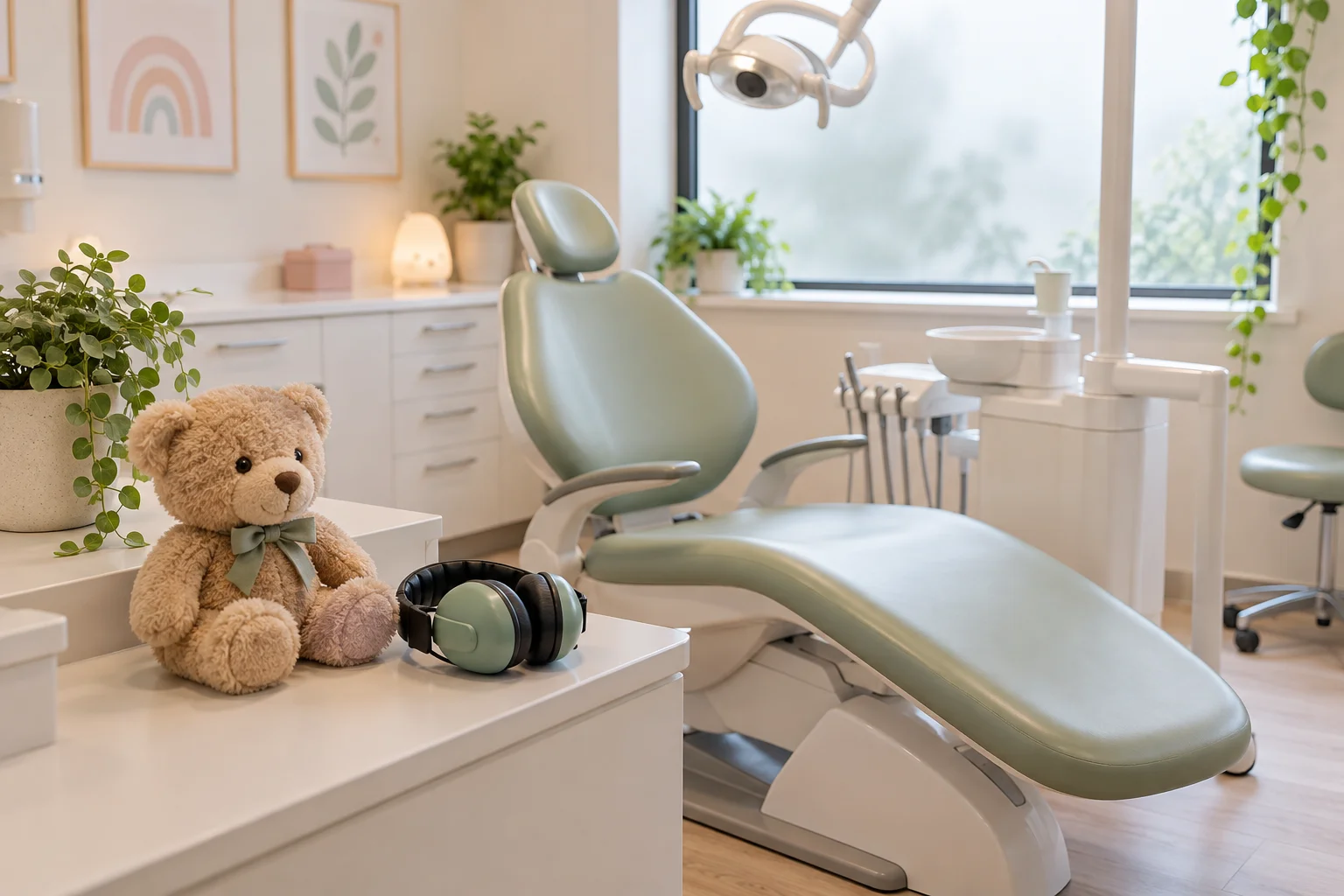
How we work around your child
- 01Before you comeTell reception what we need to know: sensory triggers, what calms your child, how they communicate, and how previous dental visits went. It changes how the appointment is set up, not only how it goes.
- 02Nothing before it has been shownTell, then show, then do. Each instrument is named and demonstrated before it is used, at your child’s pace rather than the clock’s.
- 03What can be adaptedLighting, noise, breaks, the order things happen in, and whether you sit beside the chair or step back. Ask for what your child needs — most of it is straightforward to arrange if we know in advance.
- 04If the chair is not going to work todayThen we say so. The options get talked through — laughing gas, sedation, or treatment under general anaesthesia in hospital — and a plan is made. Nothing is forced.
Social stories, and an ABA-informed approach
The clinic integrates Applied Behavior Analysis into how it approaches dental visits, so nothing about the appointment comes as a surprise.
- Social stories A short, personalised account of exactly what will happen, read several times before the day.
- Repetition A first visit with nothing to fix lets your child learn the room, the chair and the people first. If several are needed before any treatment, that is how it is planned.
- Who we see Children with autism spectrum disorder, Asperger’s syndrome, pervasive developmental disorder or sensory processing disorder, and children with developmental delay or physical disability.
- What to tell us The diagnosis if there is one, and the behaviour if there is not. The behaviour tells us more.
What you can practise at home
Rehearsal does more than explanation.
- Play dentist Count teeth in a mirror together, let your child look in your mouth, or play dentist with a doll or a toy.
- Lie back and open wide Practise for a few seconds at a time, then a few more.
- Plain, specific words Say “the dentist will count your teeth” rather than “it won’t hurt”. A promise that nothing will hurt is one you cannot control.
- A good time of day Mornings tend to go better than late afternoons. Ask for a time when your child is usually at their best.
What to bring
Familiar things do a lot of work in an unfamiliar room.
Who you would see
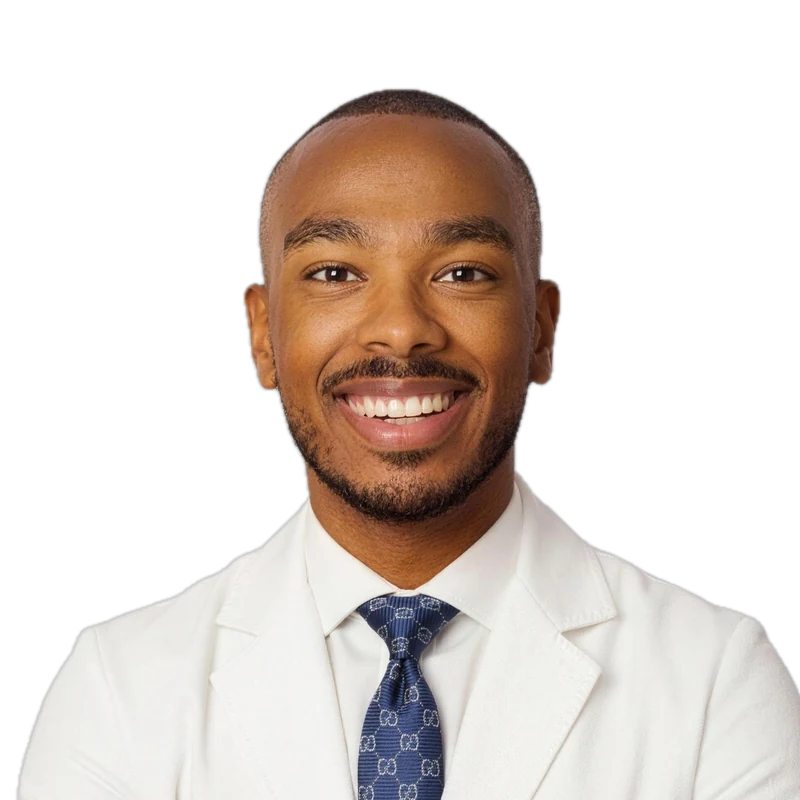 Dr. Mustafa AbdallaSpecialist Pediatric Dentist & Director of the Dental Department
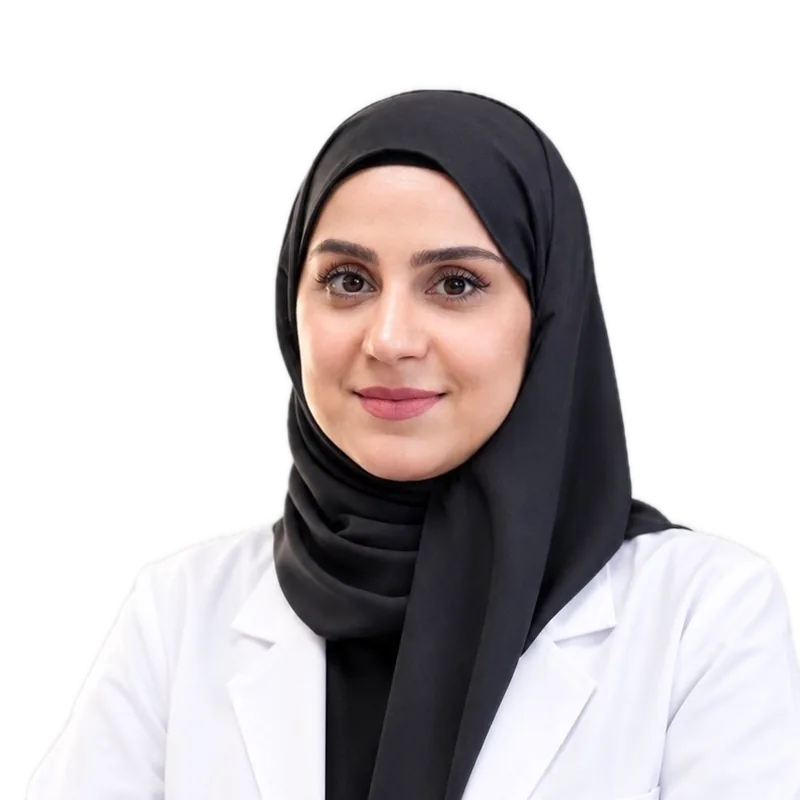 Dr. Shaima BuhamerSpecialist Pediatric Dentist
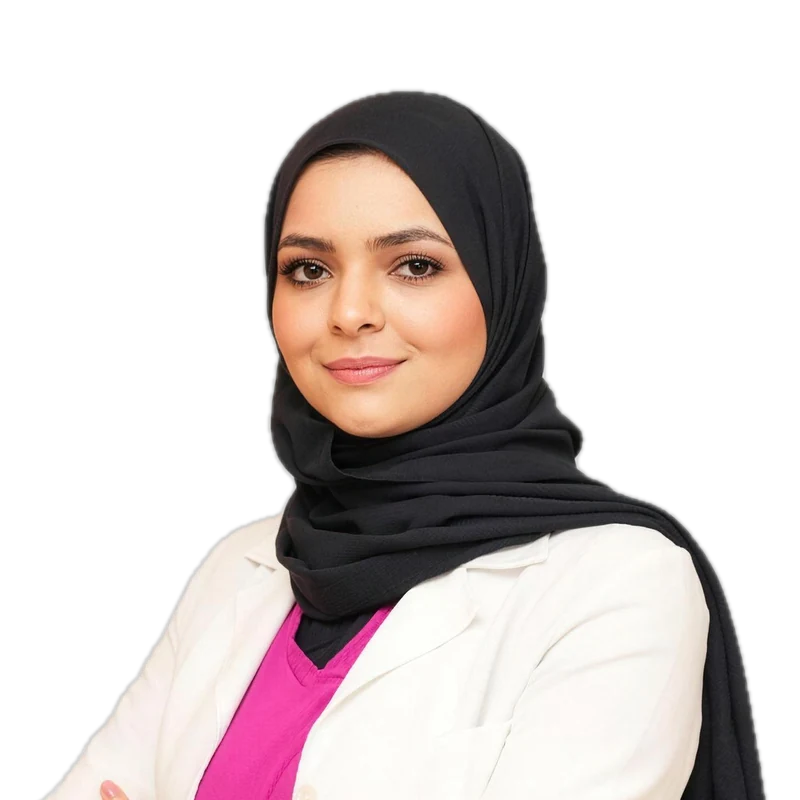 Dr. Sharifa AlHajSpecialist Pediatric Dentist
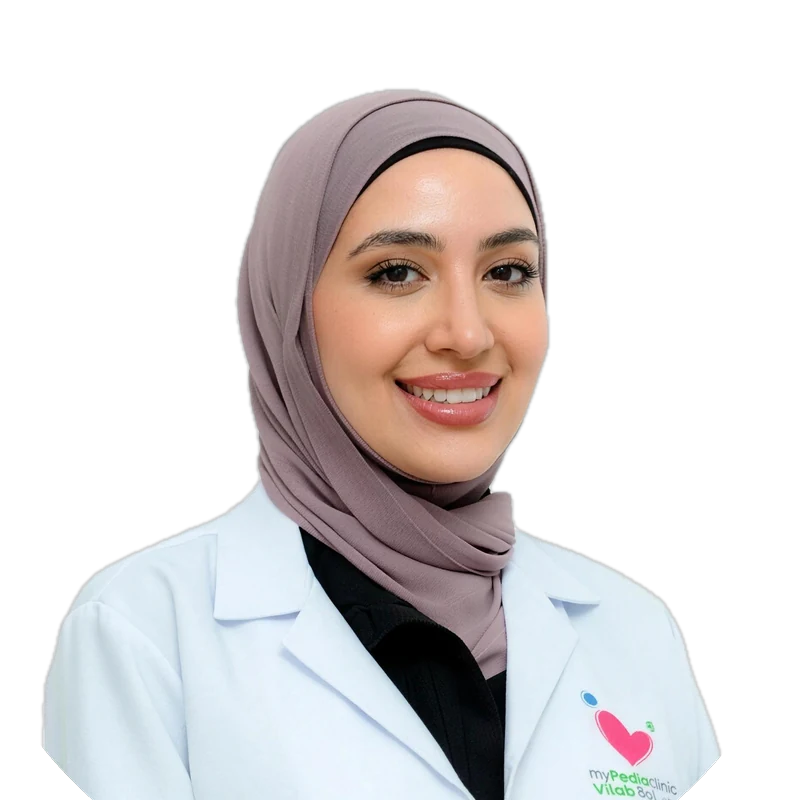 Dr. Sara Atif MustafaSpecialist Pediatric Dentist
- Assessment
- Dr. Mustafa Abdalla (Specialist Pediatric Dentist and Director of the Dental Department, Fellowship in Pediatric Dentistry, Royal College of Surgeons of Edinburgh) and Dr. Sara Atif Mustafa (Specialist Pediatric Dentist, diploma in child psychology) see anxious children and children with special healthcare needs.
- Treatment
- If treatment needs more support, Dr. Sharifa AlHaj and Dr. Shaima Buhamer provide laughing gas and treatment under general anaesthesia. Tell reception about your child when you book, and they will match you to the right dentist.
Which dentist is good for a child who is scared of the dentist?
At myPediaclinic, anxious and autistic children usually see Dr. Mustafa Abdalla or Dr. Sara Atif Mustafa, both specialist pediatric dentists. Dr. Mustafa holds an MSc in Pediatric Dentistry and Special Needs, and Dr. Sara a diploma in child psychology. The first visit can be nothing more than meeting them and the chair. Laughing gas or general anaesthesia are there when talking and showing are not enough.
Do you see children with autism, ADHD or sensory processing difficulties?
Yes. The pediatric dentists see children with autism spectrum disorder, Asperger’s syndrome, sensory processing disorder, developmental delay or physical disability, and children with no diagnosis who find the dentist impossible. Tell us what helps and what does not, and the appointment is set up around it.
Should I stay in the room?
Usually, and you are welcome to. But it is worth knowing that some children cooperate better without a parent watching — they engage directly with the dental team instead. That is ordinary development rather than a sign of anything, and it is not a judgement about you. The dentist will suggest what looks likely to work and you decide.
What if my child will not get into the chair at all?
Then that is the appointment, and it still counts. Sitting in the room, meeting the dentist, touching a mirror, leaving without anything being done — that is a successful first visit for some children, and the next one starts further along. Treatment that genuinely cannot wait has other routes.
Is sedation an option?
Yes, and it is not a first step. Nitrous oxide — laughing gas — leaves your child awake and responsive and suits many children with sensory sensitivities or additional needs. Where that is not enough, treatment under general anaesthesia is carried out in a hospital, with everything completed in one session. Both are decided with you, after an assessment.
My child has no diagnosis, but the dentist is impossible. Does this apply to us?
Yes. Nothing on this page requires a diagnosis. Fear of the dentist, a previous appointment that went badly, a gag reflex, sensory sensitivity without a label — the same adjustments apply. Tell us what happens and we will work from that.
What should I tell you before we come?
What triggers distress, what calms it, how your child communicates and what they understand, what happened at previous dental or medical appointments, any medications, and what you have already tried at home. Put it in the booking rather than saving it for the chair. It is the single most useful thing you can give us.
What will this cost?
Tell reception your insurer when you book. We hold direct billing agreements with fifteen insurers, and cover differs between the pediatric and dental departments, so we check your eligibility before the appointment rather than at the desk. Anything not covered can be split into four payments with Tabby.
Your next step
Start with a conversation.
Tell us what is on your mind and reception will confirm the right specialist and a time.
- Opening hours
- Sat-Thu: 9AM - 7PM
- Insurance
- Direct billing with 15 insurers. Check yours
- Find us
- Al Razi Building 64, Block B
Dubai Healthcare City